Loading...
Date Masamune vs Michiel de Ruyter
Date Masamune leads by 6.1 pts · 2 figures compared
…

Date Masamune
General · Modern
67.1Total
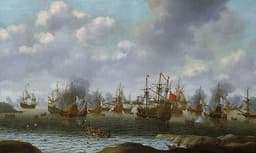
Michiel de Ruyter
General · Modern
61.0Total
Basic Information
Born
1567
1607
Died
1636
1676
Era
Modern
Modern
Nationality
Japan
Netherlands
Occupation
General
General
Civilization
Eastern
Western
Score Comparison
Military (10%)
67.3
74.0
Political (20%)
70.0
45.0
Influence (20%)
72.0
40.0
Legacy (20%)
52.0
80.0
Leadership (15%)
85.0
62.0
Strategy (15%)
61.2
75.3
TOTAL
67.1
61.0
Date Masamune — Complete Timeline
1588 AD
Battle of KoriyamaWar
Date Masamune besieged Koriyama Castle in Mutsu Province. The castle fell after a fierce battle, further expanding Masamune's territory and demonstrating his military prowess.
Sengoku PeriodSiegeMutsu
Impact: regionalconstructive
1589 AD
Battle of SuriageharaWar◆ Major
Date Masamune defeated the Ashina clan at Suriagehara in Mutsu Province. This victory allowed Masamune to expand his territory and solidify his control over the southern Tohoku region.
Sengoku PeriodBattleTohoku
Impact: regionalconstructive
1590 AD
Submission to Toyotomi HideyoshiPolitical Action◆ Major
Date Masamune submitted to Toyotomi Hideyoshi after the Siege of Odawara. He was allowed to retain his domain but was forced to cede some territory, marking a shift from independent daimyo to vassal.
Sengoku PeriodSubmissionToyotomi
Impact: national
1601 AD
Founding of SendaiPolitical Action
Date Masamune founded the city of Sendai as his new capital. He built Sendai Castle and developed the surrounding area, establishing a prosperous domain that became a major center in northern Japan.
Sengoku PeriodCity FoundingSendai
Impact: regionalconstructive
Michiel de Ruyter — Complete Timeline
1639 AD
Battle of the DownsWar
De Ruyter served as a captain in the Dutch fleet under Maarten Tromp at the Battle of the Downs, where the Dutch decisively defeated a Spanish fleet. This battle established Dutch naval dominance and marked de Ruyter's early combat experience.
Eighty Years' WarNaval BattleDutch Victory
Impact: regional
1661 AD
Expedition to the MediterraneanWar
De Ruyter led a Dutch fleet to the Mediterranean to protect Dutch merchant shipping from Barbary pirates and to assert Dutch naval presence. He negotiated treaties with Algiers and Tunis, securing safer passage for Dutch trade.
Barbary PiratesNaval DiplomacyTrade Protection
Impact: regionalconstructive
1667 AD
Raid on the MedwayWar
De Ruyter led a Dutch fleet up the River Medway, attacking the English navy at its Chatham Dockyard. The Dutch burned or captured several major English warships, including the flagship HMS Royal Charles, a humiliating defeat for England.
Second Anglo-Dutch WarNaval RaidEnglish Defeat
Impact: regional
1672 AD
Battle of SolebayWar◆ Major
De Ruyter attacked the Anglo-French fleet at Solebay, preventing a blockade of the Dutch coast. The battle was tactically indecisive but strategically important as it thwarted Allied plans to invade the Netherlands.
Third Anglo-Dutch WarNaval BattleStrategic Defense
Impact: regional
1673 AD
Battle of the TexelWar◆ Major
De Ruyter commanded the Dutch fleet to a tactical victory over a combined Anglo-French fleet at the Battle of the Texel. This victory prevented an invasion of the Netherlands and secured Dutch independence during the Franco-Dutch War.
Franco-Dutch WarNaval BattleDutch Victory
Impact: regional
1676 AD
Death at the Battle of AugustaWar◆ Major
De Ruyter was mortally wounded by a cannonball during the Battle of Augusta against a French fleet. He died several days later. His death was a major loss for the Dutch navy and he was given a state funeral with great honors.
Franco-Dutch WarNaval BattleDeath in Battle
Impact: nationaltragic
Expert Analysis
Origins
Date Masamune (1567-1636) was born into the powerful Date clan in Mutsu Province, northeastern Japan. As the eldest son, he inherited leadership at age 17 after his father's forced retirement. His early life was marked by family strife: his mother favored his younger brother and even attempted to poison him. This forged a ruthless pragmatism. Masamune lost his right eye to smallpox as a child, earning the nickname "One-Eyed Dragon." He received a traditional samurai education in military tactics and Chinese classics.
Michiel de Ruyter (1607-1676) was born in Vlissingen, Netherlands, into a poor family of beer brewers. He went to sea at age 11, working as a cabin boy and merchant sailor. Lacking formal education, he learned navigation and seamanship through experience. By his twenties, he commanded his own merchant ship. His early career included a period as a privateer, capturing Spanish vessels during the Dutch Revolt. This gave him intimate knowledge of ship handling and combat.
Rise to Power
Masamune's rise began with the Battle of Suriagehara (1580), where he defeated the Ashina clan at age 13, expanding his territory. He systematically conquered neighboring domains, employing innovative tactics like massed arquebus fire. In 1589, he defeated the Date clan's traditional rivals, the Ashina, and established control over much of Mutsu. However, his ambition clashed with the national unifier Toyotomi Hideyoshi. After the Siege of Odawara (1590), Masamune submitted to Hideyoshi, who allowed him to retain his domain but forced him to cede some territory. This submission was a calculated move to preserve his power. Under Hideyoshi's successor Tokugawa Ieyasu, Masamune fought at the Battle of Sekigahara (1600) on the Tokugawa side and was rewarded with expanded lands.
De Ruyter's rise was slower but steady. He served as a captain under Admiral Maarten Tromp at the Battle of the Downs (1639), a decisive Dutch victory over Spain. His first major independent command came in the First Anglo-Dutch War (1652-1654), where he distinguished himself as a squadron commander. In 1653, he fought in the Battle of Scheveningen, though Tromp was killed. After the war, he was appointed commander of the Dutch Mediterranean fleet. His reputation soared during the Second Anglo-Dutch War (1665-1667). In 1666, he fought the Four Days' Battle, a tactical victory. His crowning moment came in 1667 with the Raid on the Medway, where he sailed up the Thames and burned the English fleet at Chatham, forcing England to sue for peace.
Leadership & Governance
Masamune governed his domain with a blend of military force and administrative reform. He founded Sendai in 1601, building a castle and developing the city as a commercial hub. He implemented land surveys to increase tax revenue and promoted trade, even sending an embassy to the Spanish Philippines and Rome (the Keichō Embassy, 1613-1620). He allowed Christian missionaries initially but later suppressed Christianity under Tokugawa orders. His leadership style was autocratic but pragmatic: he executed rivals and disloyal retainers without hesitation. He scored 85.0 in Leadership, reflecting his ability to command loyalty and fear.
De Ruyter's leadership was based on professional respect and tactical acumen. He was known for his calm demeanor and careful planning. He emphasized training and morale, ensuring his crews were well-drilled. Unlike many admirals, he often led from the front, which earned him the nickname "Bestevaer" (Grandfather). He scored 62.0 in Leadership, lower than Masamune, but his Strategic score of 75.3 was higher. De Ruyter's governance was limited to naval administration; he served as commander-in-chief of the Dutch fleet and advised the States General on naval policy.
Triumph & Tragedy
Masamune's greatest triumph was the founding of Sendai and the development of his domain into a prosperous fief that lasted until the Meiji Restoration. He also successfully navigated the turbulent transition from the Sengoku to the Edo period, retaining his power despite the centralization efforts of Hideyoshi and Ieyasu. His tragedy was the failure of his embassy to establish trade relations with Europe; the mission returned without concrete results. He also faced family tragedies: his eldest son died young, and his succession was contested.
De Ruyter's greatest triumph was the Raid on the Medway (1667), which humiliated England and secured favorable terms for the Dutch in the Treaty of Breda. His tactical masterpiece was the Battle of the Texel (1673), where he defeated a superior Anglo-French fleet and prevented an invasion of the Netherlands. His tragedy was his death at the Battle of Augusta (1676). While fighting the French, he was struck by a cannonball that shattered his leg; he died a week later. His death was a severe blow to Dutch morale.
Character & Destiny
Masamune was calculating and ambitious. His decision to submit to Hideyoshi and later Ieyasu showed political acumen. He was also culturally sophisticated, patronizing the arts and writing poetry. His one eye became a symbol of his indomitable will. His character shaped his destiny: his loyalty to the Tokugawa shogunate ensured his domain's survival, but his early ruthlessness created many enemies.
De Ruyter was modest and duty-bound. He never sought fame, but his competence thrust him into leadership. His calm under pressure and strategic insight made him indispensable. His death in battle was a fitting end for a man who lived by the sea. His character—pious, brave, and loyal—endeared him to the Dutch people.
Legacy
Masamune's legacy is mixed. In Japan, he is remembered as a great daimyo who built Sendai and fostered culture. His embassy to Europe is a point of pride. However, his military achievements are overshadowed by the unification of Japan under the Tokugawa. His Legacy score is 52.0, reflecting limited impact beyond Japan.
De Ruyter's legacy is immense in the Netherlands. He is considered the greatest Dutch naval hero, with statues, ships, and towns named after him. His tactics influenced naval warfare for generations. He scored 80.0 in Legacy, the highest of any category for either figure. His defeat of the English and French secured Dutch independence and trade.
Conclusion
While Masamune had a higher total score (67.1 vs 61.0), De Ruyter's impact on global history is more tangible. Masamune was a regional lord in a country that was then isolated; his influence was limited to Japan. De Ruyter, by contrast, shaped the balance of power in Europe and protected the Dutch Republic—a global maritime empire. De Ruyter's legacy endures in naval doctrine and national identity. Therefore, Michiel de Ruyter had greater historical impact than Date Masamune.
Rankings
🥇
Date MasamuneLeader
Mil: 67.3Pol: 70.0Inf: 72.0
67.1
🥈
Michiel de Ruyter
Mil: 74.0Pol: 45.0Inf: 40.0
61.0
+6.1 behind
How This Comparison Works
Algorithm
Each figure is scored on 6 dimensions (0—100 scale) based on structured historical data: Military (10%), Political (20%), Influence (20%), Legacy (20%), Leadership (15%), Strategy (15%). The weighted total produces the final ranking.
Data Sources
Scores are computed from structured sub-indicators in the database. Scale factors adjust for era (Ancient ×0.85, Modern ×1.0) and civilization size (Eastern ×1.05, Other ×0.80) to account for differences in population and military scale.
Maximum 3 Figures
Comparisons are limited to 2—3 figures to ensure readability and statistical meaningfulness.
Error Margins
±5 points per dimension — Sub-scores are derived from historical records with inherent uncertainty. Two figures within 5 points on a dimension should be considered roughly equivalent in that area.
Total Score Accuracy
±3 points overall — The weighted combination of 6 dimensions produces a total score with approximately ±3 points of uncertainty. Differences of less than 3 points are not statistically significant— the figures are effectively tied.
Known Limitations
- Historical records are incomplete and uneven across civilizations
- Figures from oral-tradition societies may be underrepresented
- Occupation labels can misclassify multi-role figures
- Scores measure capability and impact, not moral character
- Quantitative scoring is a comparison tool, not absolute truth
Capability Radar
Military (10%) — Battles & Warfare
Battles
68
85
Win Rate
72
90
Expansion
65
60
Political (20%) — Governance & Reform
Reform
65
40
Diplomacy
72
70
Economy
68
55
Influence (20%) — Cultural & Global Reach
Cultural
60
75
Global
45
70
Legacy (20%) — Historical Impact
Historical
65
80
Longevity
55
75
Leadership (15%) — Power & Stability
Tenure
70
50
Stability
70
60
Strategy (15%) — Tactics & Innovation
Strategy
70
88
Tactics
75
95
Reform
60
75
Similar Comparisons
Comments & Discussion
No comments yet. Be the first to share your thoughts!