Loading...
Ludwig Erhard vs Stjepan Radic
Ludwig Erhard leads by 15.0 pts · 2 figures compared
…
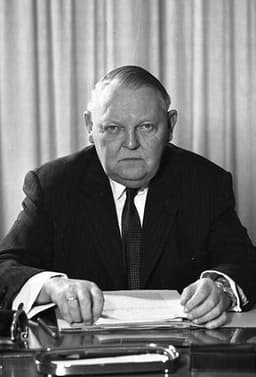
Ludwig Erhard
Politician · Modern
70.9Total
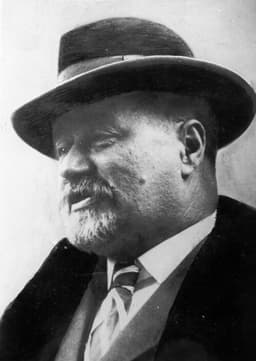
Stjepan Radic
Politician · Modern
55.9Total
Basic Information
Born
1897
1871
Died
1977
1928
Era
Modern
Modern
Nationality
Germany
Croatia
Occupation
Politician
Politician
Civilization
Western
Western
Score Comparison
Military (10%)
47.5
49.8
Political (20%)
75.0
68.0
Influence (20%)
88.0
57.2
Legacy (20%)
68.0
49.2
Leadership (15%)
78.0
65.7
Strategy (15%)
42.4
42.3
TOTAL
70.9
55.9
Ludwig Erhard — Complete Timeline
1948 AD
Currency Reform and Abolition of Price ControlsReform
Erhard oversaw the introduction of the Deutsche Mark and simultaneously abolished most price controls and rationing. This bold move, against Allied advice, triggered the 'economic miracle' by stimulating production and ending the black market.
Currency ReformEconomic MiracleFree Market
Impact: nationalconstructive
Appointment as Director of the Economic Policy DepartmentPolitical Action◆ Major
Ludwig Erhard was appointed Director of the Economic Policy Department in the Bizone, effectively becoming the chief architect of West Germany's economic policy. This position allowed him to implement his free-market ideas.
Economic PolicyWest GermanyPost-War
Impact: nationalconstructive
1963 AD
Election as Chancellor of West GermanyPolitical Action◆ Major
Erhard succeeded Konrad Adenauer as Chancellor of West Germany. His chancellorship continued the economic policies of the 'social market economy' but faced challenges from a slowing economy and coalition tensions.
ChancellorWest GermanyCDU
Impact: nationalconstructive
1966 AD
Resignation as ChancellorPolitical Action◆ Major
Erhard resigned as Chancellor after the Free Democratic Party (FDP) left his coalition government over budget disputes. His resignation marked the end of his political career and led to the formation of the Grand Coalition under Kiesinger.
ResignationCoalition CollapsePolitical End
Impact: national
Stjepan Radic — Complete Timeline
1904 AD
Founded Croatian Peasant PartyPolitical Action◆ Major
Radic co-founded the Croatian Peasant Party (HSS) with his brother Antun. The party advocated for the rights of Croatian peasants, land reform, and Croatian autonomy within the Austro-Hungarian Empire, becoming a major political force.
Croatian PoliticsPeasant MovementFounding
Impact: regionalconstructive
1919 AD
Imprisoned for Pro-Yugoslav ActivitiesPolitical Action◆ Major
Radic was imprisoned by the Yugoslav authorities for his opposition to the centralist constitution and his advocacy for Croatian autonomy. His imprisonment made him a martyr for the Croatian cause and increased his popularity.
YugoslaviaImprisonmentCroatian Rights
Impact: nationaltragic
1924 AD
Joined the Peasant InternationalPolitical Action◆ Major
Radic took the Croatian Peasant Party into the Peasant International (Green International) in Moscow, aligning with the Soviet Union. This move shocked Yugoslav authorities and led to his arrest and the party's temporary ban.
International PoliticsPeasant InternationalControversy
Impact: national
1928 AD
Assassinated in Yugoslav ParliamentPolitical Action
Radic was shot by Montenegrin Serb politician Puni
AssassinationPolitical CrisisYugoslavia
Impact: nationaltragic
Expert Analysis
Origins
Ludwig Erhard was born on February 4, 1897, in Fürth, Bavaria, into a middle-class family. His father, a textile merchant, provided a stable home. Erhard studied economics at the University of Frankfurt, earning his doctorate in 1925 under Franz Oppenheimer, whose ideas on liberal socialism influenced him. He worked as a market researcher and later at the Institute for Economic Observation, developing his economic philosophy.
Stjepan Radic was born on July 11, 1871, in Trebarjevo Desno, Croatia, then part of Austria-Hungary, into a peasant family. He studied law in Zagreb and Prague but did not complete a degree. Radicalized by the plight of Croatian peasants, he co-founded the Croatian Peasant Party (HSS) in 1904 with his brother Antun. His early life was marked by poverty and a deep connection to rural Croatia.
Rise to Power
Erhard's rise began after World War II. In 1948, he was appointed Director of the Economic Policy Department of the Bizone, the merged American and British occupation zones. His turning point came on June 20, 1948, when he implemented the currency reform, introducing the Deutsche Mark, and simultaneously abolished most price controls and rationing—against Allied advice. This bold move triggered the 'economic miracle' (Wirtschaftswunder). By 1949, he became Minister of Economic Affairs under Chancellor Adenauer, a position he held until 1963.
Radic rose through peasant advocacy. He founded the HSS in 1904, but it was after World War I and the creation of the Kingdom of Serbs, Croats, and Slovenes (later Yugoslavia) that he gained prominence. He led the Croatian Peasant Party into the Peasant International in Moscow in 1924, aligning with the Soviet Union, which shocked conservative circles. His opposition to the centralist 1921 constitution led to his imprisonment in 1925, which increased his popularity. In 1928, he became the leader of the Croatian opposition in parliament.
Leadership & Governance
Erhard's leadership style was technocratic and market-oriented. He championed the 'social market economy', a middle path between laissez-faire and state control. His policies included anti-cartel legislation, stable currency, and integration into Western Europe. As Chancellor (1963-1966), he struggled with coalition management and economic slowdown, but his earlier governance as economic minister was highly effective. He scored 78.0 in leadership, reflecting his decisive role in economic policy.
Radic was a charismatic orator and grassroots organizer. He focused on agrarian reform, Croatian autonomy, and peasant rights. His governance approach was confrontational within the Yugoslav parliament, advocating federalism. He was less effective in building broader coalitions, scoring 65.7 in leadership. His strategy score is 42.3, indicating limited strategic planning compared to Erhard's 42.4 (similar, but Erhard's execution was stronger).
Triumph & Tragedy
Erhard's greatest triumph was the 1948 currency reform and the subsequent economic boom. West Germany's GDP grew at 8% annually in the 1950s, unemployment fell from 10% to 1%, and exports surged. His tragedy came as Chancellor: he failed to manage a recession in 1965-66, leading to coalition collapse and his resignation in 1966. His political score of 75.0 reflects his mixed success in high office.
Radic's triumph was building the HSS into the largest political party in Croatia, representing peasant interests. His tragedy was his assassination: on June 20, 1928, he was shot in parliament by Puniša Račić and died weeks later. This event destabilized Yugoslavia and deepened Serb-Croat tensions. His legacy score of 49.2 reflects his unfulfilled potential.
Character & Destiny
Erhard was pragmatic, stubborn, and intellectually confident. He often clashed with Adenauer and the CDU. His character—a belief in free markets and disdain for ideology—shaped his successful economic policies but also his political isolation. He scored 68.0 in legacy, reflecting his enduring impact on German economic policy.
Radic was passionate, volatile, and deeply connected to peasant identity. His confrontational style and alignment with Moscow alienated moderates. His destiny was sealed by the violent atmosphere of Yugoslav politics. His influence score of 57.2 reflects his limited reach compared to Erhard's 88.0.
Legacy
Erhard's legacy is the social market economy, which became the foundation of West Germany's post-war prosperity and later unified Germany. His ideas influenced European economic integration and the concept of 'ordo-liberalism'. Today, he is remembered as the 'father of the German economic miracle'. His total score of 70.9 reflects his high influence and leadership.
Radic's legacy is as a martyr for Croatian autonomy and peasant rights. The HSS continued after his death, but his assassination marked a turning point in Yugoslav history. He is celebrated in Croatia but less known internationally. His total score of 55.9 reflects regional impact.
Conclusion
Ludwig Erhard had a greater impact by a clear margin (70.9 vs 55.9). His economic policies transformed Germany from rubble to an economic powerhouse, shaping European history. Radic's influence was significant but confined to Croatia and the interwar period. While Radic's assassination highlighted ethnic tensions, Erhard's reforms created lasting prosperity. The data supports Erhard as the more consequential figure.
Rankings
🥇
Ludwig ErhardLeader
Mil: 47.5Pol: 75.0Inf: 88.0
70.9
🥈
Stjepan Radic
Mil: 49.8Pol: 68.0Inf: 57.2
55.9
+15.0 behind
How This Comparison Works
Algorithm
Each figure is scored on 6 dimensions (0—100 scale) based on structured historical data: Military (10%), Political (20%), Influence (20%), Legacy (20%), Leadership (15%), Strategy (15%). The weighted total produces the final ranking.
Data Sources
Scores are computed from structured sub-indicators in the database. Scale factors adjust for era (Ancient ×0.85, Modern ×1.0) and civilization size (Eastern ×1.05, Other ×0.80) to account for differences in population and military scale.
Maximum 3 Figures
Comparisons are limited to 2—3 figures to ensure readability and statistical meaningfulness.
Error Margins
±5 points per dimension — Sub-scores are derived from historical records with inherent uncertainty. Two figures within 5 points on a dimension should be considered roughly equivalent in that area.
Total Score Accuracy
±3 points overall — The weighted combination of 6 dimensions produces a total score with approximately ±3 points of uncertainty. Differences of less than 3 points are not statistically significant— the figures are effectively tied.
Known Limitations
- Historical records are incomplete and uneven across civilizations
- Figures from oral-tradition societies may be underrepresented
- Occupation labels can misclassify multi-role figures
- Scores measure capability and impact, not moral character
- Quantitative scoring is a comparison tool, not absolute truth
Capability Radar
Military (10%) — Battles & Warfare
Battles
28
28
Win Rate
35
32
Expansion
37
36
Political (20%) — Governance & Reform
Reform
85
60
Diplomacy
75
55
Economy
95
30
Influence (20%) — Cultural & Global Reach
Cultural
60
50
Global
75
35
Legacy (20%) — Historical Impact
Historical
80
55
Longevity
70
40
Leadership (15%) — Power & Stability
Tenure
65
45
Stability
80
20
Strategy (15%) — Tactics & Innovation
Strategy
35
38
Tactics
41
44
Reform
46
41
Similar Comparisons
Comments & Discussion
No comments yet. Be the first to share your thoughts!