Loading...
James A. Garfield vs Stjepan Radic
Stjepan Radic leads by 15.1 pts · 2 figures compared
…

James A. Garfield
Politician · Modern
40.8Total
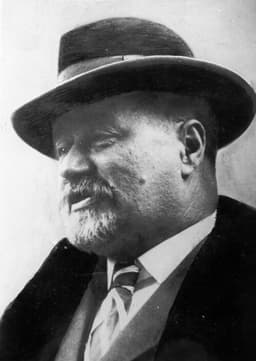
Stjepan Radic
Politician · Modern
55.9Total
Basic Information
Born
1831
1871
Died
1881
1928
Era
Modern
Modern
Nationality
United States
Croatia
Occupation
Politician
Politician
Civilization
Western
Western
Score Comparison
Military (10%)
39.9
49.8
Political (20%)
32.2
68.0
Influence (20%)
47.9
57.2
Legacy (20%)
38.3
49.2
Leadership (15%)
33.6
65.7
Strategy (15%)
53.8
42.3
TOTAL
40.8
55.9
James A. Garfield — Complete Timeline
1880 AD
Election as President of the United StatesPolitical Action◆ Major
Garfield won the 1880 presidential election as a Republican, defeating Democrat Winfield Scott Hancock. The election was closely contested, with Garfield winning the popular vote by a narrow margin but securing a comfortable Electoral College victory.
Presidential ElectionRepublican Party
Impact: national
Advocacy for Civil Rights and EducationPolitical Action
During his brief presidency, Garfield advocated for African American civil rights and federal support for education. He appointed several African Americans to federal positions and supported the Blair Education Bill, which aimed to provide federal aid to public schools.
Civil RightsEducation Policy
Impact: nationalprogressive
1881 AD
Assassination by Charles GuiteauPolitical Action
Garfield was shot by Charles Guiteau, a disgruntled office-seeker, at the Baltimore and Potomac Railroad Station in Washington, D.C. He died from complications of his wounds on September 19, 1881, after serving only 200 days in office.
AssassinationPresidential Death
Impact: nationaltragic
Stjepan Radic — Complete Timeline
1904 AD
Founded Croatian Peasant PartyPolitical Action◆ Major
Radic co-founded the Croatian Peasant Party (HSS) with his brother Antun. The party advocated for the rights of Croatian peasants, land reform, and Croatian autonomy within the Austro-Hungarian Empire, becoming a major political force.
Croatian PoliticsPeasant MovementFounding
Impact: regionalconstructive
1919 AD
Imprisoned for Pro-Yugoslav ActivitiesPolitical Action◆ Major
Radic was imprisoned by the Yugoslav authorities for his opposition to the centralist constitution and his advocacy for Croatian autonomy. His imprisonment made him a martyr for the Croatian cause and increased his popularity.
YugoslaviaImprisonmentCroatian Rights
Impact: nationaltragic
1924 AD
Joined the Peasant InternationalPolitical Action◆ Major
Radic took the Croatian Peasant Party into the Peasant International (Green International) in Moscow, aligning with the Soviet Union. This move shocked Yugoslav authorities and led to his arrest and the party's temporary ban.
International PoliticsPeasant InternationalControversy
Impact: national
1928 AD
Assassinated in Yugoslav ParliamentPolitical Action
Radic was shot by Montenegrin Serb politician Puni
AssassinationPolitical CrisisYugoslavia
Impact: nationaltragic
Expert Analysis
Origins
James Abram Garfield was born on November 19, 1831, in a log cabin in Orange Township, Ohio, the youngest of five children. His father died when he was 18 months old, and he was raised in poverty by his mother. Garfield worked as a canal boat driver and later attended the Western Reserve Eclectic Institute (now Hiram College), where he taught classics and became president at age 26. He graduated from Williams College in 1856, showing a strong aptitude for learning. Garfield's early life was marked by self-education and ambition, rising from humble beginnings to become a college president and lawyer.
Stjepan Radic was born on July 11, 1871, in Trebarjevo Desno, a village in the Kingdom of Croatia-Slavonia, Austria-Hungary. He was one of 11 children in a peasant family. Radic attended primary school in Podgora and later studied at the University of Zagreb, where he became involved in nationalist politics. He was expelled for his political activities and continued his education in Prague and Paris. Radic's formative experiences included witnessing the oppression of Croatian peasants under Hungarian rule, which shaped his lifelong advocacy for peasant rights and Croatian autonomy.
Rise to Power
Garfield's rise began with his service in the Union Army during the American Civil War. He recruited the 42nd Ohio Infantry and became its colonel, later rising to major general. He fought at the battles of Middle Creek, Shiloh, and Chickamauga. In 1862, while still in the army, he was elected to the U.S. House of Representatives as a Republican. He served nine terms, becoming a leading figure in the party. In 1880, the Republican National Convention deadlocked between Ulysses S. Grant and James G. Blaine, and Garfield emerged as a compromise candidate on the 36th ballot. He won the presidency by a narrow margin, with 214 electoral votes to Democrat Winfield Scott Hancock's 155.
Radic's rise was tied to his founding of the Croatian Peasant Party (HSS) in 1904 with his brother Antun. The party championed land reform, education, and Croatian autonomy within the Habsburg monarchy. After World War I, Radic opposed the creation of the Kingdom of Serbs, Croats, and Slovenes (later Yugoslavia) under a Serbian monarchy. He advocated for a federal system and was imprisoned multiple times. In 1925, he made a controversial move by joining the Peasant International (Green International) in Moscow, aligning with the Soviet Union. He later returned to Yugoslav politics and became minister of education in 1925, but his opposition to centralism continued.
Leadership & Governance
Garfield's leadership style was intellectual and reformist. As president, he sought to reduce the power of political patronage, advocating for a merit-based civil service. He appointed African Americans to federal positions, including Frederick Douglass as Recorder of Deeds for the District of Columbia. Garfield also supported federal funding for education, particularly for freedmen. His governance was cut short after only 199 days in office, but he set a precedent for reform that culminated in the Pendleton Civil Service Reform Act of 1883. Garfield's political skill score of 32.2 reflects his limited time to enact change, but his strategy score of 53.8 indicates a thoughtful approach to policy.
Radic's leadership was charismatic and focused on peasant empowerment. He used fiery rhetoric to mobilize Croatian peasants, leading mass protests and boycotts of the Yugoslav parliament. His governance approach was decentralized; he advocated for a federal Yugoslavia with strong regional autonomy. As minister of education, he promoted literacy and agricultural education. However, his willingness to align with the Soviet Union alienated many Western allies. Radic's political score of 68.0 and leadership score of 65.7 reflect his effectiveness in mobilizing a movement, but his strategy score of 42.3 suggests tactical missteps in alienating potential partners.
Triumph & Tragedy
Garfield's greatest triumph was winning the presidency against odds, representing a victory for reformist Republicans. He successfully navigated the Stalwart-Half-Breed split in his party. His advocacy for civil rights was notable; he appointed African Americans and denounced the violence against them in the South. His greatest tragedy was his assassination on July 2, 1881, by Charles Guiteau, a delusional office-seeker. Garfield's death was prolonged and painful, and his ineffective medical care highlighted the need for antiseptic practices. His assassination also galvanized support for civil service reform.
Radic's triumphs include founding the Croatian Peasant Party, which became the dominant political force among Croats. He successfully forced the Yugoslav government to consider Croatian autonomy, leading to the Vidovdan Constitution compromises. His greatest tragedy was his assassination on June 20, 1928, when Puniša Račić shot him and two other Croatian deputies in parliament. Radic died on August 8 from his wounds. The assassination deepened ethnic tensions and contributed to the collapse of parliamentary democracy in Yugoslavia, leading to King Alexander's dictatorship in 1929. Radic's legacy score of 49.2 reflects the mixed outcomes of his movement.
Character & Destiny
Garfield was known for his intellectual curiosity, integrity, and moderation. He was a skilled orator and debater, but also a conciliator who sought unity. His character shaped his destiny: his principled stand against patronage made him a target for Guiteau. Historians note that if Garfield had lived, he might have successfully reformed the civil service and advanced civil rights. His death made him a martyr for reform, but also limited his direct impact.
Radic was passionate, stubborn, and confrontational. He was a master of peasant politics but also a polarizing figure. His decision to join the Peasant International shocked the establishment, showing his willingness to take risks. His character drove him to challenge the Serbian-dominated state, but also led to his violent end. Radic's assassination made him a symbol of Croatian resistance, but his uncompromising stance arguably prevented earlier compromises that might have achieved more autonomy.
Legacy
Garfield's legacy is primarily as a martyr for civil service reform. The Pendleton Act, passed in 1883, transformed the U.S. bureaucracy by establishing merit-based hiring. His brief presidency also highlighted the need for presidential security and medical reform. Garfield's influence score of 47.9 reflects his symbolic importance, but his actual policy impact was limited. He is remembered as a promising leader cut down too soon.
Radic's legacy is foundational for Croatian national identity. The Croatian Peasant Party continued to be a major force until the communist takeover. His ideas of peasant rights and federalism influenced later Croatian movements. Radic's influence score of 57.2 is higher than Garfield's, as his movement had a longer-term impact on Croatian politics. However, his assassination also contributed to the instability that led to the royal dictatorship and eventually to World War II.
Conclusion
Stjepan Radic had a greater impact than James A. Garfield when measured by total score (55.9 vs. 40.8) and by lasting influence on his nation's trajectory. Radic's political and leadership scores (68.0 and 65.7) dwarf Garfield's (32.2 and 33.6), reflecting his role as a founder of a major political movement that endured decades. While Garfield's assassination catalyzed important reforms, his presidency was too brief to generate substantial change. Radic's advocacy for Croatian autonomy shaped the political landscape of the Balkans and continues to resonate. Therefore, Radic emerges as the more historically significant figure.
Rankings
🥇
Stjepan RadicLeader
Mil: 49.8Pol: 68.0Inf: 57.2
55.9
🥈
James A. Garfield
Mil: 39.9Pol: 32.2Inf: 47.9
40.8
+15.1 behind
How This Comparison Works
Algorithm
Each figure is scored on 6 dimensions (0—100 scale) based on structured historical data: Military (10%), Political (20%), Influence (20%), Legacy (20%), Leadership (15%), Strategy (15%). The weighted total produces the final ranking.
Data Sources
Scores are computed from structured sub-indicators in the database. Scale factors adjust for era (Ancient ×0.85, Modern ×1.0) and civilization size (Eastern ×1.05, Other ×0.80) to account for differences in population and military scale.
Maximum 3 Figures
Comparisons are limited to 2—3 figures to ensure readability and statistical meaningfulness.
Error Margins
±5 points per dimension — Sub-scores are derived from historical records with inherent uncertainty. Two figures within 5 points on a dimension should be considered roughly equivalent in that area.
Total Score Accuracy
±3 points overall — The weighted combination of 6 dimensions produces a total score with approximately ±3 points of uncertainty. Differences of less than 3 points are not statistically significant— the figures are effectively tied.
Known Limitations
- Historical records are incomplete and uneven across civilizations
- Figures from oral-tradition societies may be underrepresented
- Occupation labels can misclassify multi-role figures
- Scores measure capability and impact, not moral character
- Quantitative scoring is a comparison tool, not absolute truth
Capability Radar
Military (10%) — Battles & Warfare
Battles
10
28
Win Rate
10
32
Expansion
5
36
Political (20%) — Governance & Reform
Reform
20
60
Diplomacy
30
55
Economy
15
30
Influence (20%) — Cultural & Global Reach
Cultural
15
50
Global
10
35
Legacy (20%) — Historical Impact
Historical
20
55
Longevity
10
40
Leadership (15%) — Power & Stability
Tenure
5
45
Stability
5
20
Strategy (15%) — Tactics & Innovation
Strategy
15
38
Tactics
15
44
Reform
5
41
Similar Comparisons
Comments & Discussion
No comments yet. Be the first to share your thoughts!