Loading...
This comparison has not been analyzed yet.
One-time AI generation (~1 minute). Scores and timeline are already available below.
Johann Sigurjonsson vs Stjepan Radic
Stjepan Radic leads by 12.4 pts · 2 figures compared
…

Johann Sigurjonsson
Politician · Modern
43.5Total
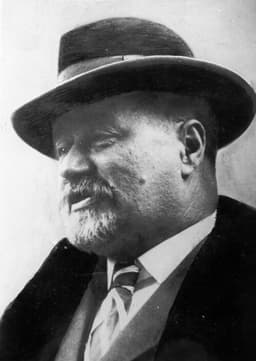
Stjepan Radic
Politician · Modern
55.9Total
Basic Information
Born
1880
1871
Died
1919
1928
Era
Modern
Modern
Nationality
Iceland
Croatia
Occupation
Politician
Politician
Civilization
Western
Western
Score Comparison
Military (10%)
50.0
49.8
Political (20%)
27.9
68.0
Influence (20%)
53.3
57.2
Legacy (20%)
44.2
49.2
Leadership (15%)
38.1
65.7
Strategy (15%)
42.7
42.3
TOTAL
43.5
55.9
Johann Sigurjonsson — Complete Timeline
1915 AD
Wrote the play 'The Wish' (Oskast)Cultural
Sigurjónsson wrote 'The Wish', a play that gained international recognition. The work explores themes of desire and fate, and was performed in Iceland and abroad, establishing his reputation as a playwright.
PlaywritingIcelandic LiteratureDrama
Impact: national
1918 AD
Wrote the play 'The Hraun Farm' (Hraun)Cultural
Sigurjónsson wrote 'The Hraun Farm', a play set in rural Iceland that depicts the harsh life of farmers. The work is considered a classic of Icelandic realism, highlighting social and economic struggles.
PlaywritingRealismRural Life
Impact: national
Advocated for Icelandic independence from DenmarkPolitical Action◆ Major
Sigurjónsson was active in the Icelandic independence movement, using his writings to promote national identity and self-rule. He supported the 1918 Act of Union, which granted Iceland sovereignty while sharing a monarch with Denmark.
IndependenceNationalismDenmark
Impact: nationalprogressive
1919 AD
Died at a young ageOther
Sigurjónsson died at the age of 39 from tuberculosis, cutting short his literary career. His death was a loss to Icelandic literature, but his works continued to be performed and studied.
DeathTuberculosisLiterary Loss
Impact: nationaltragic
Stjepan Radic — Complete Timeline
1904 AD
Founded Croatian Peasant PartyPolitical Action◆ Major
Radic co-founded the Croatian Peasant Party (HSS) with his brother Antun. The party advocated for the rights of Croatian peasants, land reform, and Croatian autonomy within the Austro-Hungarian Empire, becoming a major political force.
Croatian PoliticsPeasant MovementFounding
Impact: regionalconstructive
1919 AD
Imprisoned for Pro-Yugoslav ActivitiesPolitical Action◆ Major
Radic was imprisoned by the Yugoslav authorities for his opposition to the centralist constitution and his advocacy for Croatian autonomy. His imprisonment made him a martyr for the Croatian cause and increased his popularity.
YugoslaviaImprisonmentCroatian Rights
Impact: nationaltragic
1924 AD
Joined the Peasant InternationalPolitical Action◆ Major
Radic took the Croatian Peasant Party into the Peasant International (Green International) in Moscow, aligning with the Soviet Union. This move shocked Yugoslav authorities and led to his arrest and the party's temporary ban.
International PoliticsPeasant InternationalControversy
Impact: national
1928 AD
Assassinated in Yugoslav ParliamentPolitical Action
Radic was shot by Montenegrin Serb politician Puni
AssassinationPolitical CrisisYugoslavia
Impact: nationaltragic
This comparison has not been analyzed yet.
One-time AI generation (~1 minute). Scores and timeline are already available below.
Rankings
🥇
Stjepan RadicLeader
Mil: 49.8Pol: 68.0Inf: 57.2
55.9
🥈
Johann Sigurjonsson
Mil: 50.0Pol: 27.9Inf: 53.3
43.5
+12.4 behind
How This Comparison Works
Algorithm
Each figure is scored on 6 dimensions (0—100 scale) based on structured historical data: Military (10%), Political (20%), Influence (20%), Legacy (20%), Leadership (15%), Strategy (15%). The weighted total produces the final ranking.
Data Sources
Scores are computed from structured sub-indicators in the database. Scale factors adjust for era (Ancient ×0.85, Modern ×1.0) and civilization size (Eastern ×1.05, Other ×0.80) to account for differences in population and military scale.
Maximum 3 Figures
Comparisons are limited to 2—3 figures to ensure readability and statistical meaningfulness.
Error Margins
±5 points per dimension — Sub-scores are derived from historical records with inherent uncertainty. Two figures within 5 points on a dimension should be considered roughly equivalent in that area.
Total Score Accuracy
±3 points overall — The weighted combination of 6 dimensions produces a total score with approximately ±3 points of uncertainty. Differences of less than 3 points are not statistically significant— the figures are effectively tied.
Known Limitations
- Historical records are incomplete and uneven across civilizations
- Figures from oral-tradition societies may be underrepresented
- Occupation labels can misclassify multi-role figures
- Scores measure capability and impact, not moral character
- Quantitative scoring is a comparison tool, not absolute truth
Capability Radar
Military (10%) — Battles & Warfare
Battles
26
28
Win Rate
30
32
Expansion
36
36
Political (20%) — Governance & Reform
Reform
20
60
Diplomacy
20
55
Economy
10
30
Influence (20%) — Cultural & Global Reach
Cultural
40
50
Global
20
35
Legacy (20%) — Historical Impact
Historical
35
55
Longevity
30
40
Leadership (15%) — Power & Stability
Tenure
10
45
Stability
15
20
Strategy (15%) — Tactics & Innovation
Strategy
35
38
Tactics
43
44
Reform
45
41
Similar Comparisons
Comments & Discussion
No comments yet. Be the first to share your thoughts!