Loading...
Louis VI the Fat vs Nyatsimba Mutota
Nyatsimba Mutota leads by 7.7 pts · 2 figures compared
…
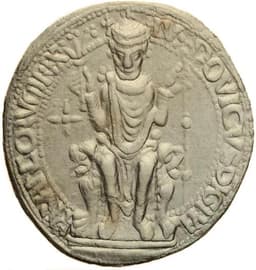
Louis VI the Fat
Emperor · Medieval
48.8Total

Nyatsimba Mutota
Emperor · Medieval
56.5Total
Basic Information
Born
1081
1400
Died
1137
1450
Era
Medieval
Medieval
Nationality
France
Mozambique
Occupation
Emperor
Emperor
Civilization
Western
Other
Score Comparison
Military (10%)
45.0
72.5
Political (20%)
61.3
68.0
Influence (20%)
53.3
59.0
Legacy (20%)
47.5
50.0
Leadership (15%)
40.0
40.0
Strategy (15%)
38.6
57.5
TOTAL
48.8
56.5
Louis VI the Fat — Complete Timeline
1108 AD
Consolidation of Royal Power in the Ile-de-FrancePolitical Action◆ Major
Louis VI succeeded his father Philip I as King of the Franks. He focused on consolidating royal authority in the Ile-de-France, subduing rebellious nobles and securing the region as the core of the Capetian domain.
KingshipConsolidationIle-de-France
Impact: regionalconstructive
1119 AD
Battle of BrémuleWar◆ Major
Louis VI was defeated by Henry I of England at the Battle of Br
BattleNormandyDefeat
Impact: regionaltragic
1122 AD
Alliance with the Church and SugerPolitical Action
Louis VI formed a close alliance with the Church, particularly with Abbot Suger of Saint-Denis. Suger became a key advisor and chronicler, helping to legitimize Capetian rule and promote royal authority.
AllianceChurchSuger
Impact: nationalconstructive
1128 AD
War with the County of BloisWar
Louis VI fought a war against the County of Blois, which had allied with England. The conflict ended with a truce, but it demonstrated Louis's determination to expand royal influence beyond the Ile-de-France.
WarBloisExpansion
Impact: regional
Nyatsimba Mutota — Complete Timeline
1430 AD
Founding of the Mutapa EmpirePolitical Action
Nyatsimba Mutota led a migration north from Great Zimbabwe and founded the Mutapa Empire in the Zambezi valley. He established a new capital at Zvongombe and began territorial expansion.
Impact: regionalconstructive
1440 AD
Conquest of the TavaraWar◆ Major
Nyatsimba Mutota conquered the Tavara people in the Zambezi valley, incorporating their territory into the Mutapa Empire. This victory secured control over fertile agricultural lands and trade routes.
Impact: regional
1445 AD
Establishment of the Mwenemutapa TitlePolitical Action◆ Major
Nyatsimba Mutota adopted the title Mwenemutapa, meaning 'lord of the conquered lands,' formalizing the imperial structure. This title became hereditary and defined the ruler's authority over conquered peoples.
Impact: regionalconstructive
Expert Analysis
Origins
Louis VI, known as Louis the Fat, was born around 1081 in Paris, France, the son of King Philip I and Bertha of Holland. He was raised in the Capetian court, where royal authority was weak, with the king controlling only the Ile-de-France. His education was overseen by the Church, and he was groomed for kingship from an early age. He was crowned in 1108 upon his father's death.
Nyatsimba Mutota was born around 1400 in the Great Zimbabwe region, likely of noble lineage. He was a descendant of the rulers of Great Zimbabwe, a powerful state that had declined by the early 15th century. His early life is obscure, but he emerged as a leader of a migration northward, seeking new lands and resources. He founded the Mutapa Empire around 1430.
Rise to Power
Louis VI's rise was marked by his struggle to assert control over the Ile-de-France. He faced rebellious barons, notably the lords of Montlhéry and the Le Puiset family. In 1108, he defeated a coalition of nobles at the Battle of Meaux. His alliance with the Church, especially with Abbot Suger of Saint-Denis, provided ideological support. He also fought against Henry I of England over Normandy, but was defeated at the Battle of Brémule in 1119, forcing him to abandon his claims.
Nyatsimba Mutota's rise came through migration and conquest. He led a group of Shona people north from Great Zimbabwe into the Zambezi valley, where he conquered the Tavara people around 1430. He established his capital at Zvongombe and adopted the title Mwenemutapa (Lord of the Conquered Lands). His military campaigns expanded the empire to include parts of modern-day Zimbabwe, Mozambique, and Zambia.
Leadership & Governance
Louis VI ruled through feudal relationships and church support. He focused on consolidating royal domain, using force and diplomacy to subdue local lords. He introduced the use of provosts (prévôts) to administer royal lands, a precursor to centralized bureaucracy. His governance was limited by the power of nobles and the Church. He scored 40.0 in Leadership and 38.6 in Strategy, reflecting his cautious, incremental approach.
Nyatsimba Mutota established a more centralized imperial system. He created a hierarchical administration with appointed governors (makurukota) over conquered territories. He controlled trade routes for gold and ivory, which funded his empire. His military score of 72.5 reflects his successful conquests. He scored 57.5 in Strategy, showing effective planning in expansion.
Triumph & Tragedy
Louis VI's greatest success was strengthening the Capetian monarchy. He secured the Ile-de-France, built alliances with the Church, and left a stable kingdom for his son, Louis VII. His failure was his inability to expand French influence beyond the region. He lost to Henry I of England and failed to reclaim Normandy. His death in 1137 left unfinished ambitions.
Nyatsimba Mutota's triumph was founding the Mutapa Empire, which lasted over 200 years. He conquered the Tavara and established a lucrative trade network. His tragedy may lie in the limited historical record; his later successors faced internal strife and Portuguese encroachment. His legacy is mixed, as the empire eventually declined.
Character & Destiny
Louis VI was pragmatic and determined, but not a brilliant military commander. He relied on diplomacy and church support. His obesity (hence 'the Fat') may have affected his health. He was a consolidator, not a conqueror. His character shaped a cautious reign that strengthened but did not transform France.
Nyatsimba Mutota was ambitious and strategic, leading a migration that founded an empire. He was a warrior and administrator, combining military conquest with state-building. His character drove him to seek new lands, but his empire's longevity depended on successors upholding his systems.
Legacy
Louis VI's legacy is as a builder of the French monarchy. He laid groundwork for the centralized state, with Suger's chronicles providing ideological support. His scores: Political 61.3, Legacy 47.5. He is remembered as a key Capetian king.
Nyatsimba Mutota's legacy is the Mutapa Empire, which influenced the Zambezi region. His title Mwenemutapa persisted. He scored 59.0 in Influence, 50.0 in Legacy. He is a founding figure in Zimbabwean history.
Conclusion
Nyatsimba Mutota had greater impact due to founding a lasting empire and achieving higher scores overall (56.5 vs 48.8). His military and political scores (72.5, 68.0) surpass Louis's (45.0, 61.3). While Louis strengthened France, his impact was regional and incremental. Mutota created a new state that shaped southern Africa. Thus, Mutota's impact was more transformative.
Rankings
🥇
Nyatsimba MutotaLeader
Mil: 72.5Pol: 68.0Inf: 59.0
56.5
🥈
Louis VI the Fat
Mil: 45.0Pol: 61.3Inf: 53.3
48.8
+7.7 behind
How This Comparison Works
Algorithm
Each figure is scored on 6 dimensions (0—100 scale) based on structured historical data: Military (10%), Political (20%), Influence (20%), Legacy (20%), Leadership (15%), Strategy (15%). The weighted total produces the final ranking.
Data Sources
Scores are computed from structured sub-indicators in the database. Scale factors adjust for era (Ancient ×0.85, Modern ×1.0) and civilization size (Eastern ×1.05, Other ×0.80) to account for differences in population and military scale.
Maximum 3 Figures
Comparisons are limited to 2—3 figures to ensure readability and statistical meaningfulness.
Error Margins
±5 points per dimension — Sub-scores are derived from historical records with inherent uncertainty. Two figures within 5 points on a dimension should be considered roughly equivalent in that area.
Total Score Accuracy
±3 points overall — The weighted combination of 6 dimensions produces a total score with approximately ±3 points of uncertainty. Differences of less than 3 points are not statistically significant— the figures are effectively tied.
Known Limitations
- Historical records are incomplete and uneven across civilizations
- Figures from oral-tradition societies may be underrepresented
- Occupation labels can misclassify multi-role figures
- Scores measure capability and impact, not moral character
- Quantitative scoring is a comparison tool, not absolute truth
Capability Radar
Military (10%) — Battles & Warfare
Battles
25
55
Win Rate
30
60
Expansion
30
65
Political (20%) — Governance & Reform
Reform
55
50
Diplomacy
50
55
Economy
40
50
Influence (20%) — Cultural & Global Reach
Cultural
30
45
Global
20
40
Legacy (20%) — Historical Impact
Historical
45
55
Longevity
40
50
Leadership (15%) — Power & Stability
Tenure
60
60
Stability
55
55
Strategy (15%) — Tactics & Innovation
Strategy
25
55
Tactics
20
50
Reform
15
40
Similar Comparisons
Comments & Discussion
No comments yet. Be the first to share your thoughts!