Loading...
Lothair III vs Yuwen Yong
Yuwen Yong leads by 20.6 pts · 2 figures compared
…
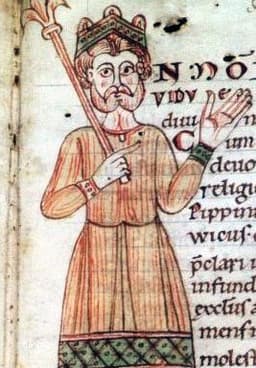
Lothair III
Emperor · Medieval
46.6Total
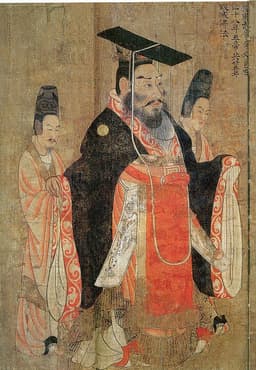
Yuwen Yong
Emperor · Medieval
67.2Total
Basic Information
Born
1075
543
Died
1137
578
Era
Medieval
Medieval
Nationality
Holy Roman Empire
China
Occupation
Emperor
Emperor
Civilization
Western
Eastern
Score Comparison
Military (10%)
25.0
78.0
Political (20%)
37.9
78.0
Influence (20%)
48.6
58.0
Legacy (20%)
41.7
54.0
Leadership (15%)
65.7
85.0
Strategy (15%)
60.0
69.1
TOTAL
46.6
67.2
Lothair III — Complete Timeline
1125 AD
Election as King of GermanyPolitical Action◆ Major
Lothair III was elected King of Germany in 1125 after the death of Henry V, ending the Salian dynasty. His election was contested by the Hohenstaufen family, leading to a prolonged civil war.
SuccessionCivil War
Impact: regional
1129 AD
Battle of the UnstrutWar
Lothair III defeated the Hohenstaufen forces at the Battle of the Unstrut in 1129, a key victory in the civil war against Conrad III. This battle weakened Hohenstaufen resistance and consolidated Lothair's rule.
Civil WarHohenstaufen Conflict
Impact: regional
1133 AD
Coronation as Holy Roman EmperorPolitical Action◆ Major
Pope Innocent II crowned Lothair III Holy Roman Emperor in Rome on June 4, 1133. In return, Lothair supported Innocent II against the rival Pope Anacletus II, strengthening the papal alliance.
CoronationPapal Alliance
Impact: regionalconstructive
1136 AD
Second Italian CampaignWar
Lothair III led a second campaign to Italy in 1136-1137 to support Pope Innocent II against Roger II of Sicily. He captured parts of southern Italy but failed to dislodge Roger, and the campaign ended inconclusively.
Italian CampaignSicily Conflict
Impact: regional
Yuwen Yong — Complete Timeline
574 AD
Suppression of Buddhism in Northern ZhouReform◆ Major
Emperor Wu of Northern Zhou (Yuwen Yong) ordered the suppression of Buddhism, confiscating monastic lands, forcing monks and nuns to return to lay life, and destroying temples. He aimed to increase state revenue and military manpower, strengthening the state.
Northern ZhouBuddhist PersecutionReform
Impact: nationaldestructive
577 AD
Conquest of Northern QiWar
Emperor Wu led a successful campaign against the rival Northern Qi dynasty, conquering its territory and unifying northern China under Northern Zhou. This victory ended the division of the north and set the stage for the Sui dynasty's unification of all China.
Northern ZhouUnificationNorthern Qi
Impact: regionalconstructive
578 AD
Death during campaign against the TurksWar◆ Major
Emperor Wu died of illness while leading a campaign against the G
Northern ZhouMilitary CampaignDeath
Impact: regionaltragic
Expert Analysis
Origins
Lothair III was born around 1075 into the Saxon Supplinburg family. His father, Gebhard of Supplinburg, died in battle in 1075, leaving Lothair to navigate a fractured political landscape. He rose through local governance, becoming Duke of Saxony in 1106 after supporting Henry V against his father. Yuwen Yong was born in 543 into the Yuwen clan, part of the Xianbei elite of Western Wei. His father, Yuwen Tai, was a powerful general and regent. Yuwen Yong was raised in a militaristic environment, with his elder brother Yuwen Yu briefly serving as emperor before his death in 560. Yuwen Yong ascended the throne in 560 after his cousin Yuwen Hu, who had dominated the court, was executed.
Rise to Power
Lothair III's rise began with his election as King of Germany in 1125 after Emperor Henry V died without an heir. The election was contested by the Hohenstaufen family, leading to a civil war. Lothair secured support from the papacy and key princes. His coronation as Holy Roman Emperor by Pope Innocent II in 1133 formalized his status, but the Hohenstaufen conflict persisted. Yuwen Yong rose to power after eliminating his cousin Yuwen Hu, who had been regent and de facto ruler since 557. In 572, Yuwen Yong staged a coup, killing Yuwen Hu and assuming full control. He then consolidated power by centralizing authority and reforming the military.
Leadership & Governance
Lothair III's leadership was marked by reliance on ecclesiastical support and feudal alliances. He granted lands to the Church to secure loyalty, as seen in his support for Pope Innocent II against Anacletus II. He also attempted to assert imperial authority in Italy, but his campaigns were limited in scope. Yuwen Yong exhibited strong centralized leadership. He implemented political reforms, including a merit-based bureaucracy and a centralized command structure. His suppression of Buddhism in 574-577 was a major policy: he confiscated monastic lands, forced monks and nuns to return to lay life, and redirected resources to the state. This action scored him a political score of 78.0, reflecting his decisive governance.
Triumph & Tragedy
Lothair III's greatest success was his election and coronation, which preserved the imperial title for the Saxon line. He also secured a victory against the Hohenstaufen at the Battle of the Unstrut in 1129. However, his failures included an inability to establish a lasting dynasty—his only son died young—and his Italian campaigns achieved little. He died in 1137 while returning from Italy. Yuwen Yong's triumph was the conquest of Northern Qi in 577, unifying northern China under Northern Zhou. This military achievement earned him a score of 78.0. His suppression of Buddhism, while controversial, strengthened state finances. His tragedy was his early death at age 35 in 578 during a campaign against the Göktürks, which halted Northern Zhou's expansion and led to the rise of his son, who proved incompetent.
Character & Destiny
Lothair III was a pragmatic ruler, often indecisive and reliant on compromise. His character led to a reign defined by conflict with the Hohenstaufen, which drained resources. He scored 65.7 in leadership but only 37.9 in political maneuvering, indicating his limitations. Yuwen Yong was decisive and ruthless. He eliminated his regent, suppressed a major religion, and commanded campaigns personally. His leadership score of 85.0 reflects his ability to enforce his will. His destiny was cut short by illness, but his policies shaped Northern Zhou's trajectory.
Legacy
Lothair III's legacy is mixed. He is remembered as a transitional figure, with his reign failing to establish a stable imperial system. The Hohenstaufen conflict continued after his death. He scored 41.7 in legacy. Yuwen Yong's legacy is more profound. He unified northern China, laying groundwork for the Sui dynasty that would reunify all of China in 589. His suppression of Buddhism reduced monastic power, though Buddhism later revived. His influence score of 58.0 reflects his impact on Chinese history.
Conclusion
Yuwen Yong had a greater impact than Lothair III. His military and political scores (78.0 and 78.0) far exceed Lothair's (25.0 and 37.9). Yuwen Yong unified a significant territory and enacted policies that shaped Chinese governance, while Lothair's reign was mired in civil war and failed to produce lasting change. Yuwen Yong's total score of 67.2 compared to Lothair's 46.6 underscores his superior effectiveness. Yuwen Yong stands as a decisive unifier, whereas Lothair III remains a footnote in Holy Roman Empire history.
Rankings
🥇
Yuwen YongLeader
Mil: 78.0Pol: 78.0Inf: 58.0
67.2
🥈
Lothair III
Mil: 25.0Pol: 37.9Inf: 48.6
46.6
+20.6 behind
How This Comparison Works
Algorithm
Each figure is scored on 6 dimensions (0—100 scale) based on structured historical data: Military (10%), Political (20%), Influence (20%), Legacy (20%), Leadership (15%), Strategy (15%). The weighted total produces the final ranking.
Data Sources
Scores are computed from structured sub-indicators in the database. Scale factors adjust for era (Ancient ×0.85, Modern ×1.0) and civilization size (Eastern ×1.05, Other ×0.80) to account for differences in population and military scale.
Maximum 3 Figures
Comparisons are limited to 2—3 figures to ensure readability and statistical meaningfulness.
Error Margins
±5 points per dimension — Sub-scores are derived from historical records with inherent uncertainty. Two figures within 5 points on a dimension should be considered roughly equivalent in that area.
Total Score Accuracy
±3 points overall — The weighted combination of 6 dimensions produces a total score with approximately ±3 points of uncertainty. Differences of less than 3 points are not statistically significant— the figures are effectively tied.
Known Limitations
- Historical records are incomplete and uneven across civilizations
- Figures from oral-tradition societies may be underrepresented
- Occupation labels can misclassify multi-role figures
- Scores measure capability and impact, not moral character
- Quantitative scoring is a comparison tool, not absolute truth
Capability Radar
Military (10%) — Battles & Warfare
Battles
45
75
Win Rate
40
80
Expansion
30
80
Political (20%) — Governance & Reform
Reform
30
85
Diplomacy
45
70
Economy
25
75
Influence (20%) — Cultural & Global Reach
Cultural
20
40
Global
10
40
Legacy (20%) — Historical Impact
Historical
35
65
Longevity
15
50
Leadership (15%) — Power & Stability
Tenure
50
60
Stability
35
70
Strategy (15%) — Tactics & Innovation
Strategy
40
75
Tactics
35
70
Reform
20
85
Similar Comparisons
Comments & Discussion
No comments yet. Be the first to share your thoughts!