Loading...
Alexios I Komnenos vs Yuwen Yong
Alexios I Komnenos leads by 11.2 pts · 2 figures compared
…
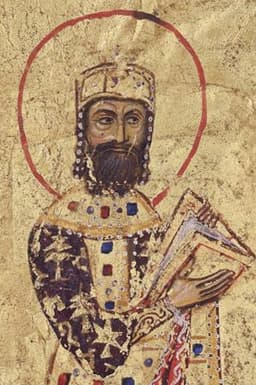
Alexios I Komnenos
Emperor · Medieval
78.4Total
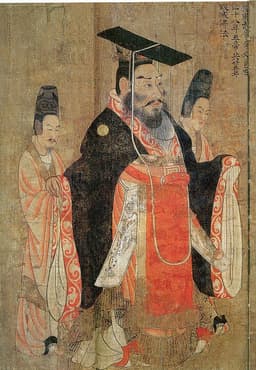
Yuwen Yong
Emperor · Medieval
67.2Total
Basic Information
Born
1048
543
Died
1118
578
Era
Medieval
Medieval
Nationality
Byzantine Empire
China
Occupation
Emperor
Emperor
Civilization
Western
Eastern
Score Comparison
Military (10%)
61.7
78.0
Political (20%)
78.0
78.0
Influence (20%)
88.0
58.0
Legacy (20%)
80.0
54.0
Leadership (15%)
78.0
85.0
Strategy (15%)
68.0
69.1
TOTAL
78.4
67.2
Alexios I Komnenos — Complete Timeline
1081 AD
Battle of DyrrhachiumWar◆ Major
Alexios I Komnenos was defeated by the Norman army under Robert Guiscard at Dyrrhachium. The Byzantine forces were routed, and Alexios barely escaped. This loss allowed the Normans to occupy much of the western Balkans, though Alexios later recovered some territory.
Norman InvasionDefeatBalkans
Impact: regionaltragic
1090 AD
Reforms of the Byzantine Military and EconomyReform◆ Major
Alexios I implemented a series of reforms to restore Byzantine power. He reorganized the army by relying more on foreign mercenaries, reformed the currency (the hyperpyron), and granted tax exemptions to the Church. These measures stabilized the empire after decades of decline.
Military ReformEconomic ReformKomnenian Restoration
Impact: nationalconstructive
1095 AD
Appeal to the West: Council of PiacenzaPolitical Action
Alexios I sent envoys to Pope Urban II at the Council of Piacenza, requesting military aid against the Seljuk Turks. This appeal contributed to Urban's call for the First Crusade at the Council of Clermont later that year, initiating the Crusader movement.
First CrusadePope Urban IISeljuk Turks
Impact: global
1097 AD
First Crusade: Siege of NicaeaWar◆ Major
Alexios I cooperated with the Crusader army to besiege and capture Nicaea from the Seljuk Turks. The city was surrendered to Byzantine control, and Alexios used the Crusaders to recover key territories in Anatolia, though tensions later arose over land claims.
First CrusadeNicaeaByzantine-Crusader Relations
Impact: regionalconstructive
Yuwen Yong — Complete Timeline
574 AD
Suppression of Buddhism in Northern ZhouReform◆ Major
Emperor Wu of Northern Zhou (Yuwen Yong) ordered the suppression of Buddhism, confiscating monastic lands, forcing monks and nuns to return to lay life, and destroying temples. He aimed to increase state revenue and military manpower, strengthening the state.
Northern ZhouBuddhist PersecutionReform
Impact: nationaldestructive
577 AD
Conquest of Northern QiWar
Emperor Wu led a successful campaign against the rival Northern Qi dynasty, conquering its territory and unifying northern China under Northern Zhou. This victory ended the division of the north and set the stage for the Sui dynasty's unification of all China.
Northern ZhouUnificationNorthern Qi
Impact: regionalconstructive
578 AD
Death during campaign against the TurksWar◆ Major
Emperor Wu died of illness while leading a campaign against the G
Northern ZhouMilitary CampaignDeath
Impact: regionaltragic
Expert Analysis
Alexios I Komnenos vs Yuwen Yong
# The Emperor’s Gambit
In the autumn of 1095, a desperate Byzantine emperor knelt before the Pope of Rome. Alexios I Komnenos had not come to submit—he came to beg. For decades, the Seljuk Turks had gnawed at the edges of his empire, and now, at the Council of Piacenza, he asked for mercenaries from the West. What he got instead was a crusade: a tidal wave of Frankish knights, zealots, and adventurers that would reshape the Mediterranean for centuries. Half a world away, another emperor faced his own crisis. Yuwen Yong of Northern Zhou, a man of iron discipline and cold ambition, looked upon a land fractured by war and a faith that had grown too rich. He did not ask for help. He demanded obedience. And when the Buddhist monasteries refused, he burned them to the ground.
Two emperors, two civilizations, two paths to survival. One opened a door he could never close; the other closed a door forever. Why did they choose so differently?
Origins
Alexios Komnenos was born into a world of fading glory. The Byzantine Empire in 1048 was a hollow shell of Rome’s eastern heir—beset by Norman mercenaries in Italy, Turkic nomads in Anatolia, and internal coups that had made the throne a revolving door. His family, the Komnenoi, were military aristocrats, but Alexios learned early that loyalty was a currency spent sparingly. His rise came through cunning, not birthright; he seized power in a coup in 1081, at age thirty-three, with the army behind him but the treasury empty.
Yuwen Yong, born in 543, emerged from a different chaos. Northern China was a chessboard of warring dynasties, where the Xianbei warrior elite ruled over a Han Chinese populace. His own family, the Yuwen clan, had overthrown the Western Wei to found Northern Zhou. But Yuwen Yong was not the eldest son, nor the favorite. He watched his elder brothers die at the hands of a tyrannical regent, and he learned patience. When he finally took power at age twenty-nine, he did so not by storm but by strategy—waiting for his enemies to overreach, then striking.
Both men inherited broken empires. But Alexios looked west for salvation; Yuwen Yong looked inward.
Rise to Power
Alexios’s path was a knife’s edge. In 1081, just months after his coronation, he faced Robert Guiscard, the Norman warlord who had already swallowed southern Italy. At the Battle of Dyrrhachium, Alexios’s army was routed. The Norman cavalry smashed through his lines, and he barely escaped with his life. It was a humiliation that could have ended him. Instead, it taught him the limits of Byzantine military power. He could not defeat the Normans in open battle, so he outwaited them—using diplomacy, bribery, and the death of Guiscard to buy time.
Yuwen Yong’s rise was quieter but deadlier. He did not fight a single great battle to claim his throne; he simply outlived his rivals. By 560, he had consolidated control over Northern Zhou, but his true test came in 574. That year, he ordered the suppression of Buddhism. It was not a religious whim. Buddhist monasteries had amassed vast tax-exempt lands and thousands of able-bodied monks, draining the state of revenue and soldiers. Yuwen Yong confiscated their property, forced monks back into lay life, and melted down their statues for coin. He did not hate Buddhism—he needed its wealth.
Leadership & Governance
Alexios ruled through accommodation. He reformed the Byzantine military by relying on foreign mercenaries—Varangians, Franks, Turks—because he could not trust his own generals. He debased the currency, granted trade privileges to Venice, and married his daughters into powerful families. His greatest political achievement was the Komnenian system: a network of imperial relatives who governed provinces as personal fiefs, binding the aristocracy to the throne. But this came at a cost. The empire survived, but it became a family business, not a state.
Yuwen Yong ruled through centralization. He streamlined the bureaucracy, promoted Han Chinese officials alongside Xianbei nobles, and built a merit-based army. His military strategy was relentless: in 577, he conquered the rival Northern Qi dynasty in a single, swift campaign, unifying northern China under one rule. He was a commander who led from the front, sharing his soldiers’ rations and sleeping on the ground. His leadership score of 76.9 reflects a man who inspired loyalty through example, not intrigue.
Triumph & Tragedy
Alexios’s greatest moment came in 1097, when the First Crusade’s armies arrived at Constantinople. He had asked for a few thousand mercenaries; he got perhaps 60,000 crusaders. It was a nightmare of logistics and diplomacy. Yet Alexios managed the impossible: he persuaded the Crusader leaders to swear oaths of fealty, then guided them to besiege Nicaea. The city fell in June 1097, returned to Byzantine control. It was a triumph of manipulation—but it planted a seed of distrust. The Crusaders would remember his cunning, and later generations would pay the price.
Yuwen Yong’s tragedy came in 578, on the cusp of even greater glory. He was leading a campaign against the Göktürks when he fell ill and died. He was only thirty-five. His son was a child; within three years, the Northern Zhou dynasty collapsed, usurped by a general who founded the Sui dynasty. Yuwen Yong had unified the north, but he died before he could unite all of China. His legacy was stolen.
Character & Destiny
Alexios was a survivor, not a visionary. He was cautious, pragmatic, and deeply suspicious. He believed that the empire could be saved by bending, not breaking. He negotiated with enemies, married his children to foreigners, and welcomed crusaders—even when he feared them. His political score of 80.0 reflects a master of the possible, not the ideal.
Yuwen Yong was a builder, not a bargainer. He believed in order, discipline, and the supremacy of the state. When he saw Buddhism as a threat, he crushed it. When he saw Northern Qi as an obstacle, he conquered it. He did not compromise. His strategy score of 81.8 was the highest among his peers, but his legacy score of 68.6 was the lowest—because his empire did not outlive him.
Legacy
Alexios I Komnenos founded a dynasty that lasted a century. He began the Crusades, a chain of events that would bring both glory and catastrophe to Byzantium. He is remembered as the emperor who saved the empire—but also as the man who opened the door to the Fourth Crusade, which sacked Constantinople in 1204. His legacy is ambiguous, like the man himself.
Yuwen Yong is remembered only by scholars. He suppressed Buddhism so thoroughly that his name became a byword for persecution in Chinese Buddhist texts. Yet his unification of the north paved the way for the Sui and Tang dynasties, which would create one of the greatest civilizations in history. He was the root, not the flower.
Conclusion
Two emperors, two strategies for survival. Alexios chose to borrow power from the West, and it worked—for a time. Yuwen Yong chose to build power from within, and it worked—until he died. Neither choice was wrong. But their stories remind us that history does not reward the wise or the strong. It rewards the lucky, and the living. Alexios died in his bed at age seventy, his dynasty intact. Yuwen Yong died on campaign at thirty-five, his work unfinished. Which man would you rather be? The one who opened the door, or the one who closed it?
Rankings
🥇
Alexios I KomnenosLeader
Mil: 61.7Pol: 78.0Inf: 88.0
78.4
🥈
Yuwen Yong
Mil: 78.0Pol: 78.0Inf: 58.0
67.2
+11.2 behind
How This Comparison Works
Algorithm
Each figure is scored on 6 dimensions (0—100 scale) based on structured historical data: Military (10%), Political (20%), Influence (20%), Legacy (20%), Leadership (15%), Strategy (15%). The weighted total produces the final ranking.
Data Sources
Scores are computed from structured sub-indicators in the database. Scale factors adjust for era (Ancient ×0.85, Modern ×1.0) and civilization size (Eastern ×1.05, Other ×0.80) to account for differences in population and military scale.
Maximum 3 Figures
Comparisons are limited to 2—3 figures to ensure readability and statistical meaningfulness.
Error Margins
±5 points per dimension — Sub-scores are derived from historical records with inherent uncertainty. Two figures within 5 points on a dimension should be considered roughly equivalent in that area.
Total Score Accuracy
±3 points overall — The weighted combination of 6 dimensions produces a total score with approximately ±3 points of uncertainty. Differences of less than 3 points are not statistically significant— the figures are effectively tied.
Known Limitations
- Historical records are incomplete and uneven across civilizations
- Figures from oral-tradition societies may be underrepresented
- Occupation labels can misclassify multi-role figures
- Scores measure capability and impact, not moral character
- Quantitative scoring is a comparison tool, not absolute truth
Capability Radar
Military (10%) — Battles & Warfare
Battles
75
75
Win Rate
70
80
Expansion
60
80
Political (20%) — Governance & Reform
Reform
85
85
Diplomacy
90
70
Economy
70
75
Influence (20%) — Cultural & Global Reach
Cultural
70
40
Global
75
40
Legacy (20%) — Historical Impact
Historical
85
65
Longevity
80
50
Leadership (15%) — Power & Stability
Tenure
80
60
Stability
75
70
Strategy (15%) — Tactics & Innovation
Strategy
85
75
Tactics
80
70
Reform
75
85
Similar Comparisons
Comments & Discussion
No comments yet. Be the first to share your thoughts!