Loading...
Lord Pingyuan vs Zhang Lu
Lord Pingyuan leads by 7.7 pts · 2 figures compared
…
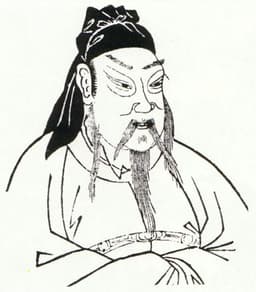
Lord Pingyuan
Politician · Ancient
53.6Total

Zhang Lu
Politician · Ancient
45.9Total
Basic Information
Born
-308
150
Died
-251
216
Era
Ancient
Ancient
Nationality
China
China
Occupation
Politician
Politician
Civilization
Eastern
Eastern
Score Comparison
Military (10%)
50.0
14.9
Political (20%)
45.1
40.8
Influence (20%)
56.4
54.9
Legacy (20%)
50.0
44.2
Leadership (15%)
74.0
64.0
Strategy (15%)
41.0
39.6
TOTAL
53.6
45.9
Lord Pingyuan — Complete Timeline
260 BC
Executed his concubine for insulting a crippled manPolitical Action
When a crippled man complained that Lord Pingyuan's concubine had mocked him, Lord Pingyuan executed the concubine to demonstrate his commitment to justice. This act enhanced his reputation for fairness and attracted many retainers to his service.
JusticeReputationRetainers
259 BC
Raised troops to defend HandanPolitical Action◆ Major
During the siege of Handan by Qin, Lord Pingyuan, as chancellor of Zhao, organized the city's defense. He personally appealed to the nobility and commoners for resources, raising a force of 3,000 volunteers to supplement the regular army.
DefenseSiege of HandanLeadership
Impact: nationalconstructive
258 BC
Secured aid from Wei and ChuPolitical Action◆ Major
Lord Pingyuan sent envoys to Wei and Chu to request military assistance against the Qin siege. His diplomatic efforts, including a famous debate with the Chu king, resulted in joint Wei-Chu forces coming to Zhao's relief, lifting the siege.
DiplomacyAllianceSiege of Handan
Impact: regionalconstructive
250 BC
Hosted 3,000 retainersCultural
Lord Pingyuan maintained a household of 3,000 retainers, including scholars, strategists, and adventurers. This practice, common among the Four Lords, made his court a center of political and intellectual activity during the Warring States period.
PatronageRetainersFour Lords
Impact: nationalconstructive
Zhang Lu — Complete Timeline
190 AD
Establishment of the Celestial Master state in HanzhongPolitical Action◆ Major
Zhang Lu, as the third Celestial Master, established a theocratic state in Hanzhong based on Taoist principles. He implemented communal living, charity stations, and a tax system, ruling independently for over two decades.
Three KingdomsTaoismTheocracy
Impact: regionalconstructive
215 AD
Surrender to Cao CaoPolitical Action◆ Major
Zhang Lu surrendered Hanzhong to Cao Cao after a military campaign. Cao Cao accepted his surrender, appointed him as General, and allowed him to retain some autonomy, integrating the Celestial Master state into Cao Wei.
Three KingdomsSurrenderIntegration
Impact: regional
Expert Analysis
Origins
Lord Pingyuan, born Zhao Sheng around 308 BCE, was a member of the Zhao royal family. As a son of King Wuling of Zhao, he grew up in the aristocratic circles of the Warring States period. His early life was shaped by the political intrigues and military conflicts that defined Zhao's struggle for survival against Qin. He was known for his patronage of scholars and retainers, amassing a household of 3,000 followers, which was a common practice among the Four Lords of the Warring States.
Zhang Lu, born around 190 CE, was the grandson of Zhang Daoling, the founder of the Way of the Celestial Masters, a Taoist religious movement. His father Zhang Heng succeeded as the second Celestial Master. Zhang Lu inherited the leadership of the movement in Hanzhong, a remote and mountainous region in present-day Shaanxi. His upbringing was steeped in Taoist teachings, communal living, and charitable practices, which later defined his rule.
Rise to Power
Lord Pingyuan rose to prominence as a chancellor of Zhao. His key turning point came during the siege of Handan in 259-257 BCE, when Qin forces surrounded the Zhao capital. As chancellor, he organized the city's defense, personally rallied the nobility and commoners, and secured aid from Wei and Chu through diplomatic missions. One famous episode involved his retainer Mao Sui, who accompanied him to Chu and successfully persuaded the Chu king to send troops. This event, known as "Mao Sui recommending himself," highlights Lord Pingyuan's reliance on capable subordinates.
Zhang Lu's rise was more gradual and religious. He became the third Celestial Master after his father's death, around 190 CE. He expanded the movement's influence in Hanzhong, establishing a theocratic state that blended religious and political authority. His rule was characterized by communal granaries, free lodging for travelers, and a justice system based on repentance rather than punishment. He also maintained a military force to defend against external threats, including the Han dynasty and local warlords.
Leadership & Governance
Lord Pingyuan's leadership style was aristocratic and pragmatic. He relied on a network of retainers and allies, as seen in his diplomatic efforts to secure aid from Wei and Chu. His governance focused on maintaining Zhao's independence through military defense and political alliances. He is also remembered for his commitment to justice: when a crippled man complained that Lord Pingyuan's concubine had mocked him, Lord Pingyuan executed the concubine to demonstrate his adherence to moral principles. This action, while harsh, reinforced his reputation as a fair and decisive leader.
Zhang Lu's governance was uniquely theocratic. He implemented a system based on Taoist principles, including communal ownership of resources, charitable works, and a simplified legal code. He abolished traditional taxes and instead relied on voluntary contributions of rice and silk. His state was relatively peaceful and stable, attracting refugees and followers. However, his military capabilities were limited; his military score of 14.9 reflects his reliance on diplomacy and surrender rather than conquest. In contrast, Lord Pingyuan's military score of 50.0 indicates a more active role in warfare.
Triumph & Tragedy
Lord Pingyuan's greatest success was the defense of Handan. His organization of the city's resistance and his diplomatic missions to Wei and Chu directly contributed to lifting the siege, preserving Zhao as a state. However, his greatest failure was his inability to prevent the eventual fall of Zhao to Qin in 228 BCE, though this occurred after his death. His reliance on retainers sometimes led to internal conflicts, and his execution of his concubine, while principled, was seen by some as excessive.
Zhang Lu's triumph was the establishment of a stable theocratic state in Hanzhong that lasted for over two decades. His policies of charity and communal living created a society that was admired by many. His tragedy was his surrender to Cao Cao in 215 CE, which ended his independent rule. However, he was treated honorably by Cao Cao, who appointed him as General and allowed him to retain his religious authority. Zhang Lu's political score of 40.8 and legacy score of 44.2 reflect his limited long-term political impact compared to Lord Pingyuan's score of 45.1 and 50.0.
Character & Destiny
Lord Pingyuan was a pragmatic and decisive leader. His willingness to execute his own concubine for insulting a cripple shows a commitment to justice that was unusual for his time. He was also a skilled diplomat, as evidenced by his successful negotiations with Wei and Chu. However, his reliance on retainers sometimes made him dependent on others, and his leadership score of 74.0 is high but tempered by his strategic score of 41.0, indicating a focus on immediate defense rather than long-term strategy.
Zhang Lu was a devout and benevolent ruler. His character was shaped by Taoist teachings, emphasizing compassion, simplicity, and harmony. He was not a military leader, preferring diplomacy and surrender to conflict. His decision to surrender to Cao Cao was pragmatic, preserving his followers and his religious legacy. His leadership score of 64.0 is lower than Lord Pingyuan's, reflecting his more passive approach.
Legacy
Lord Pingyuan is remembered as one of the Four Lords of the Warring States, a symbol of aristocratic patronage and resistance against Qin. His defense of Handan is celebrated in Chinese history, and his retainers, like Mao Sui, have become cultural icons. His influence score of 56.4 is slightly higher than Zhang Lu's 54.9, reflecting his broader impact on Chinese political culture.
Zhang Lu's legacy is more religious than political. He is revered as a patriarch in the Celestial Masters tradition, and his theocratic state influenced later Taoist movements. His policies of communal living and charity were precursors to similar practices in later Chinese history. However, his political impact was limited, as Hanzhong was eventually absorbed by Cao Wei.
Conclusion
Lord Pingyuan had a greater impact on Chinese history than Zhang Lu, as evidenced by his higher total score of 53.6 compared to Zhang Lu's 45.9. Lord Pingyuan's role in the defense of Handan was a crucial moment in the Warring States period, preserving Zhao and delaying Qin's unification. His diplomatic and military efforts, though focused on a single city, had far-reaching consequences. Zhang Lu's theocratic state, while innovative, was isolated and short-lived. Lord Pingyuan's leadership, political acumen, and legacy of resistance against tyranny make him the more significant figure. Zhang Lu's contributions to Taoism are notable, but they do not match the historical weight of Lord Pingyuan's actions.
Rankings
🥇
Lord PingyuanLeader
Mil: 50.0Pol: 45.1Inf: 56.4
53.6
🥈
Zhang Lu
Mil: 14.9Pol: 40.8Inf: 54.9
45.9
+7.7 behind
How This Comparison Works
Algorithm
Each figure is scored on 6 dimensions (0—100 scale) based on structured historical data: Military (10%), Political (20%), Influence (20%), Legacy (20%), Leadership (15%), Strategy (15%). The weighted total produces the final ranking.
Data Sources
Scores are computed from structured sub-indicators in the database. Scale factors adjust for era (Ancient ×0.85, Modern ×1.0) and civilization size (Eastern ×1.05, Other ×0.80) to account for differences in population and military scale.
Maximum 3 Figures
Comparisons are limited to 2—3 figures to ensure readability and statistical meaningfulness.
Error Margins
±5 points per dimension — Sub-scores are derived from historical records with inherent uncertainty. Two figures within 5 points on a dimension should be considered roughly equivalent in that area.
Total Score Accuracy
±3 points overall — The weighted combination of 6 dimensions produces a total score with approximately ±3 points of uncertainty. Differences of less than 3 points are not statistically significant— the figures are effectively tied.
Known Limitations
- Historical records are incomplete and uneven across civilizations
- Figures from oral-tradition societies may be underrepresented
- Occupation labels can misclassify multi-role figures
- Scores measure capability and impact, not moral character
- Quantitative scoring is a comparison tool, not absolute truth
Capability Radar
Military (10%) — Battles & Warfare
Battles
30
15
Win Rate
30
15
Expansion
10
20
Political (20%) — Governance & Reform
Reform
20
30
Diplomacy
60
30
Economy
30
35
Influence (20%) — Cultural & Global Reach
Cultural
40
40
Global
30
20
Legacy (20%) — Historical Impact
Historical
50
35
Longevity
40
30
Leadership (15%) — Power & Stability
Tenure
50
35
Stability
40
40
Strategy (15%) — Tactics & Innovation
Strategy
40
25
Tactics
30
20
Reform
10
10
Similar Comparisons
Comments & Discussion
No comments yet. Be the first to share your thoughts!