Loading...
Lord Pingyuan vs Shang Yang
Shang Yang leads by 10.5 pts · 2 figures compared
…
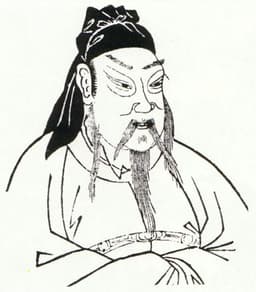
Lord Pingyuan
Politician · Ancient
53.6Total

Shang Yang
Politician · Ancient
64.1Total
Basic Information
Born
-308
-390
Died
-251
-338
Era
Ancient
Ancient
Nationality
China
China
Occupation
Politician
Politician
Civilization
Eastern
Eastern
Score Comparison
Military (10%)
50.0
50.0
Political (20%)
45.1
62.7
Influence (20%)
56.4
68.0
Legacy (20%)
50.0
65.0
Leadership (15%)
74.0
79.8
Strategy (15%)
41.0
45.0
TOTAL
53.6
64.1
Lord Pingyuan — Complete Timeline
260 BC
Executed his concubine for insulting a crippled manPolitical Action
When a crippled man complained that Lord Pingyuan's concubine had mocked him, Lord Pingyuan executed the concubine to demonstrate his commitment to justice. This act enhanced his reputation for fairness and attracted many retainers to his service.
JusticeReputationRetainers
259 BC
Raised troops to defend HandanPolitical Action◆ Major
During the siege of Handan by Qin, Lord Pingyuan, as chancellor of Zhao, organized the city's defense. He personally appealed to the nobility and commoners for resources, raising a force of 3,000 volunteers to supplement the regular army.
DefenseSiege of HandanLeadership
Impact: nationalconstructive
258 BC
Secured aid from Wei and ChuPolitical Action◆ Major
Lord Pingyuan sent envoys to Wei and Chu to request military assistance against the Qin siege. His diplomatic efforts, including a famous debate with the Chu king, resulted in joint Wei-Chu forces coming to Zhao's relief, lifting the siege.
DiplomacyAllianceSiege of Handan
Impact: regionalconstructive
250 BC
Hosted 3,000 retainersCultural
Lord Pingyuan maintained a household of 3,000 retainers, including scholars, strategists, and adventurers. This practice, common among the Four Lords, made his court a center of political and intellectual activity during the Warring States period.
PatronageRetainersFour Lords
Impact: nationalconstructive
Shang Yang — Complete Timeline
356 BC
First Reforms in QinReform
Shang Yang implemented his first set of Legalist reforms in the Qin state, including the abolition of aristocratic privileges, promotion of agriculture and military merit, and the introduction of a strict legal code. These reforms centralized power and increased state efficiency.
Legalist ReformCentralizationState Building
Impact: national
350 BC
Second Reforms in QinReform◆ Major
Shang Yang introduced further reforms, including the reorganization of the state into administrative counties, standardization of weights and measures, and the promotion of collective responsibility. These measures strengthened Qin's military and bureaucratic capacity.
Legalist ReformAdministrationStandardization
Impact: national
340 BC
Battle of AnyiWar◆ Major
Shang Yang led a Qin army to victory against the Wei state at the Battle of Anyi. The victory captured the Wei capital and forced Wei to cede territory, significantly expanding Qin's power and demonstrating the effectiveness of his military reforms.
BattleMilitary ReformTerritorial Expansion
Impact: regional
338 BC
Death by DismembermentOther◆ Major
After the death of Duke Xiao of Qin, Shang Yang was accused of treason by the new ruler, King Huiwen. He attempted to flee but was captured and executed by dismemberment (chariot tearing). His family was also executed, ending his influence.
ExecutionPolitical FallLegalist
Impact: nationaltragic
Expert Analysis
Origins
Lord Pingyuan, born Zhao Sheng (趙勝), was a noble of the Zhao state during the Warring States period (c. 308–251 BCE). As a son of King Zhao Wuling, he grew up in the privileged Zhao court, receiving education in statecraft and military arts. His family background positioned him among the elite, and he later became one of the Four Lords of the Warring States—a group of influential aristocrats known for their patronage of retainers.
Shang Yang (商鞅), originally named Gongsun Yang (公孫鞅), was born around 390 BCE in the Wei state, into a minor noble family of the Wey ruling house. He studied law and statecraft under the tutelage of the Legalist scholar Li Kui. After failing to gain a position in Wei, he traveled to Qin, where he eventually gained the trust of Duke Xiao of Qin. His humble origins contrasted sharply with Lord Pingyuan's noble birth.
Rise to Power
Lord Pingyuan rose to power through his noble lineage and appointment as chancellor of Zhao. His key turning point came during the siege of Handan (c. 259–257 BCE), when Qin forces besieged the Zhao capital. As chancellor, he organized the city's defense and personally appealed to the nobility to contribute troops and resources. His diplomatic efforts secured aid from Wei and Chu, culminating in the lifting of the siege. This event solidified his reputation as a capable leader.
Shang Yang's rise was more deliberate. He arrived in Qin around 361 BCE and gained an audience with Duke Xiao through the eunuch Jing Jian. After impressing the duke with his Legalist ideas, he was appointed as a minister. In 356 BCE, he implemented his first set of reforms, which abolished hereditary aristocratic privileges, promoted agriculture over commerce, and established a system of military merit. These reforms faced opposition but were supported by Duke Xiao. By 350 BCE, he introduced second reforms, reorganizing the state into administrative counties and standardizing weights and measures. His political score of 62.7 reflects his effective consolidation of power.
Leadership & Governance
Lord Pingyuan's leadership style was aristocratic and diplomatic. He relied on his network of retainers—up to 3,000—to gather intelligence and manage affairs. His governance focused on maintaining Zhao's independence through alliances and defense. For example, he executed his own concubine for insulting a crippled man to demonstrate his commitment to justice and win the loyalty of his retainers. However, his political score of 45.1 indicates limited structural reform.
Shang Yang's governance was authoritarian and systematic. He enforced strict laws with harsh punishments, including collective responsibility. His reforms centralized power, weakened the nobility, and created a merit-based military. For instance, he mandated that all families must produce a certain amount of grain or face penalties. His leadership score of 79.8 reflects his decisive and transformative rule, but his methods bred resentment.
Triumph & Tragedy
Lord Pingyuan's greatest success was the defense of Handan. By raising troops and securing aid, he prevented the fall of Zhao and preserved its existence for another three decades. His diplomatic victory with the Chu envoy, Mao Sui, is legendary. However, his failure to implement lasting reforms left Zhao vulnerable. His influence score of 56.4 is moderate.
Shang Yang's triumphs include the Battle of Anyi (c. 340 BCE), where he led Qin to capture the Wei capital and force territorial cessions. His reforms transformed Qin into a centralized, militaristic state that later unified China. However, his tragedy was his death: after Duke Xiao died, the new king, King Huiwen, accused him of treason. Shang Yang attempted to flee but was captured and executed by dismemberment, his body torn apart by chariots. His legacy score of 65.0 reflects his profound but controversial impact.
Character & Destiny
Lord Pingyuan was pragmatic and charismatic, using his noble status to build alliances. He valued loyalty and justice, as shown by his execution of his concubine. However, his reliance on aristocratic networks limited his ability to enact deep change. His destiny was to be remembered as a defender of Zhao, but not a reformer.
Shang Yang was uncompromising and meticulous. He believed in strict laws and harsh punishments, viewing them as necessary for order. His character made him enemies among the nobility, and his refusal to moderate his policies after Duke Xiao's death sealed his fate. His destiny was to be executed by the system he created—a cautionary tale of the Legalist philosophy.
Legacy
Lord Pingyuan's legacy is tied to the Four Lords and the defense of Handan. He is remembered as a patron of scholars and a diplomatic hero. However, his impact on governance was minimal; Zhao continued its decline after his death. His total score of 53.6 reflects limited systemic influence.
Shang Yang's legacy is immense. His reforms became the foundation of Qin's unification of China in 221 BCE. The administrative counties, standardized measures, and merit-based military that he introduced persisted for centuries. Legalism, though later tempered by Confucianism, shaped Chinese governance. His total score of 64.1 underscores his transformative role.
Conclusion
Shang Yang had a greater impact on Chinese history than Lord Pingyuan. His political score of 62.7, influence of 68.0, and legacy of 65.0 all exceed Lord Pingyuan's corresponding scores (45.1, 56.4, 50.0). While Lord Pingyuan defended a state temporarily, Shang Yang's reforms created the infrastructure for imperial China. Shang Yang's total score of 64.1 versus Lord Pingyuan's 53.6 reflects this disparity. The data supports the conclusion that Shang Yang's systemic changes outweighed Lord Pingyuan's localized achievements.
Rankings
🥇
Shang YangLeader
Mil: 50.0Pol: 62.7Inf: 68.0
64.1
🥈
Lord Pingyuan
Mil: 50.0Pol: 45.1Inf: 56.4
53.6
+10.5 behind
How This Comparison Works
Algorithm
Each figure is scored on 6 dimensions (0—100 scale) based on structured historical data: Military (10%), Political (20%), Influence (20%), Legacy (20%), Leadership (15%), Strategy (15%). The weighted total produces the final ranking.
Data Sources
Scores are computed from structured sub-indicators in the database. Scale factors adjust for era (Ancient ×0.85, Modern ×1.0) and civilization size (Eastern ×1.05, Other ×0.80) to account for differences in population and military scale.
Maximum 3 Figures
Comparisons are limited to 2—3 figures to ensure readability and statistical meaningfulness.
Error Margins
±5 points per dimension — Sub-scores are derived from historical records with inherent uncertainty. Two figures within 5 points on a dimension should be considered roughly equivalent in that area.
Total Score Accuracy
±3 points overall — The weighted combination of 6 dimensions produces a total score with approximately ±3 points of uncertainty. Differences of less than 3 points are not statistically significant— the figures are effectively tied.
Known Limitations
- Historical records are incomplete and uneven across civilizations
- Figures from oral-tradition societies may be underrepresented
- Occupation labels can misclassify multi-role figures
- Scores measure capability and impact, not moral character
- Quantitative scoring is a comparison tool, not absolute truth
Capability Radar
Military (10%) — Battles & Warfare
Battles
30
10
Win Rate
30
10
Expansion
10
70
Political (20%) — Governance & Reform
Reform
20
95
Diplomacy
60
50
Economy
30
90
Influence (20%) — Cultural & Global Reach
Cultural
40
60
Global
30
75
Legacy (20%) — Historical Impact
Historical
50
85
Longevity
40
80
Leadership (15%) — Power & Stability
Tenure
50
60
Stability
40
70
Strategy (15%) — Tactics & Innovation
Strategy
40
20
Tactics
30
10
Reform
10
85
Similar Comparisons
Comments & Discussion
No comments yet. Be the first to share your thoughts!