Loading...
Lord Dufferin vs Yang Shangkun
Lord Dufferin leads by 8.1 pts · 2 figures compared
…
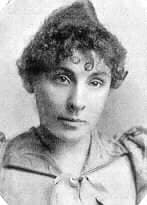
Lord Dufferin
Politician · Modern
54.5Total

Yang Shangkun
Politician · Modern
46.4Total
Basic Information
Born
1826
1907
Died
1902
1998
Era
Modern
Modern
Nationality
United Kingdom
China
Occupation
Politician
Politician
Civilization
Western
Eastern
Score Comparison
Military (10%)
50.0
14.7
Political (20%)
53.8
42.3
Influence (20%)
54.9
53.3
Legacy (20%)
45.8
46.7
Leadership (15%)
72.0
67.0
Strategy (15%)
54.8
35.8
TOTAL
54.5
46.4
Lord Dufferin — Complete Timeline
1872 AD
Tenure as Governor General of CanadaPolitical Action◆ Major
Lord Dufferin served as Governor General of Canada from 1872 to 1878. He played a key role in promoting Canadian unity and cultural development, including the establishment of the Royal Society of Canada and the encouragement of the arts. His tenure was marked by his diplomatic handling of political tensions.
CanadaGovernor GeneralCultural Development
Impact: nationalconstructive
1885 AD
Establishment of the Indian National CongressPolitical Action
During Lord Dufferin's viceroyalty, the Indian National Congress was founded in Bombay with the approval of the British authorities. Dufferin initially viewed it as a safety valve for political dissent, but the Congress later became the leading organization of the Indian independence movement.
IndiaPolitical OrganizationNationalism
Impact: national
Russian Border CommissionPolitical Action◆ Major
Lord Dufferin oversaw the settlement of the Afghan border dispute with Russia through the Joint Anglo-Russian Boundary Commission. The agreement defined the northern frontier of Afghanistan, reducing tensions between Britain and Russia in Central Asia, known as the 'Great Game'.
AfghanistanDiplomacyGreat Game
Impact: regionalconstructive
1886 AD
Annexation of Upper BurmaWar
Lord Dufferin ordered the Third Anglo-Burmese War, which resulted in the annexation of Upper Burma into British India. King Thibaw Min was deposed and exiled. This completed the British conquest of Burma, adding a large territory to the British Empire.
BurmaColonial ExpansionWar
Impact: regionaldestructive
Yang Shangkun — Complete Timeline
1934 AD
Participated in the Long MarchWar◆ Major
Yang Shangkun joined the Chinese Communist Party's Long March, serving as a political commissar. He survived the arduous retreat from Jiangxi to Yan'an, which solidified his position in the party hierarchy.
Long MarchChinese Civil WarPolitical Commissar
Impact: national
1949 AD
Served as Mayor of TianjinPolitical Action
Yang Shangkun was appointed Mayor of Tianjin after the Communist takeover. He oversaw the city's transition to Communist rule, including the suppression of counter-revolutionaries and economic reconstruction.
TianjinCommunist TakeoverUrban Administration
Impact: regionalconstructive
1966 AD
Purged during the Cultural RevolutionPolitical Action◆ Major
Yang Shangkun was purged and imprisoned for 12 years during the Cultural Revolution, accused of being a counter-revolutionary. He was held in solitary confinement and subjected to harsh treatment.
Cultural RevolutionPurgeImprisonment
Impact: nationaldestructive
1988 AD
Rehabilitated and became President of the PRCPolitical Action◆ Major
Yang Shangkun was rehabilitated and elected President of the People's Republic of China, serving until 1993. He was a key figure in the crackdown on the Tiananmen Square protests in 1989.
PresidencyTiananmen SquareRehabilitation
Impact: nationaldestructive
1989 AD
Ordered the Tiananmen Square crackdownPolitical Action
As President, Yang Shangkun was a member of the Standing Committee that authorized the use of military force to suppress the Tiananmen Square protests. The crackdown resulted in hundreds of civilian deaths.
Tiananmen SquareCrackdownHuman Rights
Impact: globaldestructive
Expert Analysis
Origins
Lord Dufferin, born Frederick Hamilton-Temple-Blackwood in 1826 in Florence, Italy, was the son of a British aristocrat. He was educated at Eton and Christ Church, Oxford, where he developed skills in diplomacy and oratory. His family's political connections facilitated his early entry into public service. Yang Shangkun, born in 1907 in Sichuan, China, came from a modest landowning family. He joined the Chinese Communist Party (CCP) in 1926 and studied at Moscow's Sun Yat-sen University, where he became acquainted with Soviet political methods. These origins shaped their divergent paths: Dufferin as a product of imperial privilege, Yang as a revolutionary shaped by ideology.
Rise to Power
Lord Dufferin rose through diplomatic appointments, serving as Governor General of Canada from 1872 to 1878, where he promoted cultural institutions and Canadian unity. His success led to his appointment as Viceroy of India in 1884. He enhanced British control by annexing Upper Burma in 1886 after the Third Anglo-Burmese War, deposing King Thibaw Min. Yang Shangkun rose within the CCP, participating in the Long March (1934-1935) as a political commissar. He served as Mayor of Tianjin after the Communist victory in 1949, suppressing opposition. He was purged during the Cultural Revolution (1966-1976) and imprisoned for 12 years. After rehabilitation in the 1980s, he became President of the People's Republic of China in 1988, a position that placed him at the center of power during the Tiananmen crisis.
Leadership & Governance
Lord Dufferin's leadership style was diplomatic and administrative. He oversaw the establishment of the Indian National Congress in 1885, initially approving it as a safety valve for political expression. He also settled the Afghan border with Russia through the Joint Anglo-Russian Boundary Commission, demonstrating skill in imperial management. His governance scored 72.0 in leadership, reflecting his ability to maintain stability. Yang Shangkun's leadership was characterized by ideological rigidity and party discipline. As President, he was a member of the Standing Committee that authorized the Tiananmen Square crackdown in June 1989. His leadership score of 67.0 indicates a firm but repressive approach. Unlike Dufferin, who allowed some political expression, Yang prioritized state control over dissent.
Triumph & Tragedy
Lord Dufferin's greatest success was the annexation of Upper Burma, expanding British India's territory. His diplomatic handling of the Russian border commission secured British interests in Central Asia. However, his legacy is marred by the long-term consequences of colonial exploitation and the suppression of Burmese sovereignty. Yang Shangkun's triumph was surviving the Long March and the Cultural Revolution to become President. He played a role in China's economic reforms under Deng Xiaoping. His tragedy is his direct involvement in the Tiananmen crackdown, which resulted in hundreds of deaths and a lasting stain on his legacy. Dufferin's military score of 50.0 reflects his use of force in Burma, while Yang's score of 14.7 indicates his lack of military background but reliance on military orders.
Character & Destiny
Lord Dufferin was a polished diplomat, known for his tact and cultural patronage. His character favored negotiation over confrontation, as seen in his handling of the Russian border. However, his destiny was tied to the decline of British imperialism. Yang Shangkun was a loyal party operative, shaped by the Long March and the purges of the Cultural Revolution. His character was cautious and obedient to party hierarchy, which led him to approve the crackdown despite moral costs. His destiny was to be both a victim of the Cultural Revolution and a perpetrator of state violence.
Legacy
Lord Dufferin is remembered as an effective imperial administrator who expanded British India and promoted Indian political institutions, albeit within colonial constraints. The Indian National Congress, founded during his tenure, eventually led to Indian independence. Yang Shangkun's legacy is overshadowed by Tiananmen. He is officially recognized as a revolutionary veteran, but his role in the crackdown is minimized in Chinese state narratives. His influence score of 53.3 reflects his impact on CCP history, while Dufferin's 54.9 shows his role in shaping colonial governance.
Conclusion
Lord Dufferin had a greater long-term impact than Yang Shangkun. Dufferin's annexation of Burma and his role in the formation of the Indian National Congress set in motion historical processes that shaped modern South Asia. Yang Shangkun's actions, while significant in Chinese political history, were largely reactive and did not create lasting institutions. Dufferin's total score of 54.5 versus Yang's 46.4 reflects his broader influence. However, both figures are evaluated lower in legacy due to the controversial nature of their actions: Dufferin's colonialism and Yang's repression. Ultimately, Dufferin's impact on global history exceeds Yang's.
Rankings
🥇
Lord DufferinLeader
Mil: 50.0Pol: 53.8Inf: 54.9
54.5
🥈
Yang Shangkun
Mil: 14.7Pol: 42.3Inf: 53.3
46.4
+8.1 behind
How This Comparison Works
Algorithm
Each figure is scored on 6 dimensions (0—100 scale) based on structured historical data: Military (10%), Political (20%), Influence (20%), Legacy (20%), Leadership (15%), Strategy (15%). The weighted total produces the final ranking.
Data Sources
Scores are computed from structured sub-indicators in the database. Scale factors adjust for era (Ancient ×0.85, Modern ×1.0) and civilization size (Eastern ×1.05, Other ×0.80) to account for differences in population and military scale.
Maximum 3 Figures
Comparisons are limited to 2—3 figures to ensure readability and statistical meaningfulness.
Error Margins
±5 points per dimension — Sub-scores are derived from historical records with inherent uncertainty. Two figures within 5 points on a dimension should be considered roughly equivalent in that area.
Total Score Accuracy
±3 points overall — The weighted combination of 6 dimensions produces a total score with approximately ±3 points of uncertainty. Differences of less than 3 points are not statistically significant— the figures are effectively tied.
Known Limitations
- Historical records are incomplete and uneven across civilizations
- Figures from oral-tradition societies may be underrepresented
- Occupation labels can misclassify multi-role figures
- Scores measure capability and impact, not moral character
- Quantitative scoring is a comparison tool, not absolute truth
Capability Radar
Military (10%) — Battles & Warfare
Battles
20
14
Win Rate
25
18
Expansion
40
18
Political (20%) — Governance & Reform
Reform
55
30
Diplomacy
70
40
Economy
50
30
Influence (20%) — Cultural & Global Reach
Cultural
30
20
Global
40
30
Legacy (20%) — Historical Impact
Historical
45
40
Longevity
30
30
Leadership (15%) — Power & Stability
Tenure
60
50
Stability
60
20
Strategy (15%) — Tactics & Innovation
Strategy
30
24
Tactics
15
25
Reform
10
28
Similar Comparisons
Comments & Discussion
No comments yet. Be the first to share your thoughts!