Loading...
Jeremy Corbyn vs Yang Shangkun
Jeremy Corbyn leads by 1.0 pts · 2 figures compared
…
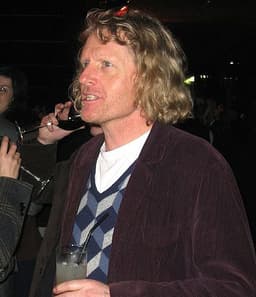
Jeremy Corbyn
Politician · Modern
47.4Total

Yang Shangkun
Politician · Modern
46.4Total
Basic Information
Born
1949
1907
Died
—
1998
Era
Modern
Modern
Nationality
United Kingdom
China
Occupation
Politician
Politician
Civilization
Western
Eastern
Score Comparison
Military (10%)
49.6
14.7
Political (20%)
40.8
42.3
Influence (20%)
55.7
53.3
Legacy (20%)
41.7
46.7
Leadership (15%)
51.9
67.0
Strategy (15%)
41.5
35.8
TOTAL
47.4
46.4
Jeremy Corbyn — Complete Timeline
2015 AD
Elected Leader of the Labour PartyPolitical Action◆ Major
Jeremy Corbyn was elected Labour leader on a left-wing platform, winning 59.5% of the vote. His leadership was seen as a shift away from New Labour, advocating for nationalization, anti-austerity, and nuclear disarmament.
Labour PartyLeadershipLeft-wing
Impact: nationalconstructive
2017 AD
Led Labour into the 2017 general electionPolitical Action◆ Major
Corbyn led Labour to a surprise result in the 2017 general election, gaining 30 seats and denying Theresa May a majority. Labour won 40% of the vote, its highest share since 2001, and forced a hung parliament.
ElectionLabour PartyHung Parliament
Impact: nationalconstructive
2019 AD
Led Labour into the 2019 general electionPolitical Action◆ Major
Corbyn led Labour to a landslide defeat in the 2019 general election, winning only 202 seats. The party lost many traditional Labour seats in the 'Red Wall' to the Conservatives. Corbyn resigned as leader following the defeat.
ElectionDefeatLabour Party
Impact: nationaltragic
2020 AD
Suspended from Labour PartyPolitical Action◆ Major
Corbyn was suspended from the Labour Party by Keir Starmer after his response to the Equality and Human Rights Commission report on antisemitism. He claimed the scale of antisemitism had been overstated, leading to his suspension.
Labour PartyAntisemitismSuspension
Impact: nationaldestructive
Yang Shangkun — Complete Timeline
1934 AD
Participated in the Long MarchWar◆ Major
Yang Shangkun joined the Chinese Communist Party's Long March, serving as a political commissar. He survived the arduous retreat from Jiangxi to Yan'an, which solidified his position in the party hierarchy.
Long MarchChinese Civil WarPolitical Commissar
Impact: national
1949 AD
Served as Mayor of TianjinPolitical Action
Yang Shangkun was appointed Mayor of Tianjin after the Communist takeover. He oversaw the city's transition to Communist rule, including the suppression of counter-revolutionaries and economic reconstruction.
TianjinCommunist TakeoverUrban Administration
Impact: regionalconstructive
1966 AD
Purged during the Cultural RevolutionPolitical Action◆ Major
Yang Shangkun was purged and imprisoned for 12 years during the Cultural Revolution, accused of being a counter-revolutionary. He was held in solitary confinement and subjected to harsh treatment.
Cultural RevolutionPurgeImprisonment
Impact: nationaldestructive
1988 AD
Rehabilitated and became President of the PRCPolitical Action◆ Major
Yang Shangkun was rehabilitated and elected President of the People's Republic of China, serving until 1993. He was a key figure in the crackdown on the Tiananmen Square protests in 1989.
PresidencyTiananmen SquareRehabilitation
Impact: nationaldestructive
1989 AD
Ordered the Tiananmen Square crackdownPolitical Action
As President, Yang Shangkun was a member of the Standing Committee that authorized the use of military force to suppress the Tiananmen Square protests. The crackdown resulted in hundreds of civilian deaths.
Tiananmen SquareCrackdownHuman Rights
Impact: globaldestructive
Expert Analysis
Origins
Jeremy Corbyn was born in 1949 in Chippenham, England, to a middle-class family with leftist leanings. His father was an electrical engineer and his mother a mathematics teacher. He studied at Adams Grammar School and later attended the University of the West of Scotland (then Paisley College of Technology) but left without a degree. He became active in local politics and trade unionism early on, joining the Labour Party at age 16. His early career included stints as a community organizer and trade union official, shaping his grassroots activism.
Yang Shangkun was born in 1907 in Tongnan, Sichuan, into a relatively affluent family. He studied at the Sichuan Higher Normal School and later attended Shanghai University, where he was exposed to communist ideas. He joined the Chinese Communist Party (CCP) in 1925 and participated in the Northern Expedition. His formative experiences included involvement in the Long March (1934-1935), where he served as a political commissar, enduring extreme hardship. This period forged his loyalty to the CCP leadership.
Rise to Power
Corbyn's rise came late. He was first elected as MP for Islington North in 1983, consistently voting against his party's whip on key issues. He gained prominence through grassroots campaigns and anti-war activism. In 2015, he was elected Labour leader on a left-wing platform, winning 59.5% of the vote, defeating more centrist candidates. His rise was propelled by a surge of new members attracted to his anti-austerity stance.
Yang Shangkun's rise was within the CCP hierarchy. He participated in the Long March and later served as a political commissar in the Eighth Route Army. After the Communist victory in 1949, he became Mayor of Tianjin, overseeing the transition to Communist rule. He was purged during the Cultural Revolution (1966-1976), spending 12 years in prison. After Mao's death, he was rehabilitated and rose to become President of China in 1988, a role that placed him at the center of power during the Tiananmen crisis.
Leadership & Governance
Corbyn's leadership style was based on grassroots mobilization and participatory democracy. He advocated for nationalization, higher taxes on the wealthy, and nuclear disarmament. As Labour leader, he faced internal dissent from centrist MPs. In the 2017 general election, he defied expectations by gaining 30 seats, achieving 40% of the vote. However, his leadership was criticized for indecisiveness and a failure to address antisemitism within the party.
Yang Shangkun governed as a loyal Communist enforcer. As President, he was a key member of the Standing Committee that authorized the military crackdown on Tiananmen Square protests in June 1989. He supported Deng Xiaoping's economic reforms while maintaining strict political control. His governance emphasized stability and party discipline, often at the cost of human rights.
Triumph & Tragedy
Corbyn's greatest triumph was the 2017 election result, which denied the Conservatives a majority and revived Labour's electoral fortunes. His tragedy was the 2019 election, where Labour suffered its worst defeat since 1935, winning only 202 seats, partly due to Brexit division and antisemitism controversies. He was later suspended from the party in 2020 after criticizing the EHRC report on antisemitism.
Yang Shangkun's triumph was surviving the Cultural Revolution and rising to the presidency. His tragedy is his association with the Tiananmen crackdown, which resulted in hundreds (possibly thousands) of civilian deaths. He authorized the use of military force, a decision that stains his legacy. He also oversaw the suppression of dissent in Tianjin as mayor.
Character & Destiny
Corbyn is characterized by ideological consistency and personal austerity. He remained a rebel throughout his career, rarely compromising. His stubbornness helped him win the leadership but hindered his ability to unite the party. His destiny was to become a symbol of the left's revival and its subsequent collapse.
Yang Shangkun was a pragmatic survivor. He adapted to shifting party lines, from Mao to Deng. His imprisonment during the Cultural Revolution likely taught him the value of obedience to the party. His destiny was to be a tool of the state, executing orders without public dissent.
Legacy
Corbyn's legacy is mixed. He shifted Labour to the left, influencing policy debates on nationalization and austerity. However, his tenure also saw Labour's electoral decline and internal division. His score of 41.7 in legacy reflects his limited long-term impact.
Yang Shangkun's legacy is tied to Tiananmen. He is remembered as a key figure in the crackdown, which continues to shape China's political repression. His score of 46.7 in legacy is slightly higher due to his role in China's modern authoritarian governance.
Conclusion
While Corbyn scored 47.4 overall to Yang's 46.4, Yang Shangkun had greater impact on history due to his direct involvement in a defining event that affected millions. Corbyn's impact was largely domestic and temporary, whereas Yang's actions contributed to the consolidation of authoritarian rule in China. Despite the narrow score gap, Yang's legacy is more consequential.
Rankings
🥇
Jeremy CorbynLeader
Mil: 49.6Pol: 40.8Inf: 55.7
47.4
🥈
Yang Shangkun
Mil: 14.7Pol: 42.3Inf: 53.3
46.4
+1.0 behind
How This Comparison Works
Algorithm
Each figure is scored on 6 dimensions (0—100 scale) based on structured historical data: Military (10%), Political (20%), Influence (20%), Legacy (20%), Leadership (15%), Strategy (15%). The weighted total produces the final ranking.
Data Sources
Scores are computed from structured sub-indicators in the database. Scale factors adjust for era (Ancient ×0.85, Modern ×1.0) and civilization size (Eastern ×1.05, Other ×0.80) to account for differences in population and military scale.
Maximum 3 Figures
Comparisons are limited to 2—3 figures to ensure readability and statistical meaningfulness.
Error Margins
±5 points per dimension — Sub-scores are derived from historical records with inherent uncertainty. Two figures within 5 points on a dimension should be considered roughly equivalent in that area.
Total Score Accuracy
±3 points overall — The weighted combination of 6 dimensions produces a total score with approximately ±3 points of uncertainty. Differences of less than 3 points are not statistically significant— the figures are effectively tied.
Known Limitations
- Historical records are incomplete and uneven across civilizations
- Figures from oral-tradition societies may be underrepresented
- Occupation labels can misclassify multi-role figures
- Scores measure capability and impact, not moral character
- Quantitative scoring is a comparison tool, not absolute truth
Capability Radar
Military (10%) — Battles & Warfare
Battles
31
14
Win Rate
30
18
Expansion
35
18
Political (20%) — Governance & Reform
Reform
40
30
Diplomacy
35
40
Economy
20
30
Influence (20%) — Cultural & Global Reach
Cultural
40
20
Global
35
30
Legacy (20%) — Historical Impact
Historical
30
40
Longevity
20
30
Leadership (15%) — Power & Stability
Tenure
30
50
Stability
15
20
Strategy (15%) — Tactics & Innovation
Strategy
41
24
Tactics
38
25
Reform
41
28
Similar Comparisons
Comments & Discussion
No comments yet. Be the first to share your thoughts!