Loading...
Antonio Guterres vs Lord Dufferin
Lord Dufferin leads by 2.2 pts · 2 figures compared
…

Antonio Guterres
Politician · Modern
52.3Total
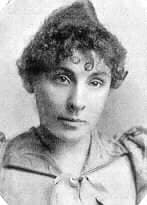
Lord Dufferin
Politician · Modern
54.5Total
Basic Information
Born
1949
1826
Died
—
1902
Era
Modern
Modern
Nationality
Portugal
United Kingdom
Occupation
Politician
Politician
Civilization
Western
Western
Score Comparison
Military (10%)
10.1
50.0
Political (20%)
72.0
53.8
Influence (20%)
58.3
54.9
Legacy (20%)
50.0
45.8
Leadership (15%)
72.0
72.0
Strategy (15%)
26.5
54.8
TOTAL
52.3
54.5
Antonio Guterres — Complete Timeline
1995 AD
Prime Minister of PortugalPolitical Action◆ Major
Guterres became Prime Minister of Portugal on October 28, 1995, after his Socialist Party won the general election. He led a center-left government focused on economic growth and social welfare.
GovernmentSocialist
Impact: nationalconstructive
1998 AD
Expo 98 in LisbonCultural◆ Major
Guterres oversaw the successful hosting of Expo 98 in Lisbon, a world's fair themed around the oceans. The event revitalized the city's eastern waterfront and boosted Portugal's international image.
World ExpoUrban Development
Impact: nationalconstructive
2002 AD
Resignation as Prime MinisterPolitical Action◆ Major
Guterres resigned as Prime Minister on December 17, 2002, after his party suffered heavy losses in local elections. His government had faced economic slowdown and criticism over handling of the economy.
ResignationPolitical
Impact: national
2017 AD
United Nations Secretary-GeneralPolitical Action◆ Major
Guterres became the ninth UN Secretary-General on January 1, 2017, succeeding Ban Ki-moon. He prioritized climate action, conflict resolution, and reform of the UN system, including addressing the Rohingya crisis and Syrian civil war.
United NationsDiplomacy
Impact: globalconstructive
Lord Dufferin — Complete Timeline
1872 AD
Tenure as Governor General of CanadaPolitical Action◆ Major
Lord Dufferin served as Governor General of Canada from 1872 to 1878. He played a key role in promoting Canadian unity and cultural development, including the establishment of the Royal Society of Canada and the encouragement of the arts. His tenure was marked by his diplomatic handling of political tensions.
CanadaGovernor GeneralCultural Development
Impact: nationalconstructive
1885 AD
Establishment of the Indian National CongressPolitical Action
During Lord Dufferin's viceroyalty, the Indian National Congress was founded in Bombay with the approval of the British authorities. Dufferin initially viewed it as a safety valve for political dissent, but the Congress later became the leading organization of the Indian independence movement.
IndiaPolitical OrganizationNationalism
Impact: national
Russian Border CommissionPolitical Action◆ Major
Lord Dufferin oversaw the settlement of the Afghan border dispute with Russia through the Joint Anglo-Russian Boundary Commission. The agreement defined the northern frontier of Afghanistan, reducing tensions between Britain and Russia in Central Asia, known as the 'Great Game'.
AfghanistanDiplomacyGreat Game
Impact: regionalconstructive
1886 AD
Annexation of Upper BurmaWar
Lord Dufferin ordered the Third Anglo-Burmese War, which resulted in the annexation of Upper Burma into British India. King Thibaw Min was deposed and exiled. This completed the British conquest of Burma, adding a large territory to the British Empire.
BurmaColonial ExpansionWar
Impact: regionaldestructive
Expert Analysis
Origins
Antonio Guterres was born on April 30, 1949, in Lisbon, Portugal, into a middle-class family. He studied electrical engineering at the Instituto Superior Técnico, graduating in 1971, and later became a professor. His political career began in the 1970s after the Carnation Revolution, joining the Socialist Party. In contrast, Frederick Hamilton-Temple-Blackwood, 1st Marquess of Dufferin and Ava (Lord Dufferin), was born on June 21, 1826, in Florence, Italy, into the aristocratic Blackwood family. He studied at Eton and Christ Church, Oxford, but left without a degree. His early career included diplomatic posts in Syria and Canada, shaping his imperial worldview.
Rise to Power
Guterres entered national politics in 1976 as a member of parliament. He became leader of the Socialist Party in 1992 and won the 1995 general election, becoming Prime Minister on October 28, 1995. His rise was marked by moderate socialism and economic reform. Lord Dufferin rose through diplomatic and colonial service: he was Governor General of Canada from 1872 to 1878, then Ambassador to Russia and the Ottoman Empire. In 1884, he was appointed Viceroy of India, a position he held until 1888. His appointment was due to his diplomatic skills and aristocratic connections.
Leadership & Governance
Guterres' leadership style as Portuguese PM (1995-2002) was pragmatic and consensus-oriented. He oversaw economic growth and Portugal's entry into the eurozone. However, his government faced criticism for austerity measures. As UN Secretary-General (2017-present), he advocates for multilateralism, climate action, and refugee rights. His political score is 72.0, reflecting his diplomatic approach. Lord Dufferin's governance as Viceroy was autocratic but tactful. He authorized the Third Anglo-Burmese War (1885), annexing Upper Burma. He also supported the founding of the Indian National Congress (1885) as a safety valve for dissent. His leadership score is 72.0, matching Guterres. However, his governance was imperial, focused on British interests.
Triumph & Tragedy
Guterres' triumphs include successfully hosting Expo 98 in Lisbon, which revitalized the city's eastern waterfront. As UN chief, he has pushed for climate action, notably the 2019 Climate Action Summit. His tragedies include resigning as PM in 2002 after electoral losses due to economic stagnation. At the UN, he has faced criticism for inaction in conflicts like Syria and Myanmar. Lord Dufferin's triumph was the annexation of Upper Burma (1886), expanding British India. He also resolved the Afghan border dispute with Russia (1886-88). His tragedy was the suppression of local sovereignty, and his support for the Indian National Congress inadvertently fostered Indian nationalism, which later challenged British rule. His military score of 50.0 reflects his imperial campaigns, while Guterres scores only 10.1.
Character & Destiny
Guterres is described as calm, intellectual, and diplomatic. His background as an engineer influences his data-driven approach. His destiny was shaped by his commitment to multilateralism, leading him to the UN's top post. Lord Dufferin was charming and cultured but also a product of British imperialism. His career was defined by service to the empire, culminating in the viceroyalty. His character allowed him to navigate complex diplomatic situations, but his legacy is tied to colonial expansion.
Legacy
Guterres' legacy is ongoing: he has championed the Sustainable Development Goals and the Paris Agreement. His influence score of 58.3 reflects his global role. Lord Dufferin's legacy is mixed: he expanded the British Empire but also inadvertently planted seeds of Indian self-rule. The Indian National Congress became the leading force for independence. His influence score is 54.9. Both have legacies tied to their respective systems: Guterres to multilateral governance, Dufferin to imperialism.
Conclusion
While Lord Dufferin has a higher total score (54.5 vs 52.3), his impact is largely historical and tied to British imperialism. Guterres' influence is contemporary and global, shaping international cooperation. Guterres' work on climate change and refugee rights has immediate relevance, whereas Dufferin's annexations are of historical interest. Therefore, Antonio Guterres has greater impact on the modern world, despite the score gap.
Rankings
🥇
Lord DufferinLeader
Mil: 50.0Pol: 53.8Inf: 54.9
54.5
🥈
Antonio Guterres
Mil: 10.1Pol: 72.0Inf: 58.3
52.3
+2.2 behind
How This Comparison Works
Algorithm
Each figure is scored on 6 dimensions (0—100 scale) based on structured historical data: Military (10%), Political (20%), Influence (20%), Legacy (20%), Leadership (15%), Strategy (15%). The weighted total produces the final ranking.
Data Sources
Scores are computed from structured sub-indicators in the database. Scale factors adjust for era (Ancient ×0.85, Modern ×1.0) and civilization size (Eastern ×1.05, Other ×0.80) to account for differences in population and military scale.
Maximum 3 Figures
Comparisons are limited to 2—3 figures to ensure readability and statistical meaningfulness.
Error Margins
±5 points per dimension — Sub-scores are derived from historical records with inherent uncertainty. Two figures within 5 points on a dimension should be considered roughly equivalent in that area.
Total Score Accuracy
±3 points overall — The weighted combination of 6 dimensions produces a total score with approximately ±3 points of uncertainty. Differences of less than 3 points are not statistically significant— the figures are effectively tied.
Known Limitations
- Historical records are incomplete and uneven across civilizations
- Figures from oral-tradition societies may be underrepresented
- Occupation labels can misclassify multi-role figures
- Scores measure capability and impact, not moral character
- Quantitative scoring is a comparison tool, not absolute truth
Capability Radar
Military (10%) — Battles & Warfare
Battles
11
20
Win Rate
16
25
Expansion
19
40
Political (20%) — Governance & Reform
Reform
55
55
Diplomacy
85
70
Economy
50
50
Influence (20%) — Cultural & Global Reach
Cultural
40
30
Global
70
40
Legacy (20%) — Historical Impact
Historical
55
45
Longevity
45
30
Leadership (15%) — Power & Stability
Tenure
60
60
Stability
60
60
Strategy (15%) — Tactics & Innovation
Strategy
19
30
Tactics
23
15
Reform
25
10
Similar Comparisons
Comments & Discussion
No comments yet. Be the first to share your thoughts!