Loading...
Lord Dufferin vs Napoleon Bonaparte
Napoleon Bonaparte leads by 16.4 pts · 2 figures compared
…
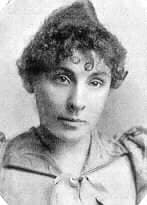
Lord Dufferin
Politician · Modern
54.5Total

Napoleon Bonaparte
General · Modern
70.9Total
Basic Information
Born
1826
1769
Died
1902
1821
Era
Modern
Modern
Nationality
United Kingdom
France
Occupation
Politician
General
Civilization
Western
Western
Score Comparison
Military (10%)
50.0
94.0
Political (20%)
53.8
72.0
Influence (20%)
54.9
40.0
Legacy (20%)
45.8
80.0
Leadership (15%)
72.0
78.0
Strategy (15%)
54.8
90.0
TOTAL
54.5
70.9
Lord Dufferin — Complete Timeline
1872 AD
Tenure as Governor General of CanadaPolitical Action◆ Major
Lord Dufferin served as Governor General of Canada from 1872 to 1878. He played a key role in promoting Canadian unity and cultural development, including the establishment of the Royal Society of Canada and the encouragement of the arts. His tenure was marked by his diplomatic handling of political tensions.
CanadaGovernor GeneralCultural Development
Impact: nationalconstructive
1885 AD
Establishment of the Indian National CongressPolitical Action
During Lord Dufferin's viceroyalty, the Indian National Congress was founded in Bombay with the approval of the British authorities. Dufferin initially viewed it as a safety valve for political dissent, but the Congress later became the leading organization of the Indian independence movement.
IndiaPolitical OrganizationNationalism
Impact: national
Russian Border CommissionPolitical Action◆ Major
Lord Dufferin oversaw the settlement of the Afghan border dispute with Russia through the Joint Anglo-Russian Boundary Commission. The agreement defined the northern frontier of Afghanistan, reducing tensions between Britain and Russia in Central Asia, known as the 'Great Game'.
AfghanistanDiplomacyGreat Game
Impact: regionalconstructive
1886 AD
Annexation of Upper BurmaWar
Lord Dufferin ordered the Third Anglo-Burmese War, which resulted in the annexation of Upper Burma into British India. King Thibaw Min was deposed and exiled. This completed the British conquest of Burma, adding a large territory to the British Empire.
BurmaColonial ExpansionWar
Impact: regionaldestructive
Napoleon Bonaparte — Complete Timeline
1799 AD
Coup of 18 BrumaireOther◆ Major
Napoleon Bonaparte, with support from his brother Lucien and key political figures, overthrew the Directory in a bloodless coup. He established the Consulate with himself as First Consul, effectively becoming the ruler of France. This event ended the French Revolution's most unstable period.
French RevolutionCoupRise to Power
Impact: regional
1804 AD
Promulgation of the Napoleonic CodeOther◆ Major
Napoleon enacted the Civil Code of the French, known as the Napoleonic Code, a comprehensive set of laws that replaced the fragmented feudal legal systems. The code established legal equality, protected property rights, and secularized law. It became the basis for legal systems in many European and world countries.
Legal ReformNapoleonic CodeCivil Law
Impact: globalconstructive
1805 AD
Battle of AusterlitzWar◆ Major
Napoleon's Grande Arm
Napoleonic WarsBattleDecisive Victory
Impact: global
1812 AD
Invasion of RussiaWar◆ Major
Napoleon led the Grande Arm
Napoleonic WarsInvasionDisaster
Impact: globaldestructive
1815 AD
Battle of WaterlooWar◆ Major
Napoleon's French army was defeated by the combined forces of the Duke of Wellington's Anglo-Allied army and Gebhard Leberecht von Bl
Napoleonic WarsBattleFinal Defeat
Impact: globaldestructive
Expert Analysis
lord-dufferin-vs-napoleon-bonaparte
### The Conqueror and the Custodian
On a June morning in 1815, Napoleon Bonaparte watched the sun rise over a muddy field near Waterloo, his last army forming up for a desperate gamble. Half a century later, in 1885, Lord Dufferin sat in a cool Calcutta study, signing a dispatch that would erase the Kingdom of Burma from the map. One man fought for glory, the other for order. Both remade the world in their image, yet their paths could not have diverged more sharply. Why did Napoleon, the Corsican artilleryman, end his days a prisoner on a remote Atlantic island, while Dufferin, the Anglo-Irish aristocrat, died comfortably in his bed, praised as a master of empire? The answer lies not in their ambitions, but in the soil from which they grew.
### Origins
Napoleon was born in 1769 on the rocky island of Corsica, a place that had only just become French. His family was minor nobility, but poor—more peasant than prince. He spoke Italian-accented French and was mocked by classmates at military school. This outsider’s fury drove him. He read history and military treatises obsessively, convinced that a man of talent could conquer anything. The French Revolution had shattered the old order, and for a young officer with nothing to lose, the chaos was opportunity.
Lord Dufferin, by contrast, was born in 1826 into the heart of the British establishment. His full name—Frederick Temple Hamilton-Temple-Blackwood—was a roll call of inherited estates. He grew up in the grand halls of Clandeboye in Ireland, educated at Eton and Oxford, where he learned not how to fight but how to persuade. His world was stable, hierarchical, and certain. The British Empire was at its zenith, and his role was to manage it, not to storm it. Where Napoleon saw walls to breach, Dufferin saw committees to chair.
### Rise to Power
Napoleon’s ascent was a cannonball. In 1793, at age 24, he recaptured the port of Toulon from British forces with a brilliant artillery plan. By 1795, he had saved the revolutionary government from a Paris mob with a “whiff of grapeshot.” In 1796, he was given command of a starving army in Italy—and within a year, he had defeated Austria, carved up Italian states, and made himself a hero. He did not wait for promotion; he seized it. By 1799, he had overthrown the government in a coup and made himself First Consul. By 1804, he crowned himself Emperor.
Dufferin’s rise was a staircase. He served as a junior diplomat in Syria, then as Governor General of Canada from 1872 to 1878, where he navigated Canadian federation with a light touch. His real breakthrough came in 1884, when he was appointed Viceroy of India. He did not conquer his way there; he was chosen by the British Foreign Office precisely because he was safe, polished, and reliable. Where Napoleon forced doors open, Dufferin walked through those already unlocked.
### Leadership & Governance
As emperor, Napoleon governed like a general on campaign. He centralized everything. He reformed French law into the Napoleonic Code, which banned feudalism, protected property, and established merit-based advancement. He built roads and schools, established the Bank of France, and made peace with the Catholic Church. But his genius was also his flaw: he could not stop conquering. By 1812, he ruled most of Europe, but his empire was a machine that needed constant war to function. He had no patience for diplomacy, only for victory.
Dufferin governed like a chairman of a board. As Viceroy, he faced the “Great Game” with Russia, a border dispute in Afghanistan. Rather than marching armies into the mountains, he negotiated a joint boundary commission in 1885 that settled the line peacefully—a rare achievement in that volatile region. When the Third Anglo-Burmese War broke out in 1885, he ordered a swift, decisive campaign. The war lasted two weeks. Upper Burma was annexed with minimal British casualties. He also allowed the Indian National Congress to be founded in 1885, seeing it as a harmless debating society. He was wrong about that, but his style was to manage, not to crush.
### Triumph & Tragedy
Napoleon’s greatest triumph was Austerlitz in 1805, where he destroyed the combined armies of Austria and Russia in a single day. His tragedy was the Russian campaign of 1812. He marched 600,000 men into Russia; fewer than 100,000 came back. The winter, the scorched earth, the vastness—they broke him. He was exiled to Elba, escaped, raised another army, and was finally crushed at Waterloo in 1815. His ambition had no governor.
Dufferin’s triumph was the peaceful resolution of the Afghan boundary, which kept the British Empire from a costly war with Russia. His tragedy was subtler: the annexation of Burma, though efficient, planted seeds of resentment that would bloom into nationalist movements decades later. He never faced a Waterloo. His failures were not dramatic collapses but quiet miscalculations. He died in 1902, still respected, still rich, still safe.
### Character & Destiny
Napoleon was a creature of fire. He was restless, brilliant, and utterly convinced of his own destiny. “Impossible,” he once said, “is a word to be found only in the dictionary of fools.” This confidence built an empire, but it also blinded him. He could not compromise, could not stop, could not see that the world would eventually push back. His personality was his fate.
Dufferin was a creature of ice. He was patient, diplomatic, and cautious. “A wise man,” he wrote, “will make more opportunities than he finds.” He knew when to advance and when to hold back. He did not dream of conquering Europe; he dreamed of a quiet border and a balanced budget. His personality saved him from tragedy, but it also limited him. He left no legend, only a well-managed province.
### Legacy
Napoleon’s legacy is a paradox. He spread the ideals of the French Revolution—meritocracy, legal equality, nationalism—across Europe, even as he trampled its peoples. The Napoleonic Code remains the basis of law in many countries. He is remembered as a titan, a genius, a monster. His name is synonymous with ambition.
Dufferin’s legacy is quieter. In Canada, he is remembered as a governor who promoted unity. In India, he is a footnote—the viceroy who annexed Burma and allowed the Congress to form. His name appears in history books, not in legends. He is remembered as a competent administrator, nothing more.
### Conclusion
Standing at Waterloo, Napoleon saw a field of glory. Standing in Calcutta, Dufferin saw a map to be managed. The difference between them is the difference between a revolution and a bureaucracy, between a man who would burn the world to remake it and a man who would keep it running smoothly. Both were products of their time: Napoleon of a bleeding, chaotic France that demanded heroes; Dufferin of a secure, imperial Britain that demanded stewards. In the end, Napoleon’s fire consumed him, while Dufferin’s ice preserved him. But which of them truly changed the world? The answer, like history itself, is never simple.
Rankings
🥇
Napoleon BonaparteLeader
Mil: 94.0Pol: 72.0Inf: 40.0
70.9
🥈
Lord Dufferin
Mil: 50.0Pol: 53.8Inf: 54.9
54.5
+16.4 behind
How This Comparison Works
Algorithm
Each figure is scored on 6 dimensions (0—100 scale) based on structured historical data: Military (10%), Political (20%), Influence (20%), Legacy (20%), Leadership (15%), Strategy (15%). The weighted total produces the final ranking.
Data Sources
Scores are computed from structured sub-indicators in the database. Scale factors adjust for era (Ancient ×0.85, Modern ×1.0) and civilization size (Eastern ×1.05, Other ×0.80) to account for differences in population and military scale.
Maximum 3 Figures
Comparisons are limited to 2—3 figures to ensure readability and statistical meaningfulness.
Error Margins
±5 points per dimension — Sub-scores are derived from historical records with inherent uncertainty. Two figures within 5 points on a dimension should be considered roughly equivalent in that area.
Total Score Accuracy
±3 points overall — The weighted combination of 6 dimensions produces a total score with approximately ±3 points of uncertainty. Differences of less than 3 points are not statistically significant— the figures are effectively tied.
Known Limitations
- Historical records are incomplete and uneven across civilizations
- Figures from oral-tradition societies may be underrepresented
- Occupation labels can misclassify multi-role figures
- Scores measure capability and impact, not moral character
- Quantitative scoring is a comparison tool, not absolute truth
Capability Radar
Military (10%) — Battles & Warfare
Battles
20
95
Win Rate
25
90
Expansion
40
95
Political (20%) — Governance & Reform
Reform
55
95
Diplomacy
70
80
Economy
50
85
Influence (20%) — Cultural & Global Reach
Cultural
30
85
Global
40
90
Legacy (20%) — Historical Impact
Historical
45
95
Longevity
30
90
Leadership (15%) — Power & Stability
Tenure
60
85
Stability
60
70
Strategy (15%) — Tactics & Innovation
Strategy
30
95
Tactics
15
98
Reform
10
92
Similar Comparisons
Comments & Discussion
数据挖洞者6/17/2026
拿破仑粉丝吹嘘“意大利战役”天才,那是他们选择性失明。看看数字:1812年侵俄大军,60万人进去,不到10万活着出来,阵亡率堪比排队送死。达费林吞并缅甸,多少伤亡?英军阵亡不到两千。拿破仑用士兵命换自己荣光,达费林用外交和行政收场。谁更会经营?账本不会撒谎。
THE CORNERED CORSICAN6/17/2026
Waterloo wasn't just a battle—it was a verdict on Napoleon's fatal overreach. He gambled everything on a single grand stroke, splitting his already-outnumbered army in Flanders. Dufferin understood something Napoleon never did: that empires are sustained by bureaucracy, not brilliance. While Napoleon burned through men like gunpowder, Dufferin annexed Burma with a signed dispatch. One died a prisoner; the other, a peer. That's not luck. That's strategy. And Napoleon had none when it counted.
THE LENS OF COMPARISON6/17/2026
You're comparing a man who redrew the map of Europe in a decade to a colonial administrator who annexed a single kingdom. That's like comparing a hurricane to a drizzle. Napoleon's impact—legal codes, national borders, the very idea of meritocracy—reshaped continents for generations. Dufferin drafted dispatches. Yes, he died in bed. So did every clerk at the East India Company. The measure of greatness isn't how you exit, but what you leave standing.
史海铁掌6/17/2026
还什么“土壤不同”?完全是阶级滤镜作祟。拿破仑从科西嘉的穷小子打到巴黎的皇帝,是平民英雄的极致;达费林生来就是贵族,拎着祖荫上位,做几桩外交买卖就叫“帝国大师”?真正落差不在结局,在起点。拿破仑用炮火夺权,达费林用头衔守成。拿一个逆命斗士和一个体制内宠儿比?荒唐。
SYMPATHY FOR THE DEVIL6/17/2026
I've studied both their writing styles. Napoleon's letters from Elba are raw, desperate, alive—you can feel the breath of a man who sees the abyss. Dufferin's diaries are polite, measured, dead. One was a poet of power; the other, a ledger clerk. Napoleon gave Europe the Napoleonic Code. Dufferin gave Britain a railway in Burma. I know which legacy I'd rather have etched on my tombstone.