Loading...
Lon Nol vs Shi Dakai
Shi Dakai leads by 18.1 pts · 2 figures compared
…
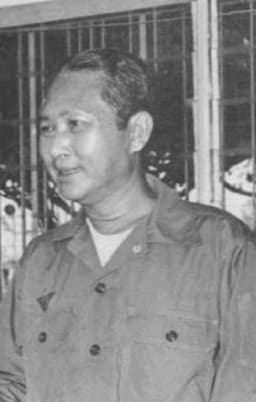
Lon Nol
General · Modern
41.5Total
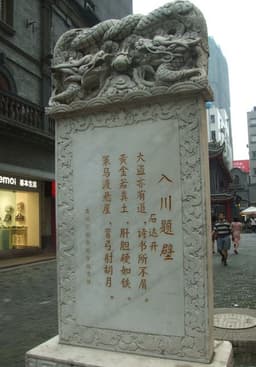
Shi Dakai
General · Modern
59.6Total
Basic Information
Born
1913
1831
Died
1985
1863
Era
Modern
Modern
Nationality
Cambodia
China
Occupation
General
General
Civilization
Eastern
Eastern
Score Comparison
Military (10%)
25.9
76.0
Political (20%)
30.8
45.0
Influence (20%)
47.9
56.7
Legacy (20%)
38.3
54.0
Leadership (15%)
61.1
72.0
Strategy (15%)
35.7
68.1
TOTAL
41.5
59.6
Lon Nol — Complete Timeline
1970 AD
Coup against Norodom SihanoukPolitical Action
Lon Nol led a military coup that overthrew King Sihanouk while he was abroad. He established the Khmer Republic, ending the monarchy and aligning Cambodia with the United States during the Vietnam War.
CoupKhmer RepublicUS alliance
Impact: nationaldestructive
Declaration of the Khmer RepublicPolitical Action◆ Major
Lon Nol officially proclaimed the Khmer Republic, abolishing the monarchy. He became president and implemented a pro-American, anti-communist regime, which led to civil war with the Khmer Rouge and North Vietnamese forces.
RepublicRegime changeCivil War
Impact: national
1975 AD
Fall of Phnom PenhWar
Lon Nol's government collapsed as Khmer Rouge forces captured Phnom Penh. He fled into exile in the United States, ending the Khmer Republic and leading to the establishment of Democratic Kampuchea under Pol Pot.
Khmer Rouge victoryExileRegime collapse
Impact: nationaltragic
Shi Dakai — Complete Timeline
1851 AD
Jintian UprisingWar◆ Major
Shi Dakai joined the Taiping Rebellion at its inception in Jintian, Guangxi. As a core leader, he helped organize the rebel forces and was appointed Wing King, becoming one of the key military commanders of the Taiping Heavenly Kingdom.
Taiping RebellionUprisingMilitary Command
Impact: national
1854 AD
Battle of XiangtanWar◆ Major
Shi Dakai led Taiping forces to a major victory at Xiangtan, Hunan, defeating Qing imperial troops. This battle secured Taiping control over key territories in the Yangtze River valley and demonstrated his military skill.
Taiping RebellionBattleVictory
Impact: regional
1856 AD
Tianjing IncidentPolitical Action
Shi Dakai returned to Tianjing (Nanjing) after the internal purge of the Eastern King Yang Xiuqing and the murder of the Northern King Wei Changhui. He condemned the violence and was forced to flee, leading to a split in Taiping leadership.
Taiping RebellionInternal ConflictPurge
Impact: nationaltragic
1858 AD
Campaign in Zhejiang and FujianWar
Shi Dakai led a separate Taiping army into Zhejiang and Fujian provinces, capturing several cities. This campaign expanded Taiping influence into southeastern China but also isolated his forces from the main Taiping base.
Taiping RebellionCampaignExpansion
Impact: regional
1863 AD
Battle of Baishui RiverWar◆ Major
Shi Dakai's army was trapped and defeated by Qing forces at the Baishui River in Sichuan. He was captured and executed shortly after, marking the end of his military career and a significant loss for the Taiping cause.
Taiping RebellionBattleDefeatDeath
Impact: nationaltragic
Expert Analysis
Shi Dakai vs Lon Nol
### The General and the Wing King
On a sweltering March morning in 1970, Phnom Penh woke to find its monarch deposed. Norodom Sihanouk, the mercurial king who had balanced his nation between Cold War giants, was abroad, and his prime minister, a quiet general named Lon Nol, had seized power. A decade earlier, in a very different corner of Asia, a young commander named Shi Dakai had watched his own king fall—but not to a rival. In 1856, the Taiping Heavenly Kingdom tore itself apart in a bloodbath of purges and betrayals, and Shi Dakai, the brilliant Wing King, chose to flee rather than fight for a throne he did not want. Two generals, two revolutions, two utterly different fates. Why did one man’s coup lead to a brief, brutal republic, while the other’s loyalty ended in a river of sorrow?
### Origins
Lon Nol was born in 1913 into the Cambodian elite, the son of a provincial governor under French colonial rule. His world was one of order, hierarchy, and the quiet hum of bureaucracy. He studied law, served as a magistrate, and climbed the ranks of the civil service—a man who knew how to administer, not inspire. The French molded him, and he internalized their values of stability and control. When Cambodia gained independence in 1953, Lon Nol became a pillar of Sihanouk’s regime, a trusted general who never questioned the king’s authority—until he did.
Shi Dakai, born in 1831, came from a Hakka farming family in Guangxi, southern China. His world was one of poverty, banditry, and simmering resentment against the Manchu Qing dynasty. The Hakka were outsiders, and the young Shi Dakai grew up with a fierce sense of justice and a gift for martial arts. When a failed scholar named Hong Xiuquan proclaimed himself the brother of Jesus Christ and launched the Taiping Rebellion in 1851, Shi Dakai, barely twenty, joined without hesitation. He was not a bureaucrat; he was a warrior-prophet, driven by faith and fury.
### Rise to Power
Lon Nol’s path was paved with patience. He served Sihanouk faithfully for years, commanding the army and suppressing communist insurgencies. But by 1970, Sihanouk’s neutrality had alienated the United States, and the Vietnam War was bleeding into Cambodia. Lon Nol saw an opportunity. While Sihanouk was in Moscow, the general staged a bloodless coup, declaring the Khmer Republic on October 9, 1970. His rise was a parliamentary maneuver, not a popular uprising—a switch flipped in a backroom.
Shi Dakai’s rise was forged in fire. At the Jintian Uprising in 1851, he led troops with such skill that Hong Xiuquan appointed him the “Wing King,” one of the five core kings of the Taiping Heavenly Kingdom. In 1854, at the Battle of Xiangtan, he crushed Qing imperial forces, securing Hunan and proving himself a master of mobile warfare. His reputation grew not through politics but through blood and brilliance—a general who could turn a rout into a victory.
### Leadership & Governance
Lon Nol ruled as a strongman, not a visionary. He abolished the monarchy, renamed the country the Khmer Republic, and embraced American aid. But his government was corrupt, his army ill-disciplined, and his policies alienated the rural peasantry. He bombed the countryside to fight communist guerrillas, but his real enemy was the Khmer Rouge, a movement he helped create by driving Sihanouk into their arms. His political wisdom was nonexistent; he governed by decree, not dialogue.
Shi Dakai governed with a gentler hand. As Wing King, he administered the Taiping’s western provinces, imposing land reforms, promoting education, and enforcing a strict moral code. He was known for his justice—punishing corrupt officials and protecting civilians. His military genius, however, was his true gift. He could read terrain and timing like a poet reads meter. In 1858, he led a separate army into Zhejiang and Fujian, capturing cities and expanding the kingdom’s reach. He was a strategist who knew when to fight and when to withdraw.
### Triumph & Tragedy
Lon Nol’s greatest moment was his coup—a clean, swift seizure of power. But it was a hollow triumph. The Khmer Republic collapsed in chaos. By 1975, the Khmer Rouge surrounded Phnom Penh. Lon Nol, crippled by a stroke and abandoned by his American allies, fled on a U.S. helicopter on April 1, 1975. Sixteen days later, the city fell. He died in exile in Hawaii in 1985, a forgotten man watching his country burn from afar.
Shi Dakai’s tragedy was deeper, more personal. After the Tianjing Incident of 1856, when Hong Xiuquan ordered the murder of the Eastern King and the Northern King, Shi Dakai returned to find his family slaughtered. He chose not to retaliate. Instead, he led his loyal troops away from the capital, a self-imposed exile that lasted years. In 1863, trapped by Qing forces at the Baishui River in Sichuan, he tried to surrender to save his men. The Qing executed him by slow slicing. He was 32.
### Character & Destiny
Lon Nol was a man of order who unleashed chaos. His personality—cautious, methodical, yet ambitious—led him to gamble on a coup without building a foundation. He believed power came from a title, not from people. His destiny was to be a footnote, a bridge between monarchy and genocide.
Shi Dakai was a man of principle who chose honor over ambition. He could have seized the Taiping throne after the purge; many urged him to. But he refused, valuing loyalty over power. His destiny was to be a wandering king, a tragic hero who fought for a lost cause. The Qing general who captured him reportedly wept at his courage.
### Legacy
Lon Nol’s legacy is almost entirely negative. He is remembered in Cambodia as the man who opened the door to the Khmer Rouge. His name appears in history books as a cautionary tale—a leader who, by clinging to power, destroyed his country. His total score of 65.7 reflects a leader who was competent but catastrophic.
Shi Dakai’s legacy is more complex. In China, he is celebrated as a folk hero, a symbol of resistance against tyranny. His military brilliance is studied in academies; his moral integrity is praised in poems. Yet his score of 71.4 hints at a flaw—his loyalty to a flawed movement. He could not save the Taiping, but he died with his honor intact.
### Conclusion
Standing at the Baishui River in 1863, Shi Dakai must have known the end was near. He had chosen exile over betrayal, loyalty over ambition. A century later, Lon Nol sat in a helicopter above Phnom Penh, fleeing the very chaos he had unleashed. One man died for a kingdom that had already betrayed him; the other lived to see his republic crumble. In the end, both were victims of their times—but only one chose how to fall. The general seized power; the Wing King surrendered to fate. History, as always, judges not just the outcome, but the heart.
Rankings
🥇
Shi DakaiLeader
Mil: 76.0Pol: 45.0Inf: 56.7
59.6
🥈
Lon Nol
Mil: 25.9Pol: 30.8Inf: 47.9
41.5
+18.1 behind
How This Comparison Works
Algorithm
Each figure is scored on 6 dimensions (0—100 scale) based on structured historical data: Military (10%), Political (20%), Influence (20%), Legacy (20%), Leadership (15%), Strategy (15%). The weighted total produces the final ranking.
Data Sources
Scores are computed from structured sub-indicators in the database. Scale factors adjust for era (Ancient ×0.85, Modern ×1.0) and civilization size (Eastern ×1.05, Other ×0.80) to account for differences in population and military scale.
Maximum 3 Figures
Comparisons are limited to 2—3 figures to ensure readability and statistical meaningfulness.
Error Margins
±5 points per dimension — Sub-scores are derived from historical records with inherent uncertainty. Two figures within 5 points on a dimension should be considered roughly equivalent in that area.
Total Score Accuracy
±3 points overall — The weighted combination of 6 dimensions produces a total score with approximately ±3 points of uncertainty. Differences of less than 3 points are not statistically significant— the figures are effectively tied.
Known Limitations
- Historical records are incomplete and uneven across civilizations
- Figures from oral-tradition societies may be underrepresented
- Occupation labels can misclassify multi-role figures
- Scores measure capability and impact, not moral character
- Quantitative scoring is a comparison tool, not absolute truth
Capability Radar
Military (10%) — Battles & Warfare
Battles
15
75
Win Rate
10
70
Expansion
5
75
Political (20%) — Governance & Reform
Reform
10
50
Diplomacy
15
45
Economy
5
40
Influence (20%) — Cultural & Global Reach
Cultural
5
55
Global
10
40
Legacy (20%) — Historical Impact
Historical
15
60
Longevity
5
45
Leadership (15%) — Power & Stability
Tenure
40
55
Stability
5
35
Strategy (15%) — Tactics & Innovation
Strategy
15
80
Tactics
20
85
Reform
10
60
Similar Comparisons
Comments & Discussion
KingWhoRan6/16/2026
Shi Dakai didn't lead a coup because he knew leadership is about serving, not seizing—he fled the Taiping bloodbath in 1856 out of integrity, while Lon Nol's 1970 power grab was pure opportunism. History remembers Dakai as the Wing King who chose exile over violence; Lon Nol just handed Cambodia to Pol Pot. One took moral high ground, the other triggered genocide. No contest.
数据清算师6/16/2026
别被浪漫故事骗了——石达开带领二十万人西征时,他真能管理这么多土匪吗?史料显示供给线崩溃是必然的,他那“胜利”全是吹出来的。而龙诺至少搞了个正式政变,没搞内部分裂。你们说伟大将军?我看就是个运气好的军阀,把失败美化成悲剧。
WingedSkeptic6/16/2026
Revisionists love to canonize Shi Dakai as the tragic hero, but let's be real: his Great Escape from Tianjing in 1857 wasn't loyalty—it was a power move to avoid being purged. He had 200,000 followers yet achieved zero strategic victories in Sichuan. Compare that to Lon Nol, who at least controlled a country for five years. One was a competent bureaucrat; the other was a charismatic failure. History's bias toward poetry over pragmatism is embarrassing.
血河观察6/16/2026
龙诺废黜西哈努克时忘了柬埔寨是冷战的棋子——他1970年押注美国,却中了越南共产主义的陷阱。石达开至少明白自己在打清朝,目标明确。而龙诺那共和国撑了五年就崩塌,直接把柬埔寨拖入大屠杀。两位都没赢,但石达开在历史中拥有一席悲哀尊严,龙诺只配做历史的脚注。