Loading...
Lon Nol vs Louis Botha
Louis Botha leads by 19.6 pts · 2 figures compared
…
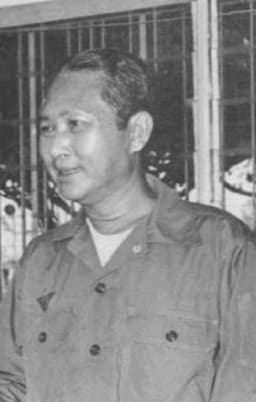
Lon Nol
General · Modern
41.5Total
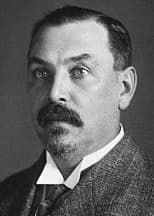
Louis Botha
General · Modern
61.1Total
Basic Information
Born
1913
1862
Died
1985
1919
Era
Modern
Modern
Nationality
Cambodia
South Africa
Occupation
General
General
Civilization
Eastern
Other
Score Comparison
Military (10%)
25.9
61.7
Political (20%)
30.8
70.0
Influence (20%)
47.9
56.7
Legacy (20%)
38.3
50.0
Leadership (15%)
61.1
79.8
Strategy (15%)
35.7
58.0
TOTAL
41.5
61.1
Lon Nol — Complete Timeline
1970 AD
Coup against Norodom SihanoukPolitical Action
Lon Nol led a military coup that overthrew King Sihanouk while he was abroad. He established the Khmer Republic, ending the monarchy and aligning Cambodia with the United States during the Vietnam War.
CoupKhmer RepublicUS alliance
Impact: nationaldestructive
Declaration of the Khmer RepublicPolitical Action◆ Major
Lon Nol officially proclaimed the Khmer Republic, abolishing the monarchy. He became president and implemented a pro-American, anti-communist regime, which led to civil war with the Khmer Rouge and North Vietnamese forces.
RepublicRegime changeCivil War
Impact: national
1975 AD
Fall of Phnom PenhWar
Lon Nol's government collapsed as Khmer Rouge forces captured Phnom Penh. He fled into exile in the United States, ending the Khmer Republic and leading to the establishment of Democratic Kampuchea under Pol Pot.
Khmer Rouge victoryExileRegime collapse
Impact: nationaltragic
Louis Botha — Complete Timeline
1899 AD
Battle of ColensoWar◆ Major
Botha commanded Boer forces at the Battle of Colenso during the Second Boer War. His troops repelled a British attack under General Buller, inflicting heavy casualties and boosting Boer morale.
Second Boer WarBattleVictory
Impact: regional
1900 AD
Boer War Guerrilla CommanderWar◆ Major
After the British captured Pretoria, Botha led Boer guerrilla forces in the Transvaal. He conducted hit-and-run attacks against British columns, prolonging the war and becoming a symbol of Afrikaner resistance.
Second Boer WarGuerrillaResistance
Impact: regional
1902 AD
Signed the Treaty of VereenigingPolitical Action
Botha, as a leading Boer general, signed the Treaty of Vereeniging which ended the Second Boer War. The treaty granted the Boer republics self-government under British sovereignty and promised eventual self-rule.
TreatyPeaceSecond Boer War
Impact: regional
1910 AD
First Prime Minister of the Union of South AfricaPolitical Action
Botha became the first Prime Minister of the newly formed Union of South Africa. He led a coalition government that sought to reconcile Afrikaners and English-speaking whites, while implementing segregationist policies.
Prime MinisterUnion of South AfricaFounding
Impact: nationalconstructive
1914 AD
Suppressed the 1914 RebellionWar◆ Major
Botha personally led government forces to suppress the Maritz Rebellion, an Afrikaner uprising against South Africa's entry into World War I. He defeated the rebels, asserting state authority and maintaining support for the British Empire.
RebellionWorld War ISuppression
Impact: national
1915 AD
Conquered German South West AfricaWar◆ Major
Botha commanded South African forces in the invasion and conquest of German South West Africa. The campaign succeeded, and the territory was later administered by South Africa under a League of Nations mandate.
World War IConquestGerman South West Africa
Impact: regional
Expert Analysis
Louis Botha vs Lon Nol
# The General Who Lost a Kingdom, and the General Who Built One
In the spring of 1975, as Khmer Rouge forces tightened their noose around Phnom Penh, a frail and exhausted Lon Nol boarded a plane for exile in the United States. He left behind a country he had promised to save, now sliding into one of the darkest genocides of the twentieth century. Just sixty years earlier and half a world away, Louis Botha stood on the deck of a troopship headed for German South West Africa, a man who had lost a war against the British Empire only to win a peace that made him the founding prime minister of a new nation. Both men were generals. Both led small nations against overwhelming powers. One built a state; the other watched his crumble. Why?
Origins
Lon Nol was born in 1913 into the Cambodian elite, the son of a provincial governor under French colonial rule. He grew up in a world where power flowed from Paris, where the monarchy was sacred, and where independence seemed an abstract dream. He studied law, joined the civil service, and rose through a system that rewarded loyalty to the French and to King Norodom Sihanouk. His Cambodia was a fragile kingdom, squeezed between Vietnam and Thailand, its identity shaped by centuries of foreign domination.
Louis Botha’s birth in 1862 placed him in the rugged highveld of the South African Republic, a world of Boer farmers who had trekked into the interior to escape British rule. His father was a Voortrekker, one of those who had fought Zulu kingdoms and British redcoats alike. Botha grew up speaking Afrikaans, riding horses, and learning that freedom meant the right to govern oneself without interference from London. His South Africa was a land of bitter conflict, where Boer and Briton, black and white, fought for control of gold, land, and destiny.
Rise to Power
Lon Nol’s path was cautious and bureaucratic. He served as a provincial governor, then as army chief, always careful to remain in Sihanouk’s favor. When Sihanouk’s neutrality during the Vietnam War angered Washington, Lon Nol saw his moment. In 1970, while Sihanouk was abroad in Moscow, Lon Nol led a bloodless coup. He declared the Khmer Republic, abolished the monarchy, and aligned Cambodia with the United States. It was a gamble born of opportunity, not vision.
Botha’s rise was forged in fire. When the Second Boer War erupted in 1899, he was a farmer, not a professional soldier. But at the Battle of Colenso in December 1899, he commanded Boer forces that repelled a British assault, inflicting heavy casualties. When Pretoria fell in 1900, Botha refused to surrender. He became a guerrilla commander, leading hit-and-run attacks across the Transvaal, keeping the war alive for two more years. His reputation as a tenacious fighter made him a natural leader when peace came.
Leadership & Governance
As president of the Khmer Republic, Lon Nol faced an impossible situation. His army was corrupt and demoralized. His American allies were bombing the countryside, radicalizing peasants who flocked to the Khmer Rouge. He tried to impose martial law, but his health was failing—he suffered a stroke in 1971 that left him partially paralyzed. His governance was erratic: he purged rivals, promoted loyalists, and relied on mysticism, consulting astrologers even as his country collapsed. His political score of 74.3 reflects the initial promise of his coup, but his military score of 44.6 tells the truer story: he could not command the war he had started.
Botha, by contrast, was a master of political transformation. As prime minister of the Union of South Africa from 1910, he had to unite Boer and Briton, former enemies who had fought a brutal war. He formed a coalition government, sought reconciliation, and pushed for self-government within the British Empire. When Afrikaner hardliners rebelled in 1914, Botha personally led government forces to crush the Maritz Rebellion. Then he turned his army outward, conquering German South West Africa in 1915, a campaign that secured South Africa’s regional dominance. His leadership score of 89.6 and political score of 83.0 reflect a man who could fight and govern.
Triumph & Tragedy
Lon Nol’s greatest moment was also his undoing. The 1970 coup was a triumph of timing, but it unleashed forces he could not control. The Khmer Rouge, backed by North Vietnam, grew stronger each year. By 1975, his regime was a shell, its army unpaid, its capital starving. When Phnom Penh fell on April 17, 1975, Lon Nol was already in Hawaii, a broken man watching from afar as his country descended into the killing fields.
Botha’s triumph was the Treaty of Vereeniging in 1902, which ended the Boer War and granted the former republics self-government. He had lost the war, but he won the peace. His tragedy came later: as prime minister, he pursued a policy of racial segregation that laid the groundwork for apartheid. He was a man of his time, but his choices cast long shadows.
Character & Destiny
Lon Nol was a man of order who brought chaos. He overthrew a king to save a kingdom, but he lacked the ruthlessness to win a civil war and the flexibility to make peace. His personality was cautious, almost passive, until the moment of the coup—then it became reckless. He trusted American power to save him, but America was already withdrawing from Vietnam. His destiny was to be a tragic hinge, the man who opened the door to Pol Pot.
Botha was a man of action who learned patience. He fought the British to a standstill, then negotiated with them. He suppressed a rebellion, then built a nation. His character was pragmatic, not ideological. He knew when to fight and when to compromise. His destiny was to be a founder, the first leader of a state that would endure, however flawed.
Legacy
Lon Nol’s legacy is almost entirely negative. He is remembered as the general who destroyed Cambodia’s monarchy and inadvertently enabled genocide. His name appears in history books as a footnote, a warning against hubris and dependence on foreign powers. His legacy score of 53.6 reflects this ambiguous, largely tragic memory.
Botha’s legacy is more complex. He is celebrated as a father of South African unity, but also criticized for entrenching white supremacy. His conquest of German South West Africa expanded South African influence, but also set the stage for decades of colonial rule in Namibia. His legacy score of 66.8 places him as a significant but contested figure, a man who built a nation on foundations that would later crack.
Conclusion
Standing at the edge of history, one sees these two generals as mirrors of each other. Both faced empires; both fought wars; both led new states. But Lon Nol was a man of the moment, swept up by events he could not master. Botha was a man of the age, who shaped events to his will. The difference was not just skill or luck—it was the ability to see beyond the battlefield, to understand that winning a war is meaningless if you cannot build a peace. Lon Nol could not. Botha could. And that made all the difference between a kingdom lost and a nation born.
Rankings
🥇
Louis BothaLeader
Mil: 61.7Pol: 70.0Inf: 56.7
61.1
🥈
Lon Nol
Mil: 25.9Pol: 30.8Inf: 47.9
41.5
+19.6 behind
How This Comparison Works
Algorithm
Each figure is scored on 6 dimensions (0—100 scale) based on structured historical data: Military (10%), Political (20%), Influence (20%), Legacy (20%), Leadership (15%), Strategy (15%). The weighted total produces the final ranking.
Data Sources
Scores are computed from structured sub-indicators in the database. Scale factors adjust for era (Ancient ×0.85, Modern ×1.0) and civilization size (Eastern ×1.05, Other ×0.80) to account for differences in population and military scale.
Maximum 3 Figures
Comparisons are limited to 2—3 figures to ensure readability and statistical meaningfulness.
Error Margins
±5 points per dimension — Sub-scores are derived from historical records with inherent uncertainty. Two figures within 5 points on a dimension should be considered roughly equivalent in that area.
Total Score Accuracy
±3 points overall — The weighted combination of 6 dimensions produces a total score with approximately ±3 points of uncertainty. Differences of less than 3 points are not statistically significant— the figures are effectively tied.
Known Limitations
- Historical records are incomplete and uneven across civilizations
- Figures from oral-tradition societies may be underrepresented
- Occupation labels can misclassify multi-role figures
- Scores measure capability and impact, not moral character
- Quantitative scoring is a comparison tool, not absolute truth
Capability Radar
Military (10%) — Battles & Warfare
Battles
15
65
Win Rate
10
70
Expansion
5
60
Political (20%) — Governance & Reform
Reform
10
65
Diplomacy
15
70
Economy
5
55
Influence (20%) — Cultural & Global Reach
Cultural
5
45
Global
10
50
Legacy (20%) — Historical Impact
Historical
15
55
Longevity
5
40
Leadership (15%) — Power & Stability
Tenure
40
60
Stability
5
50
Strategy (15%) — Tactics & Innovation
Strategy
15
72
Tactics
20
68
Reform
10
55
Similar Comparisons
Comments & Discussion
GENERAL-OF-ASHES6/16/2026
Botha knew how to lose a war and win the peace; Lon Nol knew how to lose everything. Botha surrendered at Vereeniging in 1902, then turned Boer bitterness into the Union of South Africa by 1910. That’s not luck, it’s political genius—working *with* the empire you fought. Lon Nol, by contrast, declared himself president in 1974, isolated himself in Phnom Penh, and let his army fall apart. He didn’t just lose to the Khmer Rouge; he lost to his own indecision.
废墟统帅6/16/2026
Botha这个布尔人知道怎么在输掉战争后收割和平,Lon Nol却只会把国家往火坑里推。前者1902年投降,1910年当上南非总理——不是运气,是政治嗅觉。后者1975年总统当到一半就逃去夏威夷,连美国人都懒得扶他一把。Lon Nol的柬埔寨就是个纸牌屋,风一吹就散,而Botha至少把英帝国当跳板。
DATA-SKEPTIC6/16/2026
Let’s be real: Botha’s “success” is overrated. He led a white minority state that crushed black South Africans—his legacy is apartheid, not nation-building. Lon Nol at least fought for a neutral Cambodia against Vietnamese communists, even if he failed. Botha had British backing and Boer unity; Lon Nol had American bombs and a split elite. Compare casualty rates: Botha’s wars killed thousands, Lon Nol’s civil war killed millions. “Building” a racist state isn’t a win.
蒙太奇研究员6/16/2026
你们别被Botha的光环骗了。他当总理时干的啥?1907年通过《亚洲人登记法案》排挤印度人,1913年《原住民土地法》把黑人锁在贫瘠保留地。这叫建国?这叫种族隔离的温床。Lon Nol虽然蠢到把把柄交给红色高棉,但他的柬中立路线至少试过平衡越南和泰国。Botha的成功是建立在黑人的血泪上,而Lon Nol的失败是输给了更野蛮的力量。
CLASSICS-SCHOLAR6/16/2026
Botha embodied the pragmatism of a Caesar—he knew when to bend the knee to Rome. After the Boer War’s scorched earth, he negotiated the Transvaal’s autonomy, then led South Africa into World War I as a British ally. That’s realpolitik. Lon Nol, though, echoes a tragic Pompey: clinging to a dying order, dreaming of a restored monarchy, but lacking the grace to retreat. Botha studied his enemy; Lon Nol studied the Kama Sutra of hopelessness.