Loading...
Liu Xuan vs Rehoboam
Rehoboam leads by 3.2 pts · 2 figures compared
…
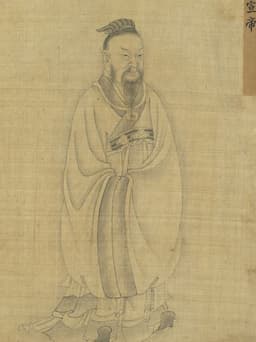
Liu Xuan
Emperor · Ancient
37.1Total
Rehoboam
Emperor · Ancient
40.3Total
Basic Information
Born
-10
-931
Died
25
-913
Era
Ancient
Ancient
Nationality
China
Judah
Occupation
Emperor
Emperor
Civilization
Eastern
Middle Eastern
Score Comparison
Military (10%)
22.6
47.5
Political (20%)
35.0
35.0
Influence (20%)
42.4
44.8
Legacy (20%)
33.3
38.3
Leadership (15%)
44.5
38.1
Strategy (15%)
39.6
38.6
TOTAL
37.1
40.3
Liu Xuan — Complete Timeline
23 AD
Proclaimed Gengshi EmperorPolitical Action◆ Major
Liu Xuan was proclaimed emperor of the restored Han dynasty by rebel forces, taking the reign title Gengshi. His ascension marked the beginning of the Han restoration after Wang Mang's Xin dynasty fell. He established his capital at Chang'an.
RestorationHan DynastyRebellion
Impact: national
25 AD
Defeated by Red EyebrowsWar◆ Major
The Red Eyebrows rebel army defeated Liu Xuan's forces and captured Chang'an. Liu Xuan surrendered and was initially spared, but was later killed by the Red Eyebrows. His brief reign ended, and the Han restoration passed to Liu Xiu (Emperor Guangwu).
Civil WarRed EyebrowsDefeat
Impact: nationaltragic
Rehoboam — Complete Timeline
931 BC
Refusal to Lighten the Tax BurdenPolitical Action
At Shechem, Rehoboam rejected the elders' advice to reduce taxes and instead threatened to increase them, saying 'My little finger is thicker than my father's loins.' This caused the ten northern tribes to rebel and form the Kingdom of Israel.
Kingdom SplitRevoltTaxation
Impact: nationaldestructive
930 BC
Fortification of Judah's CitiesReform◆ Major
Rehoboam fortified numerous cities in Judah, including Bethlehem, Hebron, and Lachish, to defend against the northern kingdom. He also strengthened the army and stored weapons, preparing for the ongoing conflict with Jeroboam.
FortificationDefenseJudah
Impact: national
925 BC
Invasion by Shishak of EgyptWar◆ Major
Pharaoh Shishak of Egypt invaded Judah in the fifth year of Rehoboam's reign. He captured Jerusalem and plundered the Temple and the royal palace, taking the gold shields Solomon had made. This weakened Judah's economy and prestige.
Egyptian InvasionPlunderJerusalem
Impact: regionaldestructive
Expert Analysis
Origins
Liu Xuan, born in 1st century BC, was a member of the Han imperial clan, a descendant of Emperor Jing. His early life was marked by the turmoil of Wang Mang's Xin dynasty, which had usurped the Han throne. Little is known of his youth, but he likely lived in obscurity until the outbreak of rebellions against Wang Mang. Liu Xuan joined the Lulin rebel group, where his royal lineage made him a useful figurehead.
Rehoboam, born around 972 BC, was the son of King Solomon and Naamah, an Ammonite princess. He grew up in the opulent court of Israel, accustomed to wealth and power. His education included the wisdom traditions of his father, but he lacked Solomon's discernment. Rehoboam's mother, a foreigner, may have influenced his later policies.
Rise to Power
Liu Xuan's rise came in 23 AD when the Lulin and other rebel forces, seeking to restore Han legitimacy, proclaimed him emperor with the reign title Gengshi. This was a strategic move: as a Liu clan member, he could rally support against Wang Mang. His forces captured Chang'an, and Wang Mang was killed. Liu Xuan then established his court, but his authority was fragile, challenged by other rebel leaders.
Rehoboam ascended the throne in 931 BC after Solomon's death. The kingdom was unified but strained by heavy taxation and forced labor. The northern tribes, led by Jeroboam, demanded relief. Rehoboam consulted both older advisors, who counseled leniency, and his peers, who advocated harshness. He chose the latter, famously declaring, "My little finger is thicker than my father's thighs." This triggered the secession of ten tribes, forming the northern Kingdom of Israel, leaving Rehoboam only Judah and Benjamin.
Leadership & Governance
Liu Xuan's leadership was ineffective. He failed to consolidate power, allowing rival generals like Liu Xiu (future Emperor Guangwu) to gain influence. He alienated key allies, such as the Red Eyebrows, by favoring his own faction. His governance was marked by purges and indecision. For example, he executed a loyal general, Liu Yan, on suspicion, weakening his own base. Liu Xuan scored 44.5 in leadership, reflecting his inability to command loyalty.
Rehoboam's governance was similarly flawed. His tax policy was politically tone-deaf, causing the kingdom's split. He fortified cities in Judah (Bethlehem, Hebron, Lachish) but failed to secure the northern border. He allowed idolatry, building high places and Asherah poles, which the biblical account condemns. His military score of 47.5 is modest; he could not prevent Shishak's invasion. Rehoboam's political score of 35.0 matches Liu Xuan's, showing poor statecraft.
Triumph & Tragedy
Liu Xuan's greatest success was overseeing the overthrow of Wang Mang and the initial restoration of Han. He entered Chang'an in triumph. However, his tragedy was swift: he lost control to the Red Eyebrows, who defeated him in 25 AD. He surrendered and was spared initially, but was later killed by his captors. His reign lasted less than three years. His legacy score of 33.3 reflects this ephemeral rule.
Rehoboam's triumph was maintaining a rump kingdom in Judah for 17 years. He fortified cities and preserved the Davidic line. His tragedy was the permanent division of Israel and the plundering of the Temple by Shishak of Egypt, who took the treasures Solomon had accumulated. This loss was a national humiliation. Rehoboam's influence score of 44.8 is higher than Liu Xuan's 42.4, as his actions shaped biblical history.
Character & Destiny
Liu Xuan was indecisive and suspicious, a fatal combination for a rebel leader. He relied on flattery and failed to build trust. His character led to isolation; even his own generals abandoned him. He scored 39.6 in strategy, showing poor military judgment. His destiny was to be a pawn in larger forces.
Rehoboam was arrogant and inexperienced. His refusal to listen to elders was a classic error of youth. He was also religiously syncretistic, which the biblical authors blamed for his misfortunes. His strategic score of 38.6 is similar to Liu Xuan's, indicating limited foresight. His destiny was to preside over a diminished kingdom, a cautionary tale of pride.
Legacy
Liu Xuan's legacy is minimal. He is a footnote in Han history, overshadowed by Guangwu's successful restoration. The Gengshi reign is sometimes used to date events, but his impact on Chinese history is negligible. His scores: military 22.6, political 35.0, influence 42.4, legacy 33.3.
Rehoboam's legacy is more significant. He is remembered as the king who split Israel, a key event in Jewish history. His story is recorded in 1 Kings and 2 Chronicles, serving as a moral lesson. The division led to the separate histories of Israel and Judah, with long-term consequences. His influence score of 44.8 reflects this.
Conclusion
While both rulers failed, Rehoboam had greater historical impact. His decision to reject tax relief directly caused the permanent split of the Israelite monarchy, shaping centuries of conflict. Liu Xuan's failure only delayed the inevitable rise of Guangwu. Rehoboam's score of 40.3 vs. Liu Xuan's 37.1 reflects this disparity. Rehoboam's actions are still studied in religious and historical contexts, while Liu Xuan is largely forgotten. Thus, Rehoboam emerges as the more consequential figure, despite his flaws.
Rankings
🥇
RehoboamLeader
Mil: 47.5Pol: 35.0Inf: 44.8
40.3
🥈
Liu Xuan
Mil: 22.6Pol: 35.0Inf: 42.4
37.1
+3.2 behind
How This Comparison Works
Algorithm
Each figure is scored on 6 dimensions (0—100 scale) based on structured historical data: Military (10%), Political (20%), Influence (20%), Legacy (20%), Leadership (15%), Strategy (15%). The weighted total produces the final ranking.
Data Sources
Scores are computed from structured sub-indicators in the database. Scale factors adjust for era (Ancient ×0.85, Modern ×1.0) and civilization size (Eastern ×1.05, Other ×0.80) to account for differences in population and military scale.
Maximum 3 Figures
Comparisons are limited to 2—3 figures to ensure readability and statistical meaningfulness.
Error Margins
±5 points per dimension — Sub-scores are derived from historical records with inherent uncertainty. Two figures within 5 points on a dimension should be considered roughly equivalent in that area.
Total Score Accuracy
±3 points overall — The weighted combination of 6 dimensions produces a total score with approximately ±3 points of uncertainty. Differences of less than 3 points are not statistically significant— the figures are effectively tied.
Known Limitations
- Historical records are incomplete and uneven across civilizations
- Figures from oral-tradition societies may be underrepresented
- Occupation labels can misclassify multi-role figures
- Scores measure capability and impact, not moral character
- Quantitative scoring is a comparison tool, not absolute truth
Capability Radar
Military (10%) — Battles & Warfare
Battles
10
5
Win Rate
10
5
Expansion
5
0
Political (20%) — Governance & Reform
Reform
5
5
Diplomacy
10
5
Economy
5
10
Influence (20%) — Cultural & Global Reach
Cultural
5
15
Global
5
10
Legacy (20%) — Historical Impact
Historical
15
30
Longevity
5
20
Leadership (15%) — Power & Stability
Tenure
15
40
Stability
5
5
Strategy (15%) — Tactics & Innovation
Strategy
10
5
Tactics
10
5
Reform
5
0
Similar Comparisons
Comments & Discussion
No comments yet. Be the first to share your thoughts!