Loading...
Chadae of Goguryeo vs Liu Xuan
Liu Xuan leads by 0.7 pts · 2 figures compared
…

Chadae of Goguryeo
Emperor · Ancient
36.4Total
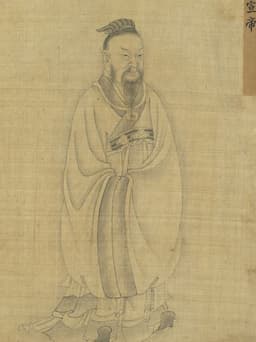
Liu Xuan
Emperor · Ancient
37.1Total
Basic Information
Born
146
-10
Died
165
25
Era
Ancient
Ancient
Nationality
Goguryeo
China
Occupation
Emperor
Emperor
Civilization
Eastern
Eastern
Score Comparison
Military (10%)
25.9
22.6
Political (20%)
35.0
35.0
Influence (20%)
42.4
42.4
Legacy (20%)
32.5
33.3
Leadership (15%)
39.0
44.5
Strategy (15%)
39.6
39.6
TOTAL
36.4
37.1
Chadae of Goguryeo — Complete Timeline
146 AD
Seizure of the throne from TaejoPolitical Action◆ Major
Chadae, younger brother of the aged Taejo, usurped the throne by force. He killed several of Taejo's sons and supporters, establishing a reign of terror that marked a sharp break from the stability of his predecessor.
UsurpationCoupRegicide
Impact: nationaldestructive
147 AD
Reign of terror and purgesPolitical Action◆ Major
Chadae initiated a series of purges against the nobility and royal family, executing or exiling anyone he perceived as a threat. This created an atmosphere of fear, weakened the central government, and alienated the powerful clans.
PurgeTyrannyPolitical Violence
Impact: nationaldestructive
Liu Xuan — Complete Timeline
23 AD
Proclaimed Gengshi EmperorPolitical Action◆ Major
Liu Xuan was proclaimed emperor of the restored Han dynasty by rebel forces, taking the reign title Gengshi. His ascension marked the beginning of the Han restoration after Wang Mang's Xin dynasty fell. He established his capital at Chang'an.
RestorationHan DynastyRebellion
Impact: national
25 AD
Defeated by Red EyebrowsWar◆ Major
The Red Eyebrows rebel army defeated Liu Xuan's forces and captured Chang'an. Liu Xuan surrendered and was initially spared, but was later killed by the Red Eyebrows. His brief reign ended, and the Han restoration passed to Liu Xiu (Emperor Guangwu).
Civil WarRed EyebrowsDefeat
Impact: nationaltragic
Expert Analysis
Origins
Chadae of Goguryeo (born c. 71 AD) was the younger brother of King Taejo, the long-reigning monarch who had ruled Goguryeo for nearly a century. As a prince of the royal house, Chadae grew up in the shadow of his brother's extended rule. Little is recorded about his early life, but as Taejo aged, Chadae likely accumulated resentment and ambition. He was part of the Go dynasty, which had founded Goguryeo in 37 BC. His upbringing would have been steeped in military traditions and court intrigue, typical of Korean aristocratic education.
Liu Xuan (born c. 1 BC) was a descendant of the Han imperial family, specifically a member of the Liu clan that had ruled China for over two centuries. He was a distant relative of the former emperor Liu Xin (Emperor Ai). Growing up during the interregnum of Wang Mang's Xin dynasty, Liu Xuan experienced the collapse of Han authority and the rise of widespread rebellion. His early life was likely marked by poverty and obscurity, as many imperial relatives fell from grace. He was part of the Luling branch of the Liu family, which produced several contenders for the throne.
Rise to Power
Chadae seized power in 146 AD when his brother Taejo was over 90 years old. Taejo had ruled for 93 years, the longest reign in Korean history. Chadae, then in his 70s, staged a coup, killing several of Taejo's sons and supporters. He justified his usurpation by claiming Taejo was senile. Chadae's rise was swift and brutal, relying on a faction of disgruntled nobles and military commanders. He established a reign of terror, executing or exiling anyone he perceived as a threat. This purge extended to the royal family, including his nephews. His political score of 35.0 reflects the effectiveness of his coup but the instability it caused.
Liu Xuan rose to prominence in 23 AD when rebel forces, led by the Lulin and Xinshi armies, proclaimed him the Gengshi Emperor, restoring the Han dynasty. He was chosen as a figurehead because of his imperial lineage and perceived weakness. His ascension marked the beginning of the Gengshi era (23-25 AD). Key turning points included the Battle of Kunyang, where his general Liu Xiu (later Emperor Guangwu) defeated Wang Mang's main army. However, Liu Xuan's own military score of 22.6 indicates his lack of personal command. He relied on alliances with rebel groups like the Red Eyebrows, who later turned against him.
Leadership & Governance
Chadae's leadership style was autocratic and paranoid. He ruled through fear, executing officials and nobles without trial. He centralized power but alienated the aristocracy, leading to a fragmented court. His reign lasted only about two years (146-147 AD). He made no significant reforms; instead, he reversed Taejo's policies of stability. His military score of 25.9 reflects his inability to defend the realm or expand territory. His leadership score of 39.0 is slightly higher due to his ruthless decisiveness, but this was a negative trait.
Liu Xuan attempted to govern as a Han emperor, issuing edicts and appointing officials from various rebel factions. He moved the capital to Chang'an and tried to restore Han institutions. However, he lacked the authority to control his subordinates. He failed to integrate the Red Eyebrows, who were given land but no real power. His leadership score of 44.5 is the highest among his scores, indicating some ability to inspire loyalty, but it was insufficient. He made the critical mistake of not rewarding the Red Eyebrows adequately, leading to their rebellion. His political score of 35.0 matches Chadae's, showing similar incompetence in managing factions.
Triumph & Tragedy
Chadae's greatest success was seizing the throne from a long-reigning king, a feat of political maneuvering. However, his reign was a tragedy: he was overthrown by his nephew, King Sindae, in 147 AD after only two years. His purges weakened the royal family and left Goguryeo vulnerable to internal strife. He died in exile or was killed, and his name was later expunged from some records. His legacy score of 32.5 reflects how he is remembered primarily as a tyrant.
Liu Xuan's greatest success was being recognized as emperor and briefly holding Chang'an, the traditional Han capital. He oversaw the defeat of Wang Mang, ending the Xin dynasty. However, his tragedy was his inability to consolidate power. The Red Eyebrows defeated him in 25 AD, and he surrendered, hoping to be spared. He was killed by them later that year. His reign lasted only two years as well. His influence score of 42.4 is decent because his reign was a transitional phase, but his legacy score of 33.3 is low due to his failure.
Character & Destiny
Chadae was ambitious and ruthless, but lacked strategic vision. His paranoia led him to eliminate potential rivals, which ironically created new enemies. His character sealed his fate: he could not trust anyone, so he ruled alone and was easily overthrown. Historical assessments paint him as a cautionary tale of tyranny.
Liu Xuan was indecisive and weak-willed, a figurehead who could not assert authority. He relied on others and made poor alliances. His destiny was to be a placeholder, and his death was a result of his inability to lead. Historians view him as a tragic figure who was out of his depth.
Legacy
Chadae's impact on Goguryeo was negative: he destabilized the kingdom, leading to a period of decline. However, his brief reign had no lasting institutional changes. Goguryeo recovered under later kings, and Chadae is mostly forgotten outside of academic circles. His legacy score of 32.5 is the lowest among the two.
Liu Xuan's legacy is more significant: his reign marked the end of the Xin dynasty and the beginning of the Eastern Han. Although he failed, his defeat by the Red Eyebrows paved the way for Liu Xiu (Emperor Guangwu) to reunite China. Liu Xuan is remembered as the Gengshi Emperor, a minor figure in the Han restoration. His influence score of 42.4 is higher because his reign was a critical juncture.
Conclusion
While both rulers were failures, Liu Xuan had a greater impact on history. His brief restoration of Han, though unsuccessful, set the stage for the Eastern Han dynasty, which lasted nearly 200 years. His score of 37.1 vs. Chadae's 36.4 reflects this, but the gap is small. However, Liu Xuan's role in the transition from Xin to Eastern Han is historically significant, whereas Chadae's tyranny was a mere blip in Goguryeo's history. Therefore, Liu Xuan had the greater impact, despite his personal incompetence.
Rankings
🥇
Liu XuanLeader
Mil: 22.6Pol: 35.0Inf: 42.4
37.1
🥈
Chadae of Goguryeo
Mil: 25.9Pol: 35.0Inf: 42.4
36.4
+0.7 behind
How This Comparison Works
Algorithm
Each figure is scored on 6 dimensions (0—100 scale) based on structured historical data: Military (10%), Political (20%), Influence (20%), Legacy (20%), Leadership (15%), Strategy (15%). The weighted total produces the final ranking.
Data Sources
Scores are computed from structured sub-indicators in the database. Scale factors adjust for era (Ancient ×0.85, Modern ×1.0) and civilization size (Eastern ×1.05, Other ×0.80) to account for differences in population and military scale.
Maximum 3 Figures
Comparisons are limited to 2—3 figures to ensure readability and statistical meaningfulness.
Error Margins
±5 points per dimension — Sub-scores are derived from historical records with inherent uncertainty. Two figures within 5 points on a dimension should be considered roughly equivalent in that area.
Total Score Accuracy
±3 points overall — The weighted combination of 6 dimensions produces a total score with approximately ±3 points of uncertainty. Differences of less than 3 points are not statistically significant— the figures are effectively tied.
Known Limitations
- Historical records are incomplete and uneven across civilizations
- Figures from oral-tradition societies may be underrepresented
- Occupation labels can misclassify multi-role figures
- Scores measure capability and impact, not moral character
- Quantitative scoring is a comparison tool, not absolute truth
Capability Radar
Military (10%) — Battles & Warfare
Battles
10
10
Win Rate
10
10
Expansion
10
5
Political (20%) — Governance & Reform
Reform
5
5
Diplomacy
5
10
Economy
5
5
Influence (20%) — Cultural & Global Reach
Cultural
5
5
Global
5
5
Legacy (20%) — Historical Impact
Historical
10
15
Longevity
5
5
Leadership (15%) — Power & Stability
Tenure
20
15
Stability
5
5
Strategy (15%) — Tactics & Innovation
Strategy
10
10
Tactics
10
10
Reform
5
5
Similar Comparisons
Comments & Discussion
No comments yet. Be the first to share your thoughts!