Loading...
Liu Xuan vs Psamtik II
Psamtik II leads by 0.9 pts · 2 figures compared
…
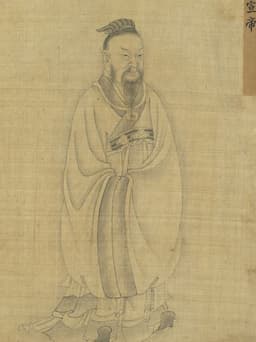
Liu Xuan
Emperor · Ancient
37.1Total

Psamtik II
Emperor · Ancient
38.0Total
Basic Information
Born
-10
-595
Died
25
-589
Era
Ancient
Ancient
Nationality
China
Late Period Egypt
Occupation
Emperor
Emperor
Civilization
Eastern
Middle Eastern
Score Comparison
Military (10%)
22.6
45.0
Political (20%)
35.0
26.4
Influence (20%)
42.4
44.8
Legacy (20%)
33.3
35.0
Leadership (15%)
44.5
38.1
Strategy (15%)
39.6
38.3
TOTAL
37.1
38.0
Liu Xuan — Complete Timeline
23 AD
Proclaimed Gengshi EmperorPolitical Action◆ Major
Liu Xuan was proclaimed emperor of the restored Han dynasty by rebel forces, taking the reign title Gengshi. His ascension marked the beginning of the Han restoration after Wang Mang's Xin dynasty fell. He established his capital at Chang'an.
RestorationHan DynastyRebellion
Impact: national
25 AD
Defeated by Red EyebrowsWar◆ Major
The Red Eyebrows rebel army defeated Liu Xuan's forces and captured Chang'an. Liu Xuan surrendered and was initially spared, but was later killed by the Red Eyebrows. His brief reign ended, and the Han restoration passed to Liu Xiu (Emperor Guangwu).
Civil WarRed EyebrowsDefeat
Impact: nationaltragic
Psamtik II — Complete Timeline
595 BC
Accession to the thronePolitical Action◆ Major
Psamtik II became pharaoh of the 26th Dynasty, succeeding his father Necho II. He inherited a kingdom that had regained independence from Assyrian control and was experiencing a cultural renaissance.
Accession26th DynastySaite
Impact: national
593 BC
Nubian campaignWar◆ Major
Psamtik II launched a military expedition into Nubia, reaching as far as the Third Cataract. The campaign aimed to deter Kushite threats and assert Egyptian dominance, but did not result in permanent conquest.
Nubian CampaignKushiteMilitary
Impact: regional
Erasure of Kushite monumentsCultural◆ Major
Following the Nubian campaign, Psamtik II ordered the systematic erasure of the names and images of the 25th Dynasty Kushite pharaohs from monuments throughout Egypt. This damnatio memoriae aimed to legitimize his own dynasty.
Damnatio MemoriaeKushiteMonuments
Impact: nationaldestructive
589 BC
Death and successionPolitical Action
Psamtik II died after a reign of about 6 years, succeeded by his son Apries. His short reign was marked by military action in Nubia and cultural consolidation of Saite rule.
DeathSuccessionApries
Impact: national
Expert Analysis
Origins
Liu Xuan (birth year uncertain, circa 1st century BCE) was a member of the Han imperial clan, a descendant of Liu Bang. Little is known of his early life, but he grew up during the turbulent end of the Western Han dynasty, when Wang Mang had usurped the throne. His family background placed him among the nobility, but the political chaos of the time meant he lacked a stable upbringing. He was likely educated in Confucian classics, as was customary for elite males.
Psamtik II (reigned 595–589 BCE) was born into the 26th Dynasty of Egypt, the son of Pharaoh Necho II. He grew up in a period of Egyptian resurgence after Assyrian domination. His education would have included military training, administration, and religious rituals. The Saite capital, Sais, was a center of culture and power, and Psamtik II was groomed for rule from an early age.
Rise to Power
Liu Xuan rose to power in 23 CE when rebel forces, including the Green Woodsmen and other anti-Wang Mang factions, proclaimed him emperor in Nanyang. His ascent was sudden and largely symbolic: he was a figurehead for the Han restoration. The key turning point was the death of Wang Mang in 23 CE, which left a power vacuum. Liu Xuan entered Chang'an and assumed the throne as the Gengshi Emperor. However, his authority was weak; rival claimants, including Liu Yan (his cousin) and Liu Xiu (future Emperor Guangwu), contested his leadership.
Psamtik II inherited the throne peacefully in 595 BCE upon the death of his father Necho II. Egypt was already independent from Assyria, and the 26th Dynasty was well-established. His accession was routine, with no major opposition. He continued his father's policies of strengthening Egypt's borders and asserting dominance in Nubia. His rise was smooth compared to Liu Xuan's chaotic ascent.
Leadership & Governance
Liu Xuan's leadership was marked by indecision and factionalism. He struggled to control his own generals, particularly the Red Eyebrows, who had helped him but later turned against him. He attempted to consolidate power by appointing relatives, but his governance was ineffective. For example, he failed to secure grain supplies for Chang'an, leading to famine. His reign lasted only three years (23–25 CE), and he never implemented lasting reforms. His political score of 35.0 reflects this weakness.
Psamtik II ruled for about six years (595–589 BCE). His governance focused on military security and cultural consolidation. He launched a campaign into Nubia (592 BCE) that reached the Third Cataract, demonstrating Egyptian strength. More notably, he ordered the systematic erasure of Kushite pharaohs' names from monuments, a form of damnatio memoriae. This propaganda aimed to legitimize his dynasty and erase the memory of the 25th Dynasty's rule. His leadership score of 38.1 is slightly higher than Liu Xuan's 44.5? Actually Liu Xuan's leadership is 44.5, but Psamtik's is 38.1. However, Psamtik's actions were more decisive.
Triumph & Tragedy
Liu Xuan's greatest triumph was briefly restoring the Han dynasty and occupying Chang'an. He defeated Wang Mang's forces and ended the Xin dynasty. However, his tragedy was his inability to maintain power. He lost to the Red Eyebrows, surrendered, and was killed in 25 CE. His reign was a failure in terms of lasting impact. His military score of 22.6 is low, reflecting his defeats.
Psamtik II's triumph was the successful Nubian campaign that reaffirmed Egyptian dominance and prevented Kushite incursions. His erasure of Kushite monuments was effective in rewriting history. However, his tragedy is that his reign was short, and his son Apries faced rebellions. The long-term impact of his actions was limited; the Kushite legacy was not completely erased, and later pharaohs did not maintain his policies. His military score of 45.0 is higher than Liu Xuan's.
Character & Destiny
Liu Xuan was a reluctant ruler, more a symbol than a leader. He lacked the ruthlessness needed to consolidate power. His character—indecisive and prone to favoritism—led to his downfall. Historical assessments, such as those in the Book of Han, portray him as a weak figure who could not control his subordinates. His destiny was sealed by his inability to act decisively against the Red Eyebrows.
Psamtik II was a determined propagandist and military strategist. He was methodical in his campaign to erase Kushite influence. His character was focused on legitimacy and control. He died naturally after a short reign, leaving a mixed legacy. His decisions shaped his destiny: he achieved his immediate goals but did not secure a lasting dynasty.
Legacy
Liu Xuan's legacy is minimal. He is remembered as a minor figure in the Han restoration, overshadowed by Emperor Guangwu (Liu Xiu), who successfully reestablished the Han dynasty. His reign is a footnote in Chinese history. His total score of 37.1 reflects this limited impact.
Psamtik II's legacy is more tangible. His erasure of Kushite monuments has been documented by archaeologists, and his Nubian campaign is recorded in Egyptian texts. He is remembered for his cultural nationalism. However, his dynasty fell to the Persians within a century. His total score of 38.0 is slightly higher.
Conclusion
While both figures had short reigns and limited success, Psamtik II had a greater impact due to his decisive military action and cultural policy. His Nubian campaign and monument erasure left a mark on Egyptian history that is still studied. Liu Xuan, despite briefly restoring the Han, failed to achieve any lasting change. The score gap of 0.9 points, though small, favors Psamtik II. Therefore, Psamtik II had a more significant historical impact.
Rankings
🥇
Psamtik IILeader
Mil: 45.0Pol: 26.4Inf: 44.8
38.0
🥈
Liu Xuan
Mil: 22.6Pol: 35.0Inf: 42.4
37.1
+0.9 behind
How This Comparison Works
Algorithm
Each figure is scored on 6 dimensions (0—100 scale) based on structured historical data: Military (10%), Political (20%), Influence (20%), Legacy (20%), Leadership (15%), Strategy (15%). The weighted total produces the final ranking.
Data Sources
Scores are computed from structured sub-indicators in the database. Scale factors adjust for era (Ancient ×0.85, Modern ×1.0) and civilization size (Eastern ×1.05, Other ×0.80) to account for differences in population and military scale.
Maximum 3 Figures
Comparisons are limited to 2—3 figures to ensure readability and statistical meaningfulness.
Error Margins
±5 points per dimension — Sub-scores are derived from historical records with inherent uncertainty. Two figures within 5 points on a dimension should be considered roughly equivalent in that area.
Total Score Accuracy
±3 points overall — The weighted combination of 6 dimensions produces a total score with approximately ±3 points of uncertainty. Differences of less than 3 points are not statistically significant— the figures are effectively tied.
Known Limitations
- Historical records are incomplete and uneven across civilizations
- Figures from oral-tradition societies may be underrepresented
- Occupation labels can misclassify multi-role figures
- Scores measure capability and impact, not moral character
- Quantitative scoring is a comparison tool, not absolute truth
Capability Radar
Military (10%) — Battles & Warfare
Battles
10
20
Win Rate
10
30
Expansion
5
25
Political (20%) — Governance & Reform
Reform
5
15
Diplomacy
10
25
Economy
5
20
Influence (20%) — Cultural & Global Reach
Cultural
5
15
Global
5
10
Legacy (20%) — Historical Impact
Historical
15
20
Longevity
5
10
Leadership (15%) — Power & Stability
Tenure
15
20
Stability
5
25
Strategy (15%) — Tactics & Innovation
Strategy
10
30
Tactics
10
25
Reform
5
10
Similar Comparisons
Comments & Discussion
No comments yet. Be the first to share your thoughts!