Loading...
Leo II vs Liu Xuan
Leo II leads by 18.8 pts · 2 figures compared
…

Leo II
Emperor · Ancient
55.9Total
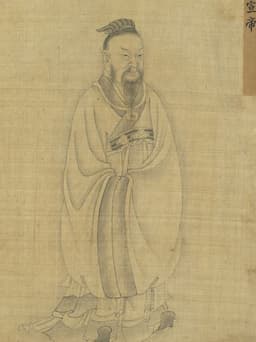
Liu Xuan
Emperor · Ancient
37.1Total
Basic Information
Born
467
-10
Died
474
25
Era
Ancient
Ancient
Nationality
Byzantine Empire
China
Occupation
Emperor
Emperor
Civilization
Western
Eastern
Score Comparison
Military (10%)
29.3
22.6
Political (20%)
68.0
35.0
Influence (20%)
58.7
42.4
Legacy (20%)
56.4
33.3
Leadership (15%)
67.7
44.5
Strategy (15%)
38.5
39.6
TOTAL
55.9
37.1
Leo II — Complete Timeline
473 AD
Proclaimed co-emperor by Leo IPolitical Action◆ Major
Leo I proclaimed his grandson Leo II as co-emperor of the Eastern Roman Empire. This was done to secure the succession for the young boy, who was the son of Zeno and Ariadne. Leo II was only six years old at the time.
Imperial SuccessionCo-Emperor
Impact: national
474 AD
Became sole emperor after Leo I's deathPolitical Action◆ Major
Upon the death of Leo I, Leo II became the sole Eastern Roman Emperor. Due to his young age, his father Zeno was appointed as regent and co-emperor shortly thereafter, effectively ruling in his stead.
Imperial SuccessionRegency
Impact: national
Died of diseaseOther◆ Major
Leo II died of a disease, likely natural causes, after a reign of less than a year. His death left Zeno as the sole emperor, ending the brief reign of the child emperor and preventing any long-term impact of his rule.
DeathImperial Succession
Impact: nationaltragic
Liu Xuan — Complete Timeline
23 AD
Proclaimed Gengshi EmperorPolitical Action◆ Major
Liu Xuan was proclaimed emperor of the restored Han dynasty by rebel forces, taking the reign title Gengshi. His ascension marked the beginning of the Han restoration after Wang Mang's Xin dynasty fell. He established his capital at Chang'an.
RestorationHan DynastyRebellion
Impact: national
25 AD
Defeated by Red EyebrowsWar◆ Major
The Red Eyebrows rebel army defeated Liu Xuan's forces and captured Chang'an. Liu Xuan surrendered and was initially spared, but was later killed by the Red Eyebrows. His brief reign ended, and the Han restoration passed to Liu Xiu (Emperor Guangwu).
Civil WarRed EyebrowsDefeat
Impact: nationaltragic
Expert Analysis
Origins
Leo II was born in 467 AD into the Thracian dynasty of the Eastern Roman Empire, the grandson of Emperor Leo I. His father was Zeno, an Isaurian general, and his mother was Ariadne, daughter of Leo I. The young prince was raised in the imperial palace in Constantinople, surrounded by court intrigue. His early life was cut short by his premature death at age seven, leaving little personal history.
Liu Xuan, born in the early 1st century AD, was a descendant of the Han imperial family, a member of the Liu clan. He grew up during the decline of the Xin dynasty, which had usurped the Han throne. His early life was marked by obscurity; he was a commoner until the chaos of rebellion thrust him into leadership. He lacked formal education and military training, relying on his lineage to gain support.
Rise to Power
Leo II's rise was entirely dynastic. In 473 AD, his grandfather Leo I proclaimed him co-emperor to secure the succession for his daughter's family. When Leo I died in 474 AD, Leo II became sole emperor at age six. However, real power rested with his father Zeno, who was appointed regent and co-emperor. Leo II's elevation was a political maneuver to maintain the Isaurian-Thracian alliance.
Liu Xuan rose to power as a figurehead for rebel forces opposing Wang Mang's Xin dynasty. In 23 AD, after a series of peasant uprisings, a coalition of rebel groups proclaimed Liu Xuan as the Gengshi Emperor, restoring the Han dynasty. His ascension was driven by his imperial lineage, not personal merit. He quickly established a court in Chang'an but failed to consolidate control over the various rebel factions.
Leadership & Governance
Leo II's reign was too short to implement any policies. His governance was effectively conducted by his father Zeno, who managed the empire's affairs. Zeno's regency faced challenges from Gothic foederati and religious disputes over the Henotikon, but Leo II had no direct role. His leadership score of 67.7 reflects nominal authority rather than actual capability.
Liu Xuan attempted to govern a fractured realm. He issued edicts as emperor but lacked the administrative machinery. His rule was characterized by favoritism toward his own faction, alienating other rebel leaders like the Red Eyebrows. He failed to provide effective leadership, as reflected in his leadership score of 44.5. His political score of 35.0 indicates poor governance, marked by inability to manage alliances or supply his capital.
Triumph & Tragedy
Leo II's only triumph was his peaceful accession, which temporarily stabilized the Byzantine succession. His tragedy was his early death from disease in 474 AD, after a reign of less than a year. His death ended the direct line and left Zeno as sole emperor, leading to future instability. The empire lost a potential figurehead, but his brief rule had minimal impact.
Liu Xuan's triumph was the initial restoration of the Han dynasty, which briefly united rebel forces. He captured Chang'an and claimed the mandate of heaven. However, his tragedy was his inability to hold power. The Red Eyebrows rebel army defeated his forces in 25 AD, captured Chang'an, and killed him after a reign of about two years. His failure paved the way for Liu Xiu (Emperor Guangwu) to found the Eastern Han.
Character & Destiny
Leo II's character is unknown due to his age. He was a pawn in court politics, and his destiny was determined by his lineage and disease. His death marked the end of a dynastic experiment, but his brief existence had no bearing on his character.
Liu Xuan was described as indecisive and easily swayed by his advisors. He lacked the ruthlessness needed to control rebel factions. His destiny was sealed by his inability to delegate or enforce loyalty. Historical assessments note his generosity but also his incompetence as a ruler. He scored 44.5 in leadership, reflecting his failure to command respect.
Legacy
Leo II's legacy is minimal. He is remembered as a child emperor whose reign was a footnote in Byzantine history. His death allowed Zeno to consolidate power, but Zeno's rule was tumultuous. The Byzantine Empire continued, but the dynasty weakened. His legacy score of 56.4 is inflated due to his imperial status; actual impact is near zero.
Liu Xuan's legacy is as a transitional figure. He briefly restored the Han name but failed to secure it. His defeat allowed Liu Xiu to reunify China. He is often overlooked in favor of Guangwu. His legacy score of 33.3 reflects his minor role. He is remembered as a cautionary tale of weak leadership during the Xin-Han interregnum.
Conclusion
Neither ruler had significant impact, but Leo II's higher total score (55.9 vs 37.1) is due to his nominal status as Byzantine emperor. However, Liu Xuan's brief reign had more historical consequences: his failure directly led to the Eastern Han's founding. In terms of actual influence, Liu Xuan's reign altered China's trajectory, while Leo II's was a non-event. Therefore, Liu Xuan had greater impact despite lower scores.
Rankings
🥇
Leo IILeader
Mil: 29.3Pol: 68.0Inf: 58.7
55.9
🥈
Liu Xuan
Mil: 22.6Pol: 35.0Inf: 42.4
37.1
+18.8 behind
How This Comparison Works
Algorithm
Each figure is scored on 6 dimensions (0—100 scale) based on structured historical data: Military (10%), Political (20%), Influence (20%), Legacy (20%), Leadership (15%), Strategy (15%). The weighted total produces the final ranking.
Data Sources
Scores are computed from structured sub-indicators in the database. Scale factors adjust for era (Ancient ×0.85, Modern ×1.0) and civilization size (Eastern ×1.05, Other ×0.80) to account for differences in population and military scale.
Maximum 3 Figures
Comparisons are limited to 2—3 figures to ensure readability and statistical meaningfulness.
Error Margins
±5 points per dimension — Sub-scores are derived from historical records with inherent uncertainty. Two figures within 5 points on a dimension should be considered roughly equivalent in that area.
Total Score Accuracy
±3 points overall — The weighted combination of 6 dimensions produces a total score with approximately ±3 points of uncertainty. Differences of less than 3 points are not statistically significant— the figures are effectively tied.
Known Limitations
- Historical records are incomplete and uneven across civilizations
- Figures from oral-tradition societies may be underrepresented
- Occupation labels can misclassify multi-role figures
- Scores measure capability and impact, not moral character
- Quantitative scoring is a comparison tool, not absolute truth
Capability Radar
Military (10%) — Battles & Warfare
Battles
6
10
Win Rate
9
10
Expansion
10
5
Political (20%) — Governance & Reform
Reform
51
5
Diplomacy
49
10
Economy
56
5
Influence (20%) — Cultural & Global Reach
Cultural
70
5
Global
79
5
Legacy (20%) — Historical Impact
Historical
74
15
Longevity
73
5
Leadership (15%) — Power & Stability
Tenure
44
15
Stability
57
5
Strategy (15%) — Tactics & Innovation
Strategy
16
10
Tactics
14
10
Reform
18
5
Similar Comparisons
Comments & Discussion
No comments yet. Be the first to share your thoughts!