Loading...
This comparison has not been analyzed yet.
One-time AI generation (~1 minute). Scores and timeline are already available below.
Liu Shaoqi vs M. K. Stalin
M. K. Stalin leads by 7.2 pts · 2 figures compared
…
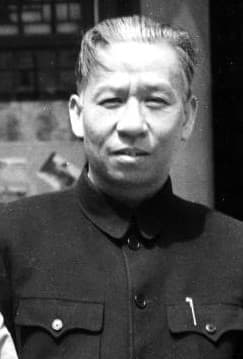
Liu Shaoqi
Politician · Modern
48.8Total

M. K. Stalin
Politician · Modern
56.0Total
Basic Information
Born
1898
1953
Died
1969
—
Era
Modern
Modern
Nationality
China
India
Occupation
Politician
Politician
Civilization
Eastern
Indian
Score Comparison
Military (10%)
13.6
46.6
Political (20%)
45.0
68.0
Influence (20%)
60.0
53.3
Legacy (20%)
49.2
44.2
Leadership (15%)
65.0
72.0
Strategy (15%)
36.5
60.0
TOTAL
48.8
56.0
Liu Shaoqi — Complete Timeline
1959 AD
Elected President of the People's Republic of ChinaPolitical Action◆ Major
Liu Shaoqi succeeded Mao Zedong as President of China. He implemented moderate economic policies during the Great Leap Forward's aftermath, including the 'Three Selfs' to revive agriculture.
PresidencyEconomic Policy
Impact: nationalconstructive
1966 AD
Purged as 'Top Capitalist Roaader'Political Action
Liu Shaoqi was denounced by Mao and Red Guards as the 'top capitalist roader'. He was stripped of all positions, expelled from the CCP, and placed under house arrest, marking the start of the Cultural Revolution's purges.
Cultural RevolutionPurge
Impact: nationaltragic
1969 AD
Died in CustodyPolitical Action◆ Major
Liu Shaoqi died in Kaifeng, Henan, after years of mistreatment and medical neglect. His death was kept secret, and he was posthumously rehabilitated in 1980.
Cultural RevolutionDeath
Impact: nationaltragic
M. K. Stalin — Complete Timeline
2021 AD
Implemented the 'Kalaignar' Health Insurance SchemeReform◆ Major
Stalin expanded the Kalaignar health insurance scheme, providing free medical coverage up to Rs 5 lakh per family. The program covered all government hospitals and empaneled private hospitals, benefiting millions.
HealthInsuranceTamil Nadu
Impact: regionalconstructive
Became Chief Minister of Tamil NaduPolitical Action◆ Major
Stalin led the DMK to a landslide victory in the 2021 Tamil Nadu assembly elections, defeating the AIADMK. He became Chief Minister, succeeding Edappadi K. Palaniswami, and promised welfare and development.
ElectionDMKTamil Nadu
Impact: regionalconstructive
2022 AD
Launched the 'Mudhalvarin Mugavari' (Chief Minister's Breakfast) SchemeReform◆ Major
Stalin introduced the Chief Minister's Breakfast Scheme, providing free nutritious breakfast to primary school students in government schools. The program aimed to improve nutrition and school attendance.
EducationWelfareTamil Nadu
Impact: regionalconstructive
Passed the 'Tamil Nadu Prohibition of Online Gambling and Regulation of Online Games' ActReform◆ Major
Stalin's government passed legislation to ban online gambling and regulate online games in Tamil Nadu. The act aimed to curb addiction and financial losses, but faced legal challenges on grounds of freedom of trade.
GamblingLegislationTamil Nadu
Impact: regionalconstructive
2024 AD
Led DMK's Alliance with Congress for 2024 Lok Sabha ElectionsPolitical Action◆ Major
Stalin forged a strong alliance with the Indian National Congress and other opposition parties for the 2024 Lok Sabha elections. The DMK-led alliance won 39 out of 39 seats in Tamil Nadu, strengthening the opposition bloc.
ElectionAllianceTamil Nadu
Impact: nationalconstructive
This comparison has not been analyzed yet.
One-time AI generation (~1 minute). Scores and timeline are already available below.
Rankings
🥇
M. K. StalinLeader
Mil: 46.6Pol: 68.0Inf: 53.3
56.0
🥈
Liu Shaoqi
Mil: 13.6Pol: 45.0Inf: 60.0
48.8
+7.2 behind
How This Comparison Works
Algorithm
Each figure is scored on 6 dimensions (0—100 scale) based on structured historical data: Military (10%), Political (20%), Influence (20%), Legacy (20%), Leadership (15%), Strategy (15%). The weighted total produces the final ranking.
Data Sources
Scores are computed from structured sub-indicators in the database. Scale factors adjust for era (Ancient ×0.85, Modern ×1.0) and civilization size (Eastern ×1.05, Other ×0.80) to account for differences in population and military scale.
Maximum 3 Figures
Comparisons are limited to 2—3 figures to ensure readability and statistical meaningfulness.
Error Margins
±5 points per dimension — Sub-scores are derived from historical records with inherent uncertainty. Two figures within 5 points on a dimension should be considered roughly equivalent in that area.
Total Score Accuracy
±3 points overall — The weighted combination of 6 dimensions produces a total score with approximately ±3 points of uncertainty. Differences of less than 3 points are not statistically significant— the figures are effectively tied.
Known Limitations
- Historical records are incomplete and uneven across civilizations
- Figures from oral-tradition societies may be underrepresented
- Occupation labels can misclassify multi-role figures
- Scores measure capability and impact, not moral character
- Quantitative scoring is a comparison tool, not absolute truth
Capability Radar
Military (10%) — Battles & Warfare
Battles
16
41
Win Rate
18
46
Expansion
18
51
Political (20%) — Governance & Reform
Reform
65
45
Diplomacy
55
50
Economy
60
50
Influence (20%) — Cultural & Global Reach
Cultural
40
40
Global
40
20
Legacy (20%) — Historical Impact
Historical
55
35
Longevity
30
30
Leadership (15%) — Power & Stability
Tenure
60
55
Stability
20
55
Strategy (15%) — Tactics & Innovation
Strategy
21
52
Tactics
27
56
Reform
28
57
Similar Comparisons
Comments & Discussion
No comments yet. Be the first to share your thoughts!