Loading...
Liu Shaoqi vs Miguel Aleman
Miguel Aleman leads by 5.5 pts · 2 figures compared
…
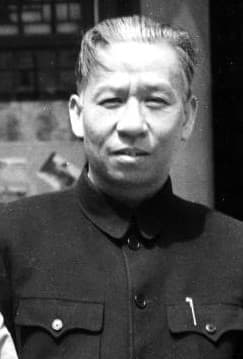
Liu Shaoqi
Politician · Modern
48.8Total

Miguel Aleman
Politician · Modern
54.3Total
Basic Information
Born
1898
1900
Died
1969
1983
Era
Modern
Modern
Nationality
China
Mexico
Occupation
Politician
Politician
Civilization
Eastern
Western
Score Comparison
Military (10%)
13.6
49.9
Political (20%)
45.0
60.0
Influence (20%)
60.0
56.4
Legacy (20%)
49.2
48.3
Leadership (15%)
65.0
66.0
Strategy (15%)
36.5
42.7
TOTAL
48.8
54.3
Liu Shaoqi — Complete Timeline
1959 AD
Elected President of the People's Republic of ChinaPolitical Action◆ Major
Liu Shaoqi succeeded Mao Zedong as President of China. He implemented moderate economic policies during the Great Leap Forward's aftermath, including the 'Three Selfs' to revive agriculture.
PresidencyEconomic Policy
Impact: nationalconstructive
1966 AD
Purged as 'Top Capitalist Roaader'Political Action
Liu Shaoqi was denounced by Mao and Red Guards as the 'top capitalist roader'. He was stripped of all positions, expelled from the CCP, and placed under house arrest, marking the start of the Cultural Revolution's purges.
Cultural RevolutionPurge
Impact: nationaltragic
1969 AD
Died in CustodyPolitical Action◆ Major
Liu Shaoqi died in Kaifeng, Henan, after years of mistreatment and medical neglect. His death was kept secret, and he was posthumously rehabilitated in 1980.
Cultural RevolutionDeath
Impact: nationaltragic
Miguel Aleman — Complete Timeline
1946 AD
Became First Civilian President After the RevolutionPolitical Action◆ Major
Miguel Alem
Mexican PoliticsCivilian RulePresidency
Impact: nationalconstructive
1947 AD
Initiated the Mexican Economic MiracleReform◆ Major
President Alem
Economic PolicyIndustrializationInfrastructure
Impact: nationalconstructive
1948 AD
Crackdown on Labor Unions and CorruptionPolitical Action
Alemán's government suppressed independent labor unions and consolidated power within the Institutional Revolutionary Party (PRI). His administration was also marked by widespread corruption and cronyism, enriching his allies.
CorruptionLabor SuppressionPRI
Impact: nationaldestructive
Expert Analysis
Origins
Liu Shaoqi was born in 1898 in Ningxiang, Hunan, China, into a wealthy landowning family. He received a classical education and later studied in Russia, joining the Chinese Communist Party (CCP) in 1921. His early work focused on labor organizing in the Chinese labor movement, where he became a key figure in the CCP's urban underground. Miguel Aleman Valdes was born in 1900 in Sayula, Veracruz, Mexico, to a middle-class family. His father was a general in the Mexican Revolution. Aleman studied law at the National Autonomous University of Mexico, graduating in 1928, and began his political career as a lawyer and judge.
Rise to Power
Liu Shaoqi rose within the CCP through his expertise in organizational and party affairs. By the 1940s, he was a key theorist, writing 'How to Be a Good Communist' in 1939. He became a member of the Politburo in 1943 and was instrumental in consolidating Mao's power. After the founding of the People's Republic in 1949, Liu became vice chairman of the CCP and succeeded Mao as President in 1959. Miguel Aleman rose through the ranks of the Institutional Revolutionary Party (PRI). He served as governor of Veracruz (1936-1939) and then as Minister of the Interior under President Manuel Avila Camacho. In 1946, he was elected president, becoming the first civilian president since the Mexican Revolution.
Leadership & Governance
Liu Shaoqi's leadership emphasized pragmatic economic policies. After the disastrous Great Leap Forward (1958-1961), he implemented moderate reforms, including the 'Three Freedoms and One Responsibility' system, which allowed private plots and free markets. He scored 65.0 in leadership, reflecting his ability to steer the party through crisis. However, his political score of 45.0 was hampered by his inability to navigate Mao's shifting ideologies. Miguel Aleman, with a leadership score of 66.0, pursued aggressive industrialization. His 'Mexican Miracle' policies included massive infrastructure projects like the construction of dams, highways, and the expansion of the steel industry. He also cracked down on labor unions and consolidated PRI's power, scoring 60.0 in politics.
Triumph & Tragedy
Liu Shaoqi's greatest triumph was stabilizing China's economy after the Great Leap Forward. He restored agricultural production and reduced famine. His tragedy was total: he was purged by Mao in 1966 as the 'Top Capitalist Roader,' stripped of all positions, and died in custody in 1969 after medical neglect. His death was kept secret until 1980, when he was posthumously rehabilitated. Miguel Aleman's triumph was the modernization of Mexico's economy, with annual GDP growth averaging 6% during his term. His tragedy was the entrenchment of authoritarian rule and corruption. His administration was marked by cronyism and suppression of dissent, which weakened democratic institutions.
Character & Destiny
Liu Shaoqi was a disciplined theoretician, known for his loyalty to party principles. He believed in collective leadership but was outmaneuvered by Mao's cult of personality. His character—principled but politically inflexible—sealed his fate. Historical assessments note his inability to adapt to Mao's radicalism. Miguel Aleman was a pragmatic modernizer, focused on economic growth and political stability. He centralized power in the PRI, prioritizing order over democracy. His character—ambitious and authoritarian—shaped Mexico's one-party state for decades. Historians view him as a transformative but flawed leader.
Legacy
Liu Shaoqi's legacy is complex. He is remembered as a tragic figure of the Cultural Revolution. His economic policies were later vindicated by Deng Xiaoping's reforms. His total score of 48.8 reflects a political career cut short. Miguel Aleman's legacy is the Mexican Miracle and the PRI's dominance. His policies laid the foundation for modern Mexico but also entrenched corruption. His total score of 54.3 edges out Liu, primarily due to higher military (49.9 vs 13.6) and political (60.0 vs 45.0) scores.
Conclusion
Miguel Aleman had a greater impact than Liu Shaoqi. His economic transformation of Mexico was concrete and long-lasting, despite its authoritarian costs. Liu's moderate policies were important but were reversed by the Cultural Revolution and only revived after his death. Aleman's score of 54.3 against Liu's 48.8 reflects this: he successfully implemented his vision, while Liu was destroyed by his own party.
Rankings
🥇
Miguel AlemanLeader
Mil: 49.9Pol: 60.0Inf: 56.4
54.3
🥈
Liu Shaoqi
Mil: 13.6Pol: 45.0Inf: 60.0
48.8
+5.5 behind
How This Comparison Works
Algorithm
Each figure is scored on 6 dimensions (0—100 scale) based on structured historical data: Military (10%), Political (20%), Influence (20%), Legacy (20%), Leadership (15%), Strategy (15%). The weighted total produces the final ranking.
Data Sources
Scores are computed from structured sub-indicators in the database. Scale factors adjust for era (Ancient ×0.85, Modern ×1.0) and civilization size (Eastern ×1.05, Other ×0.80) to account for differences in population and military scale.
Maximum 3 Figures
Comparisons are limited to 2—3 figures to ensure readability and statistical meaningfulness.
Error Margins
±5 points per dimension — Sub-scores are derived from historical records with inherent uncertainty. Two figures within 5 points on a dimension should be considered roughly equivalent in that area.
Total Score Accuracy
±3 points overall — The weighted combination of 6 dimensions produces a total score with approximately ±3 points of uncertainty. Differences of less than 3 points are not statistically significant— the figures are effectively tied.
Known Limitations
- Historical records are incomplete and uneven across civilizations
- Figures from oral-tradition societies may be underrepresented
- Occupation labels can misclassify multi-role figures
- Scores measure capability and impact, not moral character
- Quantitative scoring is a comparison tool, not absolute truth
Capability Radar
Military (10%) — Battles & Warfare
Battles
16
29
Win Rate
18
31
Expansion
18
35
Political (20%) — Governance & Reform
Reform
65
65
Diplomacy
55
60
Economy
60
70
Influence (20%) — Cultural & Global Reach
Cultural
40
40
Global
40
30
Legacy (20%) — Historical Impact
Historical
55
50
Longevity
30
40
Leadership (15%) — Power & Stability
Tenure
60
60
Stability
20
55
Strategy (15%) — Tactics & Innovation
Strategy
21
39
Tactics
27
38
Reform
28
46
Similar Comparisons
Comments & Discussion
No comments yet. Be the first to share your thoughts!