Loading...
Lester Bird vs Liu Shaoqi
Liu Shaoqi leads by 0.8 pts · 2 figures compared
…

Lester Bird
Politician · Modern
48.0Total
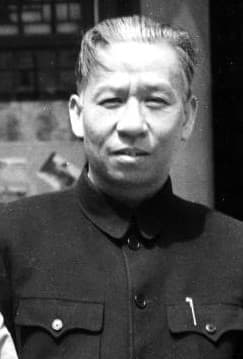
Liu Shaoqi
Politician · Modern
48.8Total
Basic Information
Born
1938
1898
Died
—
1969
Era
Modern
Modern
Nationality
Antigua and Barbuda
China
Occupation
Politician
Politician
Civilization
Other
Eastern
Score Comparison
Military (10%)
50.0
13.6
Political (20%)
40.8
45.0
Influence (20%)
50.2
60.0
Legacy (20%)
40.8
49.2
Leadership (15%)
65.7
65.0
Strategy (15%)
42.3
36.5
TOTAL
48.0
48.8
Lester Bird — Complete Timeline
1994 AD
Election as Prime Minister of Antigua and BarbudaPolitical Action◆ Major
Lester Bird led the Antigua Labour Party to victory in the 1994 general election, succeeding his father, Vere Bird, as Prime Minister. He served from March 9, 1994, to March 24, 2004.
ElectionPrime MinisterAntigua and Barbuda
Impact: nationalconstructive
1995 AD
Privatization of Antigua and Barbuda's State AssetsReform
Lester Bird's government pursued a policy of privatization, selling state-owned enterprises including the Antigua and Barbuda Broadcasting Service and the Antigua and Barbuda Development Bank. This was part of structural adjustment programs with the IMF.
PrivatizationEconomic ReformIMF
Impact: national
2004 AD
Defeat in the 2004 General ElectionPolitical Action◆ Major
Lester Bird's Antigua Labour Party lost the 2004 general election to the United Progressive Party led by Baldwin Spencer. This ended his ten-year tenure as Prime Minister and marked a shift in the country's political landscape.
Election DefeatPolitical TransitionAntigua and Barbuda
Impact: national
Liu Shaoqi — Complete Timeline
1959 AD
Elected President of the People's Republic of ChinaPolitical Action◆ Major
Liu Shaoqi succeeded Mao Zedong as President of China. He implemented moderate economic policies during the Great Leap Forward's aftermath, including the 'Three Selfs' to revive agriculture.
PresidencyEconomic Policy
Impact: nationalconstructive
1966 AD
Purged as 'Top Capitalist Roaader'Political Action
Liu Shaoqi was denounced by Mao and Red Guards as the 'top capitalist roader'. He was stripped of all positions, expelled from the CCP, and placed under house arrest, marking the start of the Cultural Revolution's purges.
Cultural RevolutionPurge
Impact: nationaltragic
1969 AD
Died in CustodyPolitical Action◆ Major
Liu Shaoqi died in Kaifeng, Henan, after years of mistreatment and medical neglect. His death was kept secret, and he was posthumously rehabilitated in 1980.
Cultural RevolutionDeath
Impact: nationaltragic
Expert Analysis
Origins
Lester Bird was born on February 21, 1938, in St. John's, Antigua, into a political dynasty. His father, Vere Bird, was the founding father of modern Antigua and Barbuda and served as its first prime minister. Lester was educated at Antigua Grammar School and later studied law at the University of London, where he earned a degree. He returned to Antigua and entered politics, serving as a minister in his father's government before succeeding him.
Liu Shaoqi was born on November 24, 1898, in Ningxiang, Hunan, China, into a wealthy landowning family. He received a classical education and later studied at the Hunan First Normal School, where he was exposed to revolutionary ideas. He joined the Chinese Communist Party (CCP) in 1921 and became a key labor organizer, rising through the ranks alongside Mao Zedong.
Rise to Power
Lester Bird rose to prominence as a member of the Antigua Labour Party (ALP), which his father founded. He served as Deputy Prime Minister under Vere Bird from 1981 to 1994. In the 1994 general election, he led the ALP to victory, becoming Prime Minister on March 1, 1994. His rise was smooth, benefiting from his father's legacy and the party's dominance.
Liu Shaoqi's rise was more tumultuous. He became a top CCP leader during the Chinese Civil War, organizing labor movements and consolidating party control. He was elected Chairman of the National People's Congress in 1954 and succeeded Mao as President of the People's Republic of China in 1959. His moderate policies during the aftermath of the Great Leap Forward (1958-1961) gained him influence, but also put him at odds with Mao.
Leadership & Governance
Lester Bird's leadership was characterized by continuity with his father's policies, focusing on tourism and privatization. He oversaw the sale of state assets, including the Antigua and Barbuda Broadcasting Service, aiming to attract foreign investment. However, his government faced allegations of corruption and nepotism, and economic growth slowed. His political score of 40.8 reflects a less than stellar governance record.
Liu Shaoqi advocated for a more pragmatic approach to socialism, emphasizing economic recovery and stability. He implemented the "Sixty Articles on Work Methods" to moderate collectivization and promote agricultural incentives. His leadership score of 65.0 indicates strong guidance, but his political score of 45.0 was weakened by his eventual purge. Mao's radicalism overshadowed Liu's moderate line, leading to conflict.
Triumph & Tragedy
Lester Bird's triumph was winning the 1994 election and leading Antigua and Barbuda for a decade, maintaining stability and expanding tourism. His tragedy was the 2004 electoral defeat, ending his family's long political dominance. He scored 50.2 in influence and 40.8 in legacy, reflecting limited lasting impact.
Liu Shaoqi's triumph was becoming President of China and implementing reforms that revived the economy after the Great Leap Forward. His tragedy was being purged as the "top capitalist roader" during the Cultural Revolution, stripped of all positions, and dying in custody in 1969 under horrific conditions. He was posthumously rehabilitated in 1980. His influence score of 60.0 and legacy of 49.2 reflect his enduring but contested reputation.
Character & Destiny
Lester Bird was a pragmatic politician, careful to maintain his party's power but lacking the visionary drive of his father. His character was cautious, leading to steady but unremarkable governance. His destiny was to be a transitional figure, bridging his father's era and the opposition's rise.
Liu Shaoqi was an intellectual and principled Marxist, committed to party discipline and economic rationality. His character was reserved and ideological, which made him a target when Mao shifted to radicalism. His destiny was tragic: his moderate stance led to his downfall, but his rehabilitation restored his place in history.
Legacy
Lester Bird's legacy is mixed. He is remembered as a prime minister who maintained stability but failed to innovate. His privatization policies set a precedent, but corruption allegations tarnished his reputation. In Antigua, he is a significant but not transformative figure.
Liu Shaoqi's legacy is profound. He is recognized as a key theorist of Chinese socialism and a martyr of the Cultural Revolution. His ideas on economic pragmatism influenced later reforms under Deng Xiaoping. He is honored as a revolutionary hero, with memorials and a positive reassessment by the CCP.
Conclusion
Liu Shaoqi had a greater impact on history. While Lester Bird governed a small Caribbean nation for a decade, Liu Shaoqi shaped Chinese policy during a critical period and his tragic fate highlighted the dangers of ideological extremism. Liu's total score of 48.8 exceeds Bird's 48.0, and his influence (60.0 vs 50.2) and legacy (49.2 vs 40.8) are higher. Liu's ideas and rehabilitation continue to influence China, while Bird's tenure is largely forgotten outside Antigua. Thus, Liu Shaoqi's historical significance surpasses that of Lester Bird.
Rankings
🥇
Liu ShaoqiLeader
Mil: 13.6Pol: 45.0Inf: 60.0
48.8
🥈
Lester Bird
Mil: 50.0Pol: 40.8Inf: 50.2
48.0
+0.8 behind
How This Comparison Works
Algorithm
Each figure is scored on 6 dimensions (0—100 scale) based on structured historical data: Military (10%), Political (20%), Influence (20%), Legacy (20%), Leadership (15%), Strategy (15%). The weighted total produces the final ranking.
Data Sources
Scores are computed from structured sub-indicators in the database. Scale factors adjust for era (Ancient ×0.85, Modern ×1.0) and civilization size (Eastern ×1.05, Other ×0.80) to account for differences in population and military scale.
Maximum 3 Figures
Comparisons are limited to 2—3 figures to ensure readability and statistical meaningfulness.
Error Margins
±5 points per dimension — Sub-scores are derived from historical records with inherent uncertainty. Two figures within 5 points on a dimension should be considered roughly equivalent in that area.
Total Score Accuracy
±3 points overall — The weighted combination of 6 dimensions produces a total score with approximately ±3 points of uncertainty. Differences of less than 3 points are not statistically significant— the figures are effectively tied.
Known Limitations
- Historical records are incomplete and uneven across civilizations
- Figures from oral-tradition societies may be underrepresented
- Occupation labels can misclassify multi-role figures
- Scores measure capability and impact, not moral character
- Quantitative scoring is a comparison tool, not absolute truth
Capability Radar
Military (10%) — Battles & Warfare
Battles
22
16
Win Rate
27
18
Expansion
29
18
Political (20%) — Governance & Reform
Reform
30
65
Diplomacy
35
55
Economy
30
60
Influence (20%) — Cultural & Global Reach
Cultural
20
40
Global
20
40
Legacy (20%) — Historical Impact
Historical
25
55
Longevity
20
30
Leadership (15%) — Power & Stability
Tenure
40
60
Stability
25
20
Strategy (15%) — Tactics & Innovation
Strategy
33
21
Tactics
32
27
Reform
37
28
Similar Comparisons
Comments & Discussion
No comments yet. Be the first to share your thoughts!