Loading...
Liu Shaoqi vs Theresa May
Theresa May leads by 1.9 pts · 2 figures compared
…
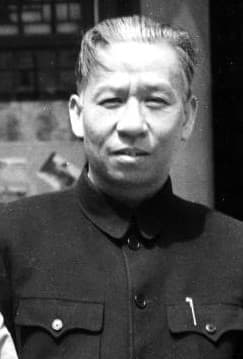
Liu Shaoqi
Politician · Modern
48.8Total

Theresa May
Politician · Modern
50.7Total
Basic Information
Born
1898
1956
Died
1969
—
Era
Modern
Modern
Nationality
China
United Kingdom
Occupation
Politician
Politician
Civilization
Eastern
Western
Score Comparison
Military (10%)
13.6
50.0
Political (20%)
45.0
48.0
Influence (20%)
60.0
54.9
Legacy (20%)
49.2
43.3
Leadership (15%)
65.0
64.0
Strategy (15%)
36.5
43.2
TOTAL
48.8
50.7
Liu Shaoqi — Complete Timeline
1959 AD
Elected President of the People's Republic of ChinaPolitical Action◆ Major
Liu Shaoqi succeeded Mao Zedong as President of China. He implemented moderate economic policies during the Great Leap Forward's aftermath, including the 'Three Selfs' to revive agriculture.
PresidencyEconomic Policy
Impact: nationalconstructive
1966 AD
Purged as 'Top Capitalist Roaader'Political Action
Liu Shaoqi was denounced by Mao and Red Guards as the 'top capitalist roader'. He was stripped of all positions, expelled from the CCP, and placed under house arrest, marking the start of the Cultural Revolution's purges.
Cultural RevolutionPurge
Impact: nationaltragic
1969 AD
Died in CustodyPolitical Action◆ Major
Liu Shaoqi died in Kaifeng, Henan, after years of mistreatment and medical neglect. His death was kept secret, and he was posthumously rehabilitated in 1980.
Cultural RevolutionDeath
Impact: nationaltragic
Theresa May — Complete Timeline
2016 AD
Appointed Prime MinisterPolitical Action◆ Major
May became Prime Minister of the United Kingdom after David Cameron's resignation following the Brexit referendum. She was the second female prime minister after Margaret Thatcher and faced the challenge of implementing Brexit.
Political TransitionBrexitPrime Minister
Impact: national
2017 AD
Triggered Article 50Political Action
May formally triggered Article 50 of the Treaty on European Union, beginning the two-year process of the UK's withdrawal from the EU. This was a historic step, initiating the formal Brexit negotiations.
BrexitArticle 50EU Withdrawal
Impact: global
Called the 2017 General ElectionPolitical Action◆ Major
May called a snap general election, hoping to strengthen her majority for Brexit negotiations. The election resulted in a hung parliament, with the Conservatives losing their majority, a major political miscalculation.
General ElectionHung ParliamentPolitical Mistake
Impact: nationaldestructive
2018 AD
Negotiated the Withdrawal AgreementPolitical Action◆ Major
May negotiated a Withdrawal Agreement with the European Union, including the controversial Northern Ireland backstop. The agreement was rejected three times by the House of Commons, leading to a political deadlock.
BrexitWithdrawal AgreementParliamentary Defeat
Impact: regional
2019 AD
Resigned as Prime MinisterPolitical Action◆ Major
May resigned as prime minister after failing to get her Brexit deal through Parliament. She acknowledged that she had done her best but that it was time for a new leader to take forward the Brexit process.
BrexitResignationPolitical Failure
Impact: nationaltragic
Expert Analysis
Origins
Liu Shaoqi was born in 1898 in Hunan, China, into a wealthy landowning family. He received a classical education and later studied in Moscow, becoming a committed Marxist. His early involvement in labor organizing laid the foundation for his rise in the Chinese Communist Party (CCP). Theresa May was born in 1956 in Eastbourne, England, to a Church of England clergyman. She studied geography at Oxford and worked in banking before entering politics. Her upbringing in a middle-class, religious household shaped her cautious, methodical approach.
Rise to Power
Liu Shaoqi rose through the CCP ranks during the Chinese Civil War, focusing on organizational work and party building. He became a key figure in the Yan'an period, known for his theoretical contributions on party construction. In 1959, he succeeded Mao Zedong as President of China, partly due to his reputation as a moderate. Theresa May became Prime Minister in 2016 after David Cameron's resignation following the Brexit referendum. She had served as Home Secretary for six years, known for her tough stance on immigration. Her rise was swift, as she was seen as a stable hand to lead Brexit negotiations.
Leadership & Governance
Liu Shaoqi governed with a pragmatic, technocratic style. After the Great Leap Forward's disaster, he implemented moderate economic policies, including the "Three Selfs and One Contract" that allowed some private farming. This contrasted with Mao's radical collectivization. Liu scored 65.0 in Leadership, reflecting his ability to stabilize the economy. Theresa May's leadership was defined by her attempt to deliver Brexit. She triggered Article 50 in 2017 and negotiated a Withdrawal Agreement with the EU. However, her lack of a parliamentary majority and internal party divisions hampered her. Her Leadership score of 64.0 is similar to Liu's, but her Strategy score of 43.2 shows her tactical missteps.
Triumph & Tragedy
Liu Shaoqi's greatest triumph was his role in stabilizing China's economy after the Great Leap Forward. However, his tragedy was his downfall during the Cultural Revolution. Denounced as the "top capitalist roader," he was purged, tortured, and died in custody in 1969. His death was kept secret for years. Theresa May's triumph was becoming the second female British prime minister and triggering Article 50. Her tragedy was the failure to pass her Brexit deal, leading to her resignation in 2019. She scored 60.0 in Influence, but her legacy is overshadowed by the chaotic Brexit process.
Character & Destiny
Liu Shaoqi was reserved and intellectual, often at odds with Mao's charismatic, revolutionary style. His belief in institutional party governance made him a target during the Cultural Revolution. His destiny was sealed by his inability to adapt to Mao's radical turn. Theresa May was known for her resilience but also for her rigidity. Her famous phrase "nothing has changed" after the 2017 election reflected her stubbornness. Her character led to a hung parliament and three failed attempts to pass her deal. Both leaders' fates were shaped by their environments: Liu by Mao's purges, May by a polarized parliament.
Legacy
Liu Shaoqi was posthumously rehabilitated in 1980, and his contributions to party building are recognized in China. However, his influence is limited compared to Mao's. He scored 49.2 in Legacy. Theresa May's legacy is tied to Brexit. She set the process in motion but failed to complete it. Her tenure is often seen as a transitional period. She scored 43.3 in Legacy, lower than Liu's. Yet, her influence on UK politics remains in the ongoing Brexit debates.
Conclusion
While Theresa May had a higher total score (50.7 vs. 48.8), Liu Shaoqi's impact on China's political trajectory was more profound. His moderate policies provided a counterpoint to Maoism, and his rehabilitation shaped Deng Xiaoping's reforms. May's Brexit failure, despite her efforts, limited her long-term influence. Liu Shaoqi, though destroyed by Mao, left a legacy that influenced China's economic liberalization. Therefore, Liu Shaoqi had greater impact.
Rankings
🥇
Theresa MayLeader
Mil: 50.0Pol: 48.0Inf: 54.9
50.7
🥈
Liu Shaoqi
Mil: 13.6Pol: 45.0Inf: 60.0
48.8
+1.9 behind
How This Comparison Works
Algorithm
Each figure is scored on 6 dimensions (0—100 scale) based on structured historical data: Military (10%), Political (20%), Influence (20%), Legacy (20%), Leadership (15%), Strategy (15%). The weighted total produces the final ranking.
Data Sources
Scores are computed from structured sub-indicators in the database. Scale factors adjust for era (Ancient ×0.85, Modern ×1.0) and civilization size (Eastern ×1.05, Other ×0.80) to account for differences in population and military scale.
Maximum 3 Figures
Comparisons are limited to 2—3 figures to ensure readability and statistical meaningfulness.
Error Margins
±5 points per dimension — Sub-scores are derived from historical records with inherent uncertainty. Two figures within 5 points on a dimension should be considered roughly equivalent in that area.
Total Score Accuracy
±3 points overall — The weighted combination of 6 dimensions produces a total score with approximately ±3 points of uncertainty. Differences of less than 3 points are not statistically significant— the figures are effectively tied.
Known Limitations
- Historical records are incomplete and uneven across civilizations
- Figures from oral-tradition societies may be underrepresented
- Occupation labels can misclassify multi-role figures
- Scores measure capability and impact, not moral character
- Quantitative scoring is a comparison tool, not absolute truth
Capability Radar
Military (10%) — Battles & Warfare
Battles
16
30
Win Rate
18
30
Expansion
18
32
Political (20%) — Governance & Reform
Reform
65
40
Diplomacy
55
30
Economy
60
35
Influence (20%) — Cultural & Global Reach
Cultural
40
25
Global
40
35
Legacy (20%) — Historical Impact
Historical
55
30
Longevity
30
20
Leadership (15%) — Power & Stability
Tenure
60
55
Stability
20
20
Strategy (15%) — Tactics & Innovation
Strategy
21
39
Tactics
27
41
Reform
28
45
Similar Comparisons
Comments & Discussion
No comments yet. Be the first to share your thoughts!