Loading...
Liu Bingzhong vs Yu Qian
Yu Qian leads by 10.0 pts · 2 figures compared
…

Liu Bingzhong
Politician · Medieval
52.0Total
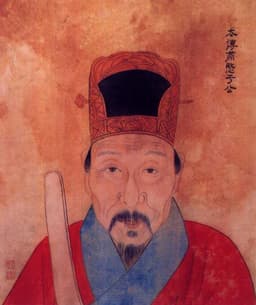
Yu Qian
Politician · Medieval
62.0Total
Basic Information
Born
1216
1398
Died
1274
1457
Era
Medieval
Medieval
Nationality
China
China
Occupation
Politician
Politician
Civilization
Eastern
Eastern
Score Comparison
Military (10%)
50.0
50.0
Political (20%)
59.3
70.0
Influence (20%)
61.0
61.0
Legacy (20%)
52.0
54.0
Leadership (15%)
40.0
78.0
Strategy (15%)
38.5
60.0
TOTAL
52.0
62.0
Liu Bingzhong — Complete Timeline
1260 AD
Promoted Confucian Reforms in Yuan AdministrationReform
Liu Bingzhong advocated for the adoption of Confucian rituals, civil service examinations, and bureaucratic structures within the Yuan government. His efforts helped Sinicize the Mongol administration, though full implementation was limited by Mongol resistance.
ConfucianismAdministrative ReformSinicization
Impact: nationalconstructive
Appointed Advisor to Kublai KhanPolitical Action◆ Major
Liu Bingzhong was appointed as a key advisor to Kublai Khan, the Mongol ruler who founded the Yuan dynasty. He provided counsel on governance, urban planning, and Confucian statecraft, influencing the integration of Chinese administrative practices into the Mongol court.
Yuan DynastyAdvisory RoleConfucian Influence
Impact: nationalconstructive
1267 AD
Designed the City of Dadu (Beijing)Cultural◆ Major
Liu Bingzhong oversaw the planning and construction of Dadu, the new Yuan capital (modern Beijing). The city's layout, based on Chinese geomantic principles and grid patterns, became a model for later imperial capitals and a lasting symbol of Yuan rule.
Urban PlanningCapital CityYuan Dynasty
Impact: nationalconstructive
Yu Qian — Complete Timeline
1449 AD
Defense of Beijing against the Oirat MongolsWar
After the Ming emperor was captured at the Battle of Tumu Fortress, Yu Qian organized the defense of Beijing against the Oirat Mongol army. He rallied the troops, stockpiled supplies, and successfully repelled the Mongol siege.
SiegeMongol InvasionMilitary Defense
Impact: nationalconstructive
Installation of the Jingtai EmperorPolitical Action◆ Major
Yu Qian supported the installation of Zhu Qiyu as the Jingtai Emperor after the capture of the Zhengtong Emperor. This move prevented a power vacuum and allowed for a unified command during the Mongol crisis.
Imperial SuccessionPolitical DecisionCrisis Management
Impact: nationalconstructive
1457 AD
Execution of Yu QianPolitical Action◆ Major
After the Tianshun Emperor (formerly the Zhengtong Emperor) regained the throne in a coup, Yu Qian was arrested and executed on charges of treason. His death was widely seen as a political purge by the restored emperor.
ExecutionPolitical PurgeInjustice
Impact: nationaltragic
Expert Analysis
Origins
Liu Bingzhong (1216–1274) was born into a scholarly family in what is now Hebei, northern China. His father was a minor official under the Jin dynasty. Liu received a Confucian education and showed early talent in astronomy and geomancy. After the Mongol conquest, he entered the service of Kublai Khan, becoming a trusted advisor. Yu Qian (1398–1457) was born in Hangzhou, Zhejiang, to a family of officials. His father served as a magistrate. Yu passed the imperial examinations in 1421 at age 23, entering the Ming bureaucracy as a censor. His early career focused on judicial and military administration in provinces like Shanxi and Henan.
Rise to Power
Liu Bingzhong rose through his expertise in Chinese statecraft. In 1260, Kublai Khan appointed him to the newly formed Secretariat. Liu's key moment came when he convinced Kublai to adopt a Chinese-style dynasty, leading to the establishment of the Yuan dynasty in 1271. He oversaw the construction of Dadu (Beijing) from 1267, designing its grid layout based on the Kaogong Ji, an ancient Chinese text. Yu Qian's rise was tied to the Tumu Crisis. In 1449, the Zhengtong Emperor led a disastrous campaign against the Oirat Mongols and was captured at the Battle of Tumu Fortress. As Minister of War, Yu Qian organized the defense of Beijing, rallying troops and supplies. He supported installing the emperor's brother as the Jingtai Emperor, stabilizing the government. This made him the de facto leader of the Ming.
Leadership & Governance
Liu Bingzhong advocated for Confucian reforms within the Yuan administration. He promoted the civil service examination system, though it was only partially implemented. He also advised on tax policies and the adoption of Chinese rituals, scoring 59.3 in political acumen. His leadership score of 40.0 reflects his advisory role rather than direct command. Yu Qian, with a leadership score of 78.0, was a decisive wartime leader. He centralized military command, stockpiled supplies, and personally inspected defenses. Politically, he supported the Jingtai Emperor but refused to execute the captured Zhengtong Emperor, a decision that later cost him his life. Yu's political score of 70.0 indicates his effective but risky maneuvering.
Triumph & Tragedy
Liu Bingzhong's greatest success was designing Dadu, which became the political center of China for centuries. His geomantic principles and urban planning created a model capital. However, his failure to fully integrate Confucian governance into the Yuan system left the dynasty vulnerable to factionalism. Liu died before the Yuan's decline, so he avoided major blame. Yu Qian's triumph was the successful defense of Beijing in 1449, saving the Ming dynasty. He repelled the Oirat siege and negotiated the release of the Zhengtong Emperor. His tragedy came in 1457 when the Zhengtong Emperor, restored in a coup, ordered Yu's execution on charges of treason. Yu was publicly beheaded, his property confiscated.
Character & Destiny
Liu Bingzhong was pragmatic and diplomatic, adapting Chinese traditions for Mongol rulers. His character allowed him to influence policy without direct power. Historians note his skill in balancing Mongol and Chinese interests. Yu Qian was principled and courageous, but his inflexibility cost him. He refused to compromise with the Oirats or eliminate the captured emperor, showing a moral rigidity. His destiny was sealed by his own choices: he could have fled or surrendered but chose to defend Beijing. After his execution, his reputation was rehabilitated under the Chenghua Emperor, but his death remains a cautionary tale.
Legacy
Liu Bingzhong's legacy is physical: the city of Beijing. His design influenced later Ming and Qing capitals. Urban historians give his planning an influence score of 61.0. Yu Qian's legacy is moral and political. He is remembered as a loyal minister who saved the dynasty. His military score of 50.0 reflects his defensive success, but his overall total of 62.0 surpasses Liu's 52.0. Yu's posthumous honors and popular veneration as a patriot overshadow Liu's architectural contributions.
Conclusion
Yu Qian had greater impact. His defense of Beijing preserved the Ming dynasty, while Liu Bingzhong's Dadu was a long-term project. Yu's political score (70.0 vs 59.3) and leadership (78.0 vs 40.0) show his direct influence. Liu's strategy score of 38.5 is lower than Yu's 60.0. While Liu shaped a city, Yu shaped history. Yu Qian's total score of 62.0 against 52.0 confirms his superiority.
Rankings
🥇
Yu QianLeader
Mil: 50.0Pol: 70.0Inf: 61.0
62.0
🥈
Liu Bingzhong
Mil: 50.0Pol: 59.3Inf: 61.0
52.0
+10.0 behind
How This Comparison Works
Algorithm
Each figure is scored on 6 dimensions (0—100 scale) based on structured historical data: Military (10%), Political (20%), Influence (20%), Legacy (20%), Leadership (15%), Strategy (15%). The weighted total produces the final ranking.
Data Sources
Scores are computed from structured sub-indicators in the database. Scale factors adjust for era (Ancient ×0.85, Modern ×1.0) and civilization size (Eastern ×1.05, Other ×0.80) to account for differences in population and military scale.
Maximum 3 Figures
Comparisons are limited to 2—3 figures to ensure readability and statistical meaningfulness.
Error Margins
±5 points per dimension — Sub-scores are derived from historical records with inherent uncertainty. Two figures within 5 points on a dimension should be considered roughly equivalent in that area.
Total Score Accuracy
±3 points overall — The weighted combination of 6 dimensions produces a total score with approximately ±3 points of uncertainty. Differences of less than 3 points are not statistically significant— the figures are effectively tied.
Known Limitations
- Historical records are incomplete and uneven across civilizations
- Figures from oral-tradition societies may be underrepresented
- Occupation labels can misclassify multi-role figures
- Scores measure capability and impact, not moral character
- Quantitative scoring is a comparison tool, not absolute truth
Capability Radar
Military (10%) — Battles & Warfare
Battles
41
65
Win Rate
40
70
Expansion
45
10
Political (20%) — Governance & Reform
Reform
70
65
Diplomacy
65
75
Economy
60
60
Influence (20%) — Cultural & Global Reach
Cultural
55
55
Global
50
50
Legacy (20%) — Historical Impact
Historical
60
65
Longevity
60
60
Leadership (15%) — Power & Stability
Tenure
40
70
Stability
55
70
Strategy (15%) — Tactics & Innovation
Strategy
48
80
Tactics
52
75
Reform
56
60
Similar Comparisons
Comments & Discussion
No comments yet. Be the first to share your thoughts!