Loading...
Han Qi vs Yu Qian
Yu Qian leads by 10.7 pts · 2 figures compared
…

Han Qi
Politician · Medieval
51.3Total
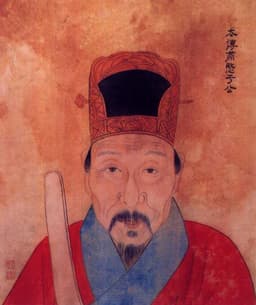
Yu Qian
Politician · Medieval
62.0Total
Basic Information
Born
1008
1398
Died
1075
1457
Era
Medieval
Medieval
Nationality
China
China
Occupation
Politician
Politician
Civilization
Eastern
Eastern
Score Comparison
Military (10%)
50.0
50.0
Political (20%)
62.7
70.0
Influence (20%)
50.2
61.0
Legacy (20%)
43.3
54.0
Leadership (15%)
66.0
78.0
Strategy (15%)
36.2
60.0
TOTAL
51.3
62.0
Han Qi — Complete Timeline
1058 AD
Appointed Grand CouncilorPolitical Action◆ Major
Han Qi became Grand Councilor under Emperor Renzong, serving as a leading conservative statesman. He focused on administrative efficiency and military preparedness, opposing aggressive expansion.
AppointmentGovernmentSong Dynasty
Impact: national
1060 AD
Compiled the 'New History of the Tang'Cultural◆ Major
Han Qi oversaw the compilation of the 'New History of the Tang' (Xin Tangshu), a official dynastic history. The work standardized historical records and became a key source for Tang dynasty studies.
HistoriographyCultural AchievementTang Dynasty
Impact: nationalconstructive
1069 AD
Opposed Wang Anshi's ReformsPolitical Action◆ Major
Han Qi led conservative opposition to Wang Anshi's New Policies, submitting memorials criticizing the reforms as too radical and disruptive. He was forced into retirement after Wang gained imperial favor.
Political OppositionReform DebateSong Dynasty
Impact: national
Yu Qian — Complete Timeline
1449 AD
Defense of Beijing against the Oirat MongolsWar
After the Ming emperor was captured at the Battle of Tumu Fortress, Yu Qian organized the defense of Beijing against the Oirat Mongol army. He rallied the troops, stockpiled supplies, and successfully repelled the Mongol siege.
SiegeMongol InvasionMilitary Defense
Impact: nationalconstructive
Installation of the Jingtai EmperorPolitical Action◆ Major
Yu Qian supported the installation of Zhu Qiyu as the Jingtai Emperor after the capture of the Zhengtong Emperor. This move prevented a power vacuum and allowed for a unified command during the Mongol crisis.
Imperial SuccessionPolitical DecisionCrisis Management
Impact: nationalconstructive
1457 AD
Execution of Yu QianPolitical Action◆ Major
After the Tianshun Emperor (formerly the Zhengtong Emperor) regained the throne in a coup, Yu Qian was arrested and executed on charges of treason. His death was widely seen as a political purge by the restored emperor.
ExecutionPolitical PurgeInjustice
Impact: nationaltragic
Expert Analysis
Origins
Han Qi was born in 1008 into a scholarly family in Xiangzhou (modern Anyang, Henan). His father, Han Guohua, was a minor official. Han Qi passed the jinshi examination in 1027, entering the civil service. He rose through the ranks due to his administrative competence and moral rectitude, becoming a key figure in the Song bureaucracy.
Yu Qian was born in 1398 in Qiantang (modern Hangzhou). His father, Yu Yan, was a scholar-official. Yu Qian passed the jinshi examination in 1421, embarking on a career in the Ming government. He gained a reputation for integrity and efficiency, serving as a censor and later as a provincial official.
Rise to Power
Han Qi's rise accelerated under Emperor Renzong. He served as a censor and then as a vice grand councilor. In 1058, he was appointed Grand Councilor, becoming the leading conservative voice at court. His influence peaked when he opposed Wang Anshi's reforms in 1069, submitting memorials that argued the New Policies would disrupt the agrarian economy and centralize power excessively. Han Qi's opposition galvanized the conservative faction, but he was eventually sidelined after Wang Anshi gained the emperor's favor.
Yu Qian's rise was marked by his response to the Tumu Crisis. In 1449, the Oirat Mongols captured the Zhengtong Emperor at the Battle of Tumu Fortress. As Minister of War, Yu Qian organized the defense of Beijing, rallying troops and supplies. He supported the installation of Zhu Qiyu as the Jingtai Emperor to stabilize the government. His leadership during the siege (October 1449) repelled the Oirat forces, saving the Ming capital.
Leadership & Governance
Han Qi's leadership style was conservative and bureaucratic. He emphasized administrative efficiency, overseeing the compilation of the 'New History of the Tang' (Xin Tangshu) to standardize historical records. He opposed radical change, advocating for gradual reform within existing structures. His governance focused on maintaining stability and moral order, with a political score of 62.7 reflecting his effectiveness within the system.
Yu Qian's leadership was decisive and militaristic. He took command during the crisis, organizing defenses and making strategic decisions. He scored 78.0 in leadership, demonstrating ability to rally people under pressure. His governance approach was pragmatic; he implemented military reforms and strengthened border defenses. However, his political maneuvering was less adept—his support for the Jingtai Emperor alienated the captured emperor's faction, leading to his eventual downfall.
Triumph & Tragedy
Han Qi's greatest success was his opposition to Wang Anshi's reforms, which preserved traditional governance structures. He compiled the 'New History of the Tang', a lasting scholarly contribution. His legacy score is 43.3, reflecting limited long-term impact. His tragedy was his inability to prevent the reforms; his faction lost influence, and he died in 1075, seeing his policies reversed.
Yu Qian's triumph was the defense of Beijing in 1449, a military achievement that earned him a score of 50.0 in military. He prevented a Mongol conquest and maintained Ming sovereignty. His tragedy was his execution in 1457 after the Tianshun Emperor regained the throne. Yu Qian was charged with treason and executed, a victim of court intrigue despite his patriotic service.
Character & Destiny
Han Qi was principled and steadfast, a conservative who valued tradition over innovation. His character shaped his destiny as a respected but ultimately marginalized figure. He accepted his political defeat with dignity, focusing on scholarly work.
Yu Qian was courageous and selfless, putting state above self. His character led him to take bold action during the crisis, but his loyalty to the Jingtai Emperor made him a target when the previous emperor returned. His execution was a tragic consequence of his uncompromising integrity.
Legacy
Han Qi's legacy is primarily historiographical; the 'New History of the Tang' remains a key source for Tang history. His opposition to Wang Anshi's reforms is remembered as a defense of traditional governance, but his influence is limited (score 50.2).
Yu Qian's legacy is heroic. He is celebrated as a national hero who saved Beijing. Posthumously rehabilitated, he received honors including the title Grand Preceptor. His story is taught in Chinese schools, and his temple exists in Hangzhou. His influence score is 61.0, reflecting his enduring symbolic importance.
Conclusion
Yu Qian had greater impact than Han Qi. His decisive action during the Tumu Crisis preserved the Ming dynasty, a concrete achievement with immediate and long-term consequences. Han Qi, while influential in his time, failed to stop the reforms he opposed, and his legacy is primarily scholarly. Yu Qian's total score of 62.0 versus Han Qi's 51.3 reflects his broader impact. Yu Qian's defense of Beijing is a defining moment in Chinese history, whereas Han Qi's opposition, though principled, did not alter the course of events. Therefore, Yu Qian stands as the more consequential figure.
Rankings
🥇
Yu QianLeader
Mil: 50.0Pol: 70.0Inf: 61.0
62.0
🥈
Han Qi
Mil: 50.0Pol: 62.7Inf: 50.2
51.3
+10.7 behind
How This Comparison Works
Algorithm
Each figure is scored on 6 dimensions (0—100 scale) based on structured historical data: Military (10%), Political (20%), Influence (20%), Legacy (20%), Leadership (15%), Strategy (15%). The weighted total produces the final ranking.
Data Sources
Scores are computed from structured sub-indicators in the database. Scale factors adjust for era (Ancient ×0.85, Modern ×1.0) and civilization size (Eastern ×1.05, Other ×0.80) to account for differences in population and military scale.
Maximum 3 Figures
Comparisons are limited to 2—3 figures to ensure readability and statistical meaningfulness.
Error Margins
±5 points per dimension — Sub-scores are derived from historical records with inherent uncertainty. Two figures within 5 points on a dimension should be considered roughly equivalent in that area.
Total Score Accuracy
±3 points overall — The weighted combination of 6 dimensions produces a total score with approximately ±3 points of uncertainty. Differences of less than 3 points are not statistically significant— the figures are effectively tied.
Known Limitations
- Historical records are incomplete and uneven across civilizations
- Figures from oral-tradition societies may be underrepresented
- Occupation labels can misclassify multi-role figures
- Scores measure capability and impact, not moral character
- Quantitative scoring is a comparison tool, not absolute truth
Capability Radar
Military (10%) — Battles & Warfare
Battles
41
65
Win Rate
41
70
Expansion
46
10
Political (20%) — Governance & Reform
Reform
55
65
Diplomacy
50
75
Economy
50
60
Influence (20%) — Cultural & Global Reach
Cultural
30
55
Global
10
50
Legacy (20%) — Historical Impact
Historical
40
65
Longevity
30
60
Leadership (15%) — Power & Stability
Tenure
60
70
Stability
55
70
Strategy (15%) — Tactics & Innovation
Strategy
49
80
Tactics
53
75
Reform
53
60
Similar Comparisons
Comments & Discussion
No comments yet. Be the first to share your thoughts!