Loading...
John of Ibelin vs Yu Qian
Yu Qian leads by 5.4 pts · 2 figures compared
…

John of Ibelin
Politician · Medieval
56.6Total
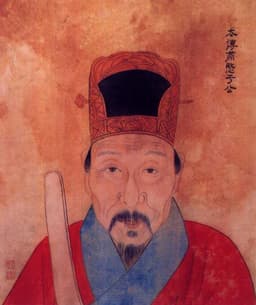
Yu Qian
Politician · Medieval
62.0Total
Basic Information
Born
1179
1398
Died
1236
1457
Era
Medieval
Medieval
Nationality
Kingdom of Jerusalem
China
Occupation
Politician
Politician
Civilization
Western
Eastern
Score Comparison
Military (10%)
45.0
50.0
Political (20%)
72.0
70.0
Influence (20%)
55.7
61.0
Legacy (20%)
48.3
54.0
Leadership (15%)
72.0
78.0
Strategy (15%)
45.0
60.0
TOTAL
56.6
62.0
John of Ibelin — Complete Timeline
1205 AD
Regency of JerusalemPolitical Action◆ Major
John of Ibelin served as regent for the young Queen Maria of Jerusalem. He administered the kingdom during her minority, managing its defense and diplomacy with neighboring Muslim states.
CrusadesRegencyJerusalem
Impact: regionalconstructive
1217 AD
Fifth Crusade InvolvementWar
John of Ibelin participated in the Fifth Crusade's campaign in Egypt. He led a contingent from Cyprus and Jerusalem, contributing to the capture of Damietta before the crusade's eventual failure.
CrusadesFifth CrusadeEgypt
Impact: regional
1228 AD
War against Frederick IIWar◆ Major
John of Ibelin led the baronial opposition to Emperor Frederick II during the Sixth Crusade. He fought against imperial forces in Cyprus and the Holy Land, defending the autonomy of the Crusader states against imperial control.
CrusadesCivil WarFrederick II
Impact: regional
1229 AD
Battle of NicosiaWar◆ Major
John of Ibelin defeated imperial forces at Nicosia, securing control of Cyprus. The victory established the Ibelin family as the dominant power in Cyprus and preserved the island's independence from Frederick II.
CrusadesBattleCyprusFrederick II
Impact: regional
1231 AD
Siege of BeirutWar
John of Ibelin defended his lordship of Beirut against imperial forces. He successfully held the city against a siege, maintaining Ibelin control over one of the wealthiest Crusader territories.
CrusadesSiegeBeirut
1235 AD
Legal CompilationCultural◆ Major
John of Ibelin compiled the 'Livre des Assises de la Haute Cour,' a legal code for the Kingdom of Jerusalem. This work codified feudal law and became a foundational text for Crusader legal systems.
LawCrusadesLegal Code
Impact: regionalconstructive
Yu Qian — Complete Timeline
1449 AD
Defense of Beijing against the Oirat MongolsWar
After the Ming emperor was captured at the Battle of Tumu Fortress, Yu Qian organized the defense of Beijing against the Oirat Mongol army. He rallied the troops, stockpiled supplies, and successfully repelled the Mongol siege.
SiegeMongol InvasionMilitary Defense
Impact: nationalconstructive
Installation of the Jingtai EmperorPolitical Action◆ Major
Yu Qian supported the installation of Zhu Qiyu as the Jingtai Emperor after the capture of the Zhengtong Emperor. This move prevented a power vacuum and allowed for a unified command during the Mongol crisis.
Imperial SuccessionPolitical DecisionCrisis Management
Impact: nationalconstructive
1457 AD
Execution of Yu QianPolitical Action◆ Major
After the Tianshun Emperor (formerly the Zhengtong Emperor) regained the throne in a coup, Yu Qian was arrested and executed on charges of treason. His death was widely seen as a political purge by the restored emperor.
ExecutionPolitical PurgeInjustice
Impact: nationaltragic
Expert Analysis
Origins
John of Ibelin (c. 1179–1236) was born into the Ibelin family, a prominent crusader dynasty in the Kingdom of Jerusalem. His father, Balian of Ibelin, had defended Jerusalem against Saladin. John received a knightly education and inherited the lordship of Beirut in 1198. He was steeped in the feudal traditions of Outremer, which shaped his legal mindset.
Yu Qian (1398–1457) was born in Hangzhou, China, into a scholarly family. He passed the imperial examinations and entered the Ming bureaucracy. His early career was marked by administrative posts, including a stint as a censor. He was known for his integrity and military acumen, which he developed through handling border affairs during the Ming dynasty's conflicts with the Mongols.
Rise to Power
John of Ibelin's rise began when he served as regent for the young Queen Maria of Jerusalem from 1205 to 1210. This position gave him control over the kingdom's administration. His influence grew during the Fifth Crusade (1217-1221), where he led a contingent from Cyprus and Jerusalem, contributing to the capture of Damietta. However, his major turning point came during the War against Frederick II (1228-1229). John led the baronial opposition to the Holy Roman Emperor, who claimed the throne of Jerusalem. In 1229, John defeated imperial forces at the Battle of Nicosia, securing control of Cyprus and establishing the Ibelins as the dominant power.
Yu Qian's rise was meteoric after the Tumu Crisis of 1449. The Zhengtong Emperor was captured by the Oirat Mongols, and the Ming capital Beijing was threatened. As Minister of War, Yu Qian took charge, organizing defenses and rallying troops. He supported the installation of the Jingtai Emperor to prevent a power vacuum. This move made him the de facto leader of the Ming government during the crisis.
Leadership & Governance
John of Ibelin's leadership was legalistic and feudal. He compiled the 'Livre des Assises de la Haute Cour', a legal code that codified the laws of the Kingdom of Jerusalem. This work became a foundational text for crusader states, emphasizing baronial rights against royal authority. His governance style was consultative, relying on the High Court of Jerusalem. In contrast, Yu Qian's leadership was authoritarian and pragmatic. He centralized military command, implemented rationing, and mobilized the populace for Beijing's defense. He rejected calls to abandon the capital, famously stating that those who suggested retreat should be executed. His governance focused on survival and stability, not legal codification.
Triumph & Tragedy
John of Ibelin's greatest success was the Battle of Nicosia (1229), where his forces defeated the imperial army, securing Ibelin dominance in Cyprus. His legal compilation ensured his lasting influence on crusader jurisprudence. However, his failure was his inability to prevent the eventual decline of the crusader states. His legalistic approach could not overcome the military and demographic challenges facing Outremer. He died in 1236, before the fall of Jerusalem in 1244.
Yu Qian's triumph was the successful defense of Beijing in 1449, which saved the Ming dynasty from collapse. He repelled the Oirat siege and later negotiated the release of the captured emperor. His tragedy came in 1457 when the Tianshun Emperor (the former Zhengtong Emperor) regained power in a coup. Yu Qian was arrested on trumped-up charges of treason and executed. His death was a stark example of Ming court factionalism.
Character & Destiny
John of Ibelin was a legal scholar and a pragmatic politician. His character was shaped by the crusader baronial tradition, valuing consensus and legal rights. This made him an effective leader in the feudal context of Outremer but limited his strategic vision. He scored 45.0 in military and 45.0 in strategy, reflecting his reliance on legal and political means rather than warfare. Yu Qian was a resolute and principled administrator. His decisive action during the crisis demonstrated high leadership (78.0) and political (70.0) scores. However, his lack of political maneuvering after the crisis led to his downfall. He failed to secure his position against the returning emperor, a fatal oversight.
Legacy
John of Ibelin's legacy is his legal code, which influenced the governance of Cyprus and Jerusalem for decades. His work is studied by historians of crusader law. He scored 48.3 in legacy, reflecting his niche but enduring impact. Yu Qian's legacy is as a national hero in China. He is remembered for his loyalty and sacrifice. His defense of Beijing is celebrated in Chinese history, and his posthumous rehabilitation by the Chenghua Emperor restored his reputation. He scored 54.0 in legacy, slightly higher than John.
Conclusion
Yu Qian had a greater impact overall. His defense of Beijing prevented the collapse of the Ming dynasty, altering the course of Chinese history. John of Ibelin, while important in crusader legal history, operated in a smaller geopolitical context. Yu Qian's higher total score (62.0 vs 56.6) reflects his broader influence and decisive actions. John's legal work, though significant, did not change the fate of the crusader states. Therefore, Yu Qian is the more consequential figure.
Rankings
🥇
Yu QianLeader
Mil: 50.0Pol: 70.0Inf: 61.0
62.0
🥈
John of Ibelin
Mil: 45.0Pol: 72.0Inf: 55.7
56.6
+5.4 behind
How This Comparison Works
Algorithm
Each figure is scored on 6 dimensions (0—100 scale) based on structured historical data: Military (10%), Political (20%), Influence (20%), Legacy (20%), Leadership (15%), Strategy (15%). The weighted total produces the final ranking.
Data Sources
Scores are computed from structured sub-indicators in the database. Scale factors adjust for era (Ancient ×0.85, Modern ×1.0) and civilization size (Eastern ×1.05, Other ×0.80) to account for differences in population and military scale.
Maximum 3 Figures
Comparisons are limited to 2—3 figures to ensure readability and statistical meaningfulness.
Error Margins
±5 points per dimension — Sub-scores are derived from historical records with inherent uncertainty. Two figures within 5 points on a dimension should be considered roughly equivalent in that area.
Total Score Accuracy
±3 points overall — The weighted combination of 6 dimensions produces a total score with approximately ±3 points of uncertainty. Differences of less than 3 points are not statistically significant— the figures are effectively tied.
Known Limitations
- Historical records are incomplete and uneven across civilizations
- Figures from oral-tradition societies may be underrepresented
- Occupation labels can misclassify multi-role figures
- Scores measure capability and impact, not moral character
- Quantitative scoring is a comparison tool, not absolute truth
Capability Radar
Military (10%) — Battles & Warfare
Battles
35
65
Win Rate
40
70
Expansion
15
10
Political (20%) — Governance & Reform
Reform
60
65
Diplomacy
65
75
Economy
50
60
Influence (20%) — Cultural & Global Reach
Cultural
45
55
Global
30
50
Legacy (20%) — Historical Impact
Historical
50
65
Longevity
40
60
Leadership (15%) — Power & Stability
Tenure
55
70
Stability
55
70
Strategy (15%) — Tactics & Innovation
Strategy
40
80
Tactics
45
75
Reform
20
60
Similar Comparisons
Comments & Discussion
No comments yet. Be the first to share your thoughts!