Loading...
Bao Zheng vs Yu Qian
Bao Zheng leads by 0.7 pts · 2 figures compared
…

Bao Zheng
Politician · Medieval
62.7Total
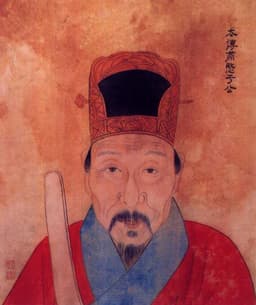
Yu Qian
Politician · Medieval
62.0Total
Basic Information
Born
999
1398
Died
1062
1457
Era
Medieval
Medieval
Nationality
China
China
Occupation
Politician
Politician
Civilization
Eastern
Eastern
Score Comparison
Military (10%)
36.0
50.0
Political (20%)
72.0
70.0
Influence (20%)
65.0
61.0
Legacy (20%)
65.0
54.0
Leadership (15%)
80.0
78.0
Strategy (15%)
37.9
60.0
TOTAL
62.7
62.0
Bao Zheng — Complete Timeline
1050 AD
Impeachment of corrupt officialsPolitical Action◆ Major
Bao Zheng submitted multiple memorials to the emperor impeaching high-ranking officials for corruption and abuse of power. His fearless criticism of powerful figures, including relatives of the emperor, solidified his image as a righteous judge.
Anti-CorruptionImpeachmentSong Dynasty
Impact: nationalconstructive
1056 AD
Appointment as Prefect of KaifengPolitical Action◆ Major
Bao Zheng was appointed prefect of Kaifeng, the Song capital. In this role, he became known for his strict enforcement of laws and impartial judgment, earning a reputation as an incorruptible official.
AppointmentJusticeSong Dynasty
Impact: nationalconstructive
1058 AD
Reform of the salt monopolyReform
Bao Zheng proposed reforms to the state salt monopoly to reduce burdens on merchants and prevent smuggling. His proposals aimed to increase state revenue while easing economic hardship on the populace.
Economic ReformSalt MonopolySong Dynasty
Impact: nationalconstructive
Yu Qian — Complete Timeline
1449 AD
Defense of Beijing against the Oirat MongolsWar
After the Ming emperor was captured at the Battle of Tumu Fortress, Yu Qian organized the defense of Beijing against the Oirat Mongol army. He rallied the troops, stockpiled supplies, and successfully repelled the Mongol siege.
SiegeMongol InvasionMilitary Defense
Impact: nationalconstructive
Installation of the Jingtai EmperorPolitical Action◆ Major
Yu Qian supported the installation of Zhu Qiyu as the Jingtai Emperor after the capture of the Zhengtong Emperor. This move prevented a power vacuum and allowed for a unified command during the Mongol crisis.
Imperial SuccessionPolitical DecisionCrisis Management
Impact: nationalconstructive
1457 AD
Execution of Yu QianPolitical Action◆ Major
After the Tianshun Emperor (formerly the Zhengtong Emperor) regained the throne in a coup, Yu Qian was arrested and executed on charges of treason. His death was widely seen as a political purge by the restored emperor.
ExecutionPolitical PurgeInjustice
Impact: nationaltragic
Expert Analysis
Origins
Bao Zheng (999–1062) was born in Hefei, Anhui, during the Northern Song dynasty. His father was a minor official, and Bao received a Confucian education, passing the imperial examinations in 1027 at age 28. He began his career as a magistrate in various counties, where he first demonstrated his commitment to justice.
Yu Qian (1398–1457) was born in Hangzhou, Zhejiang, during the Ming dynasty. His family had a tradition of scholarship; his father was a teacher. Yu Qian passed the imperial examinations in 1421 at age 23, entering the Hanlin Academy. He served in provincial posts before being called to the capital.
Rise to Power
Bao Zheng's rise came through his reputation for integrity. He served as a judge in the capital's courts, where he exposed corruption. In 1056, he was appointed Prefect of Kaifeng, the Song capital. His strict enforcement of laws and impartial judgment earned him the nickname "Bao the Clear Sky." He submitted over 150 memorials to the emperor impeaching corrupt officials, including powerful relatives of the emperor. His fearlessness made him a popular figure.
Yu Qian's rise was meteoric during the crisis of 1449. After the Ming emperor was captured at the Battle of Tumu Fortress, the Oirat Mongols threatened Beijing. As Minister of War, Yu Qian organized the city's defense, mobilized troops, and installed Zhu Qiyu as the Jingtai Emperor to stabilize the government. He successfully repelled the Mongol siege, saving the Ming dynasty.
Leadership & Governance
Bao Zheng's leadership was defined by his incorruptibility. He reformed the salt monopoly to reduce burdens on merchants and prevent smuggling, increasing state revenue. He also improved the judicial system, hearing cases personally and overturning unjust verdicts. His governance score of 72.0 reflects his effectiveness as an administrator who prioritized law and fairness.
Yu Qian's leadership was decisive and militaristic. He took command during the defense of Beijing, personally inspecting defenses and rallying troops. He also strengthened border defenses and reformed the military after the crisis. His political score of 70.0 and leadership score of 78.0 indicate his ability to take charge in a crisis, though he was less focused on long-term governance reforms.
Triumph & Tragedy
Bao Zheng's greatest triumph was his legacy as the symbol of justice in Chinese culture. He successfully impeached many corrupt officials and reformed the legal system. However, his tragedy was that his reforms were limited; after his death, corruption returned. He never achieved high office beyond prefect of Kaifeng, and his political influence waned in his later years.
Yu Qian's triumph was saving Beijing and the Ming dynasty in 1449. He prevented a Mongol takeover and maintained stability. His tragedy was his execution in 1457 after the Tianshun Emperor regained the throne in a coup. He was falsely accused of treason and executed, a victim of political revenge. He was posthumously rehabilitated in 1465.
Character & Destiny
Bao Zheng was known for his strict adherence to law and his fearlessness. He was called "Bao the Clear Sky" for his impartiality. His character made him a model official, but it also limited his political advancement; he made enemies among the powerful. His destiny was to become a folk hero, with his image used in operas and stories.
Yu Qian was bold and decisive, but also politically naive. He alienated the emperor's supporters by supporting the Jingtai Emperor. His character led him to act for the state's good, but he failed to secure his own position. His destiny was a tragic end, but later rehabilitation.
Legacy
Bao Zheng's legacy is immense in Chinese culture. He is worshipped as a deity of justice in temples, and his story is told in countless operas, novels, and films. His influence on Chinese legal culture is profound, scoring 65.0 in influence. He set a standard for judicial integrity.
Yu Qian's legacy is more political and historical. He is remembered as a national hero for defending Beijing, but his reputation is less widespread in popular culture. His influence score of 61.0 reflects his importance in Ming history, but he is not as globally recognized as Bao Zheng.
Conclusion
Bao Zheng had a greater overall impact than Yu Qian. Despite their similar total scores (62.7 vs 62.0), Bao Zheng's legacy as the symbol of justice has endured for nearly a millennium, influencing Chinese legal culture, governance, and folklore. Yu Qian's heroism was critical for the Ming dynasty, but his legacy is more limited in scope and recognition. Bao Zheng's moral example continues to inspire, while Yu Qian's is primarily a historical footnote. Therefore, Bao Zheng's impact is greater.
Rankings
🥇
Bao ZhengLeader
Mil: 36.0Pol: 72.0Inf: 65.0
62.7
🥈
Yu Qian
Mil: 50.0Pol: 70.0Inf: 61.0
62.0
+0.7 behind
How This Comparison Works
Algorithm
Each figure is scored on 6 dimensions (0—100 scale) based on structured historical data: Military (10%), Political (20%), Influence (20%), Legacy (20%), Leadership (15%), Strategy (15%). The weighted total produces the final ranking.
Data Sources
Scores are computed from structured sub-indicators in the database. Scale factors adjust for era (Ancient ×0.85, Modern ×1.0) and civilization size (Eastern ×1.05, Other ×0.80) to account for differences in population and military scale.
Maximum 3 Figures
Comparisons are limited to 2—3 figures to ensure readability and statistical meaningfulness.
Error Margins
±5 points per dimension — Sub-scores are derived from historical records with inherent uncertainty. Two figures within 5 points on a dimension should be considered roughly equivalent in that area.
Total Score Accuracy
±3 points overall — The weighted combination of 6 dimensions produces a total score with approximately ±3 points of uncertainty. Differences of less than 3 points are not statistically significant— the figures are effectively tied.
Known Limitations
- Historical records are incomplete and uneven across civilizations
- Figures from oral-tradition societies may be underrepresented
- Occupation labels can misclassify multi-role figures
- Scores measure capability and impact, not moral character
- Quantitative scoring is a comparison tool, not absolute truth
Capability Radar
Military (10%) — Battles & Warfare
Battles
36
65
Win Rate
44
70
Expansion
42
10
Political (20%) — Governance & Reform
Reform
75
65
Diplomacy
60
75
Economy
55
60
Influence (20%) — Cultural & Global Reach
Cultural
85
55
Global
70
50
Legacy (20%) — Historical Impact
Historical
80
65
Longevity
85
60
Leadership (15%) — Power & Stability
Tenure
65
70
Stability
70
70
Strategy (15%) — Tactics & Innovation
Strategy
45
80
Tactics
51
75
Reform
54
60
Similar Comparisons
Comments & Discussion
No comments yet. Be the first to share your thoughts!