Loading...
Lin Biao vs Qin Shi Huang
Qin Shi Huang leads by 18.2 pts · 2 figures compared
…

Lin Biao
General · Modern
67.0Total
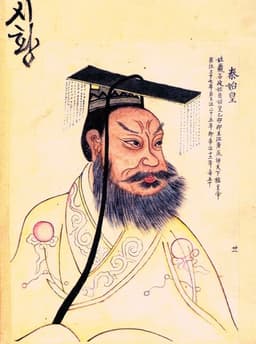
Qin Shi Huang
Emperor · Ancient
85.2Total
Basic Information
Born
1907
-259
Died
1971
-210
Era
Modern
Ancient
Nationality
China
China
Occupation
General
Emperor
Civilization
Eastern
Eastern
Score Comparison
Military (10%)
78.5
80.0
Political (20%)
68.0
90.0
Influence (20%)
72.0
85.0
Legacy (20%)
52.0
90.0
Leadership (15%)
72.0
78.0
Strategy (15%)
72.0
82.0
TOTAL
67.0
85.2
Lin Biao — Complete Timeline
1937 AD
Commanded the Victory at the Battle of PingxingguanWar
Lin Biao commanded the 115th Division of the Eighth Route Army to victory at the Battle of Pingxingguan. This was the first major Chinese victory over the Japanese in the Second Sino-Japanese War, boosting Communist prestige.
Second Sino-Japanese WarVictoryCommunist Army
Impact: nationalconstructive
1945 AD
Commander of the Fourth Field Army in the Chinese Civil WarWar
Lin Biao commanded the Fourth Field Army, which played a decisive role in the Chinese Civil War. His forces captured Manchuria, then swept south to take Beijing, Shanghai, and Guangzhou, securing Communist victory.
Chinese Civil WarMilitary Campaign
Impact: nationaldestructive
1969 AD
Designated as Mao Zedong's SuccessorPolitical Action◆ Major
Lin Biao was officially designated as Mao Zedong's successor in the Communist Party constitution. He was named Vice Chairman and held immense power during the Cultural Revolution.
Cultural RevolutionSuccessionPolitics
Impact: national
1971 AD
Died in a Plane Crash in MongoliaOther
Lin Biao died when his plane crashed in Mongolia after an alleged failed coup attempt against Mao Zedong. His death ended the Lin Biao incident, a major political crisis that led to a purge of his supporters.
DeathCoup AttemptCultural Revolution
Impact: nationaltragic
Qin Shi Huang — Complete Timeline
246 BC
Construction of the Mausoleum and Terracotta ArmyOther◆ Major
Qin Shi Huang commissioned a vast mausoleum complex near Xi'an, guarded by thousands of life-sized terracotta soldiers, horses, and chariots. The project employed hundreds of thousands of workers and reflected his obsession with immortality and imperial power.
Impact: global
230 BC
Conquest of the Six Warring StatesWar
From 230 to 221 BCE, Ying Zheng led the Qin state in a series of campaigns that conquered the Han, Zhao, Wei, Chu, Yan, and Qi states. This unified China under a single ruler for the first time, ending the Warring States period.
Impact: global
221 BC
Standardization of Writing, Currency, and MeasurementsReform◆ Major
Qin Shi Huang ordered the standardization of Chinese script, currency, and weights and measures across the unified empire. This facilitated administration, trade, and cultural integration, laying a foundation for future dynasties.
Impact: globalconstructive
Proclamation of the Qin DynastyPolitical Action
After conquering the last independent state, Ying Zheng declared himself Shi Huangdi (First Emperor), founding the Qin Dynasty. He adopted a new title to signify his supreme authority and initiated centralized imperial rule.
Impact: global
214 BC
Initiation of the Great Wall ConstructionOther◆ Major
Qin Shi Huang ordered the connection and extension of existing northern fortifications to create a unified defensive wall against nomadic Xiongnu raids. This project involved massive conscripted labor and became the precursor to the later Great Wall.
Impact: regional
213 BC
Burning of Books and Burying of ScholarsPolitical Action◆ Major
On the advice of Li Si, Qin Shi Huang ordered the burning of historical records and philosophical texts not aligned with Legalist doctrine. He also had 460 Confucian scholars buried alive to suppress dissent and consolidate ideological control.
Impact: nationaldestructive
Expert Analysis
lin-biao-vs-qin-shi-huang
# The Emperor and the General: Two Paths to Power, Two Destinies
On a September night in 1971, a Trident jet carrying China’s designated successor to Mao Zedong crashed into the Mongolian steppe, killing everyone aboard. Thirteen hundred miles away, beneath a mountain of earth in Shaanxi province, an army of terracotta soldiers stood silent guard over a tomb that had waited two millennia for its master. The two men—one who unified China with iron will, the other who nearly ruled it with military genius—could not have been more different. Yet both sought the same thing: absolute control over the world’s most populous nation. Qin Shi Huang died in his bed at age forty-nine, his dynasty crumbling around him. Lin Biao died as a traitor, his name erased from history. What drove these two fates?
Origins
Qin Shi Huang was born Ying Zheng in 259 BC, the son of a prince who had been a hostage in a rival state. His childhood was spent in the shadow of treachery and war. The Warring States period had torn China apart for centuries—seven kingdoms locked in a death struggle. From his earliest memories, the boy absorbed a single lesson: unity was survival, and weakness meant annihilation.
Lin Biao was born in 1907, in the final years of another crumbling empire—the Qing Dynasty. His father was a small landlord in Hubei province, a world away from the royal courts of ancient China. But the same chaos that shaped Qin Shi Huang shaped Lin Biao. The warlord era, Japanese invasion, and civil war between Nationalists and Communists made his generation of Chinese leaders brutal realists. Where Qin Shi Huang inherited a kingdom, Lin Biao inherited a battlefield.
Rise to Power
Qin Shi Huang’s path was one of methodical conquest. From 230 to 221 BC, he unleashed his armies against the six rival states. He did not fight alone—his chancellor Li Si and general Wang Jian were among the greatest strategists of the age. But the vision was his. When the last kingdom fell, he declared himself *Shi Huangdi*—the First Emperor—and announced a new era. The old feudal order was dead.
Lin Biao’s rise was swifter and more personal. In 1937, at age thirty, he commanded the 115th Division of the Communist Eighth Route Army at Pingxingguan. It was the first major Chinese victory against the Japanese, and it made him a hero. By 1945, he led the Fourth Field Army in the civil war, capturing Manchuria and driving the Nationalists from the mainland. Mao Zedong called him “the best general in China.” But military brilliance does not guarantee political survival.
Leadership & Governance
Qin Shi Huang governed like an architect. He standardized writing, currency, and measurements across his empire—a feat that would make Chinese civilization coherent for two thousand years. He ordered the construction of roads, canals, and the first Great Wall, linking existing fortifications into a single defensive line. His methods were ruthless: he burned books that contradicted his ideology and buried scholars alive who resisted. Yet his reforms were not madness—they were the logical tools of a man determined to prevent the fragmentation that had plagued China for centuries.
Lin Biao governed like a soldier. As defense minister, he modernized the People’s Liberation Army and wrote the *Quotations of Chairman Mao*—the Little Red Book—into mandatory study. He promoted the cult of Mao while building his own power base. But he never had the freedom to reshape China the way Qin Shi Huang did. He operated within a party system where ideology, not imperial decree, was the ultimate authority. His political score of 74.8 reflects this constraint—he was a master of strategy (86.9) but never a true ruler.
Triumph & Tragedy
Qin Shi Huang’s greatest triumph was unification itself—the end of centuries of war. His greatest tragedy was the cost. The Terracotta Army, commissioned in 246 BC, required tens of thousands of laborers, many of whom died building the emperor’s tomb. The Great Wall consumed lives like a river. And his quest for immortality—sending expeditions for the elixir of life—ended in failure. He died in 210 BC, possibly from mercury poisoning, the very substance he believed would grant eternal life.
Lin Biao’s triumph was the civil war victory that brought the Communists to power. His tragedy was the fall that followed. In 1969, he was named Mao’s successor—Vice Chairman of the Communist Party. Two years later, he was dead, allegedly fleeing after a failed coup. The details remain murky. Was he truly plotting against Mao? Or was he a victim of the paranoia he helped create? The plane crash in Mongolia left no survivors and no answers.
Character & Destiny
Qin Shi Huang was a visionary who trusted no one. He moved constantly among his palaces, never sleeping in the same place twice, to avoid assassination. He believed that his will alone could reshape reality. And in many ways, it did—the Qin Dynasty lasted only fourteen years after his death, but the imperial system he created survived for two millennia.
Lin Biao was a genius who trusted too much—in Mao, in the party, in his own invincibility. His strategy score of 86.9 suggests a mind that could outthink any battlefield opponent. But politics is not a battlefield. In the end, he was outmaneuvered by a man who had mastered both: Mao Zedong. Lin Biao’s downfall was not a failure of military logic but of political instinct.
Legacy
Qin Shi Huang’s legacy is monumental—literally. The Terracotta Army stands as one of the world’s great archaeological wonders. The Great Wall remains a symbol of China’s endurance. And the standardization of writing and currency made Chinese civilization possible. His influence score of 82.0 and legacy score of 85.0 reflect this permanence.
Lin Biao’s legacy is erased. After his death, the party condemned him as a traitor. His name was removed from official histories. For decades, Chinese schoolchildren learned nothing of the general who won the civil war. Only recently have scholars begun to reassess his role. His legacy score of 78.5 is a ghost of what it might have been.
Conclusion
Two men, separated by twenty-two centuries, both sought to shape China in their image. One succeeded by creating systems that outlasted him. The other succeeded by winning battles that others would claim. Qin Shi Huang died as an emperor; Lin Biao died as a fugitive. But both were products of their times—eras of chaos that demanded absolute will and rewarded absolute ruthlessness. The difference was not in their ambition, but in the nature of the power they seized. One built an empire. The other served one. And history, as always, remembered the builder.
Rankings
🥇
Qin Shi HuangLeader
Mil: 80.0Pol: 90.0Inf: 85.0
85.2
🥈
Lin Biao
Mil: 78.5Pol: 68.0Inf: 72.0
67.0
+18.2 behind
How This Comparison Works
Algorithm
Each figure is scored on 6 dimensions (0—100 scale) based on structured historical data: Military (10%), Political (20%), Influence (20%), Legacy (20%), Leadership (15%), Strategy (15%). The weighted total produces the final ranking.
Data Sources
Scores are computed from structured sub-indicators in the database. Scale factors adjust for era (Ancient ×0.85, Modern ×1.0) and civilization size (Eastern ×1.05, Other ×0.80) to account for differences in population and military scale.
Maximum 3 Figures
Comparisons are limited to 2—3 figures to ensure readability and statistical meaningfulness.
Error Margins
±5 points per dimension — Sub-scores are derived from historical records with inherent uncertainty. Two figures within 5 points on a dimension should be considered roughly equivalent in that area.
Total Score Accuracy
±3 points overall — The weighted combination of 6 dimensions produces a total score with approximately ±3 points of uncertainty. Differences of less than 3 points are not statistically significant— the figures are effectively tied.
Known Limitations
- Historical records are incomplete and uneven across civilizations
- Figures from oral-tradition societies may be underrepresented
- Occupation labels can misclassify multi-role figures
- Scores measure capability and impact, not moral character
- Quantitative scoring is a comparison tool, not absolute truth
Capability Radar
Military (10%) — Battles & Warfare
Battles
85
85
Win Rate
90
90
Expansion
80
90
Political (20%) — Governance & Reform
Reform
55
95
Diplomacy
50
75
Economy
45
90
Influence (20%) — Cultural & Global Reach
Cultural
55
95
Global
60
85
Legacy (20%) — Historical Impact
Historical
70
95
Longevity
50
95
Leadership (15%) — Power & Stability
Tenure
60
70
Stability
40
65
Strategy (15%) — Tactics & Innovation
Strategy
88
85
Tactics
92
80
Reform
75
95
Similar Comparisons
Comments & Discussion
考据狂人6/17/2026
这是典型的历史虚无主义!秦始皇统一文字度量衡,筑长城修驰道,那是国家构建的基础。林彪除了黄埔军校和井冈山那点事,后来搞文革整人,能比?把乱臣贼子和千古一帝放一起,不是历史学家的笔该写的。我建议你搞搞清楚谁是老虎谁是狐狸。
茶馆老张6/17/2026
拿林彪比秦始皇?笑话!老秦吃长生药求仙的时候,林彪可是实实在在带兵打了辽沈战役。要我说啊,这两人根本不是一个路子:一个靠武力加愚民统治,一个靠军事加政治阴谋。林彪要是也活到白头,说不定变成第二个秦始皇。可惜啊,他栽在飞机上了。历史这玩意,往往就是差那么一口气。
Classics Scholar6/17/2026
The Han Feizi comes to mind: Qin Shi Huang embodied Legalism's iron grip—rewards and punishments so absolute they shaped a nation. Lin Biao's Little Red Book was his own brand of Legalism, but without the philosophical depth. Both understood that power requires either fear or love, but they chose fear. Qin's fear built walls that still stand; Lin's fear crashed into Mongolian dirt. Fu Hao, anyone?
BoldScribe976/17/2026
Useless comparison. Lin Biao was a modern commander who understood logistics, air power, and political maneuvering. Qin Shi Huang didn't even have stirrups. Apples and oranges. The only thing they share is that both ended up dead in a ditch—literally in Lin's case. Try comparing Lin with Zhukov or Rommel next time. At least those are actual military peers.
Historian5846/17/2026
Let's crunch numbers: Qin Shi Huang unified 7 warring states into 1 empire, ruled 34 years, and left behind 8,000+ terracotta warriors. Lin Biao commanded the PLA during its peak size of 4 million men, but his actual combat record is mostly against fellow Chinese. Qin's body count? Debated, but high. Lin's? Probably lower. Who's more effective? Depends on how you score. If it's raw geopolitical impact, Qin wins. No contest.