Loading...
Lian Po vs Xiahou Dun
Lian Po leads by 7.9 pts · 2 figures compared
…
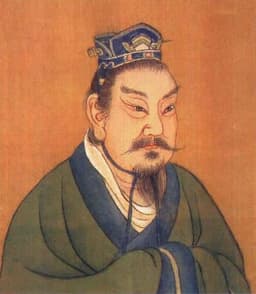
Lian Po
General · Ancient
52.5Total

Xiahou Dun
General · Ancient
44.6Total
Basic Information
Born
-327
155
Died
-243
220
Era
Ancient
Ancient
Nationality
China
China
Occupation
General
General
Civilization
Eastern
Eastern
Score Comparison
Military (10%)
67.3
52.5
Political (20%)
26.4
32.1
Influence (20%)
57.2
51.0
Legacy (20%)
50.0
44.2
Leadership (15%)
61.1
36.9
Strategy (15%)
58.0
52.5
TOTAL
52.5
44.6
Lian Po — Complete Timeline
283 BC
Defeated Qi ForcesWar
Lian Po led Zhao armies to victory against the state of Qi, capturing several cities. This campaign expanded Zhao's territory and demonstrated his military prowess as a general.
BattleZhaoQi
Impact: regional
279 BC
Reconciled with Lin XiangruCultural◆ Major
Lian Po, a veteran general of Zhao, initially resented Lin Xiangru's promotion above him. After learning of Lin's selfless behavior for the state, Lian Po apologized by carrying a thorny stick to Lin's residence, and the two became close allies.
ReconciliationZhaoFriendship
Impact: nationalconstructive
260 BC
Replaced by Zhao Kuo at ChangpingPolitical Action◆ Major
King Xiaocheng of Zhao replaced Lian Po with Zhao Kuo as commander at the Battle of Changping, against the advice of Zhao She. Lian Po's defensive strategy was abandoned, leading to a disastrous defeat for Zhao.
ReplacementBattle of ChangpingZhao
Impact: regionaltragic
Xiahou Dun — Complete Timeline
190 AD
Battle of XingyangWar◆ Major
Xiahou Dun served under Cao Cao during the campaign against Dong Zhuo. He was wounded by an arrow in the eye during a skirmish, an injury that defined his later appearance and reputation as the one-eyed general.
Three KingdomsInjuryCao Cao
Impact: nationaltragic
194 AD
Battle of PuyangWar
Xiahou Dun was captured by L
Three KingdomsCaptureLü Bu
Impact: national
200 AD
Battle of GuanduWar◆ Major
Xiahou Dun commanded a detachment of Cao Cao's army during the decisive campaign against Yuan Shao. He helped secure supply lines and participated in the final assault that broke Yuan Shao's forces.
Three KingdomsBattleYuan Shao
Impact: nationalconstructive
202 AD
Battle of BowangWar
Xiahou Dun led an expedition against Liu Bei but was defeated by a fire attack at Bowang. He retreated with heavy losses, a rare defeat in his career.
Three KingdomsDefeatLiu Bei
Impact: nationaldestructive
205 AD
Appointed General of the VanguardPolitical Action◆ Major
Cao Cao appointed Xiahou Dun as General of the Vanguard, one of the highest military posts in Wei. This reflected his trusted status and long service.
Three KingdomsPromotionCao Cao
Impact: nationalconstructive
220 AD
Death and Posthumous HonorsOther
Xiahou Dun died shortly after Cao Cao's death. He was posthumously granted the title of Marquis of Dangtu, honoring his decades of loyalty and service to Wei.
Three KingdomsDeathHonors
Impact: national
Expert Analysis
Origins
Lian Po was born around 327 BCE in the state of Zhao during the Warring States period. He came from a military family and rose through the ranks as a young officer, demonstrating early prowess in border skirmishes. His formative experiences included learning the art of war from veteran commanders and participating in campaigns against the states of Wei and Qi.
Xiahou Dun was born in the 150s CE in Pei Commandery, Han dynasty. He was a member of the influential Xiahou clan, which had close ties to the Cao family. Orphaned young, he was raised by his clan and became a childhood friend of Cao Cao. He joined Cao Cao's rebellion against Dong Zhuo in 190 CE at age 30, beginning a lifelong military career.
Rise to Power
Lian Po's rise began with his command of Zhao armies in the 280s BCE. He first gained prominence by defeating Qi forces in 283 BCE, capturing several cities. In 279 BCE, he was appointed chief general after the successful defense of Handan against Qin. His reconciliation with the diplomat Lin Xiangru in 278 BCE solidified his reputation as a patriot willing to put state above personal pride.
Xiahou Dun's rise was tied to Cao Cao's early campaigns. He fought at the Battle of Xingyang in 190 CE, where he lost an eye to an arrow but continued fighting. In 196 CE, Cao Cao appointed him as General of the Vanguard, making him one of the highest-ranking officers in Wei. His loyalty during the crisis of Cao Cao's assassination attempt in 200 CE further cemented his position.
Leadership & Governance
Lian Po's leadership style emphasized defensive warfare and troop morale. At the Battle of Changping (260 BCE), he built fortifications and refused to engage the Qin army, a strategy that would have saved Zhao if not for his replacement. He governed captured territories with a firm hand, ensuring loyalty through fear and respect. His political score of 26.4 reflects his inability to navigate court intrigues, leading to his dismissal.
Xiahou Dun governed as a trusted administrator, often left in charge of Cao Cao's capital while the warlord campaigned. He implemented agricultural policies to support the army and maintained order in Henan. His leadership score of 36.9 indicates limited independent command success; he was more a loyal executor than strategic innovator. He never won a major battle as supreme commander, and his defeat at Bowang (208 CE) exposed his tactical limitations.
Triumph & Tragedy
Lian Po's greatest triumph was his defensive stand at Changping. He held the Qin army at bay for three years (262-260 BCE), inflicting heavy casualties. His earlier victories against Qi and Wei expanded Zhao's territory significantly. His tragedy came when King Xiaocheng replaced him with Zhao Kuo, who lost the entire Zhao army (400,000 men) in a single battle. Lian Po later fled to Wei after political persecution and died in disgrace.
Xiahou Dun's triumph was his unwavering loyalty and service in over 30 years of warfare. He played crucial roles in the battles of Guandu (200 CE) and the campaign against Lü Bu. His tragedy was his capture by Lü Bu in 194 CE, where he was held hostage and forced to negotiate. His defeat at Bowang by Zhuge Liang's fire attack was a personal low, and he never achieved an independent victory of strategic importance.
Character & Destiny
Lian Po was proud and stubborn but capable of humility. His famous apology to Lin Xiangru (carrying thorny branches) showed his ability to recognize error. However, his pride led to his downfall; he refused to serve under younger generals and alienated the Zhao court. His military score of 67.3 reflects his competence, but his political ineptitude (26.4) sealed his fate.
Xiahou Dun was deeply loyal and courageous, but limited in strategic vision. His famous quote, "I would rather die than betray Lord Cao," epitomized his devotion. He was known for his frugality and care for soldiers, but his defeat at Bowang showed his inability to anticipate Zhuge Liang's tactics. His total score of 44.6 places him below Lian Po, as his career lacked decisive victories.
Legacy
Lian Po is remembered in Chinese history as a symbol of loyalty and military skill. The idiom "Lian Po's apology" (负荆请罪) is still used to describe sincere reconciliation. His defensive tactics at Changping are studied in military academies. His influence score of 57.2 reflects his enduring cultural impact.
Xiahou Dun is remembered as the archetypal one-eyed general, a trope in Chinese literature and opera. He appears in the novel "Romance of the Three Kingdoms" as a fierce but tragic figure. His legacy score of 44.2 is lower because his achievements were overshadowed by more brilliant generals like Cao Cao and Sima Yi.
Conclusion
Lian Po had greater impact on history than Xiahou Dun. His military score (67.3 vs 52.5) and total score (52.5 vs 44.6) demonstrate his superior strategic ability. While Xiahou Dun was a loyal soldier, Lian Po's defensive tactics at Changping could have altered the course of the Warring States period if he had not been replaced. Lian Po's cultural legacy as a model of patriotism and humility also surpasses Xiahou Dun's limited fame. In a direct comparison, Lian Po's influence on Chinese military thought and his role in one of history's most consequential battles gives him the edge.
Rankings
🥇
Lian PoLeader
Mil: 67.3Pol: 26.4Inf: 57.2
52.5
🥈
Xiahou Dun
Mil: 52.5Pol: 32.1Inf: 51.0
44.6
+7.9 behind
How This Comparison Works
Algorithm
Each figure is scored on 6 dimensions (0—100 scale) based on structured historical data: Military (10%), Political (20%), Influence (20%), Legacy (20%), Leadership (15%), Strategy (15%). The weighted total produces the final ranking.
Data Sources
Scores are computed from structured sub-indicators in the database. Scale factors adjust for era (Ancient ×0.85, Modern ×1.0) and civilization size (Eastern ×1.05, Other ×0.80) to account for differences in population and military scale.
Maximum 3 Figures
Comparisons are limited to 2—3 figures to ensure readability and statistical meaningfulness.
Error Margins
±5 points per dimension — Sub-scores are derived from historical records with inherent uncertainty. Two figures within 5 points on a dimension should be considered roughly equivalent in that area.
Total Score Accuracy
±3 points overall — The weighted combination of 6 dimensions produces a total score with approximately ±3 points of uncertainty. Differences of less than 3 points are not statistically significant— the figures are effectively tied.
Known Limitations
- Historical records are incomplete and uneven across civilizations
- Figures from oral-tradition societies may be underrepresented
- Occupation labels can misclassify multi-role figures
- Scores measure capability and impact, not moral character
- Quantitative scoring is a comparison tool, not absolute truth
Capability Radar
Military (10%) — Battles & Warfare
Battles
65
45
Win Rate
60
50
Expansion
40
30
Political (20%) — Governance & Reform
Reform
20
15
Diplomacy
60
35
Economy
25
25
Influence (20%) — Cultural & Global Reach
Cultural
55
35
Global
40
20
Legacy (20%) — Historical Impact
Historical
60
40
Longevity
55
35
Leadership (15%) — Power & Stability
Tenure
55
40
Stability
50
30
Strategy (15%) — Tactics & Innovation
Strategy
65
50
Tactics
70
55
Reform
30
20
Similar Comparisons
Comments & Discussion
No comments yet. Be the first to share your thoughts!