Loading...
Cao Ren vs Lian Po
Lian Po leads by 2.2 pts · 2 figures compared
…

Cao Ren
General · Ancient
50.3Total
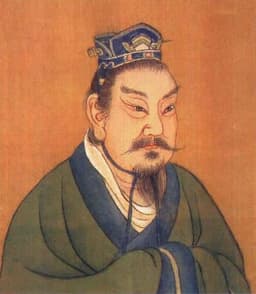
Lian Po
General · Ancient
52.5Total
Basic Information
Born
168
-327
Died
223
-243
Era
Ancient
Ancient
Nationality
China
China
Occupation
General
General
Civilization
Eastern
Eastern
Score Comparison
Military (10%)
80.0
67.3
Political (20%)
27.9
26.4
Influence (20%)
51.0
57.2
Legacy (20%)
45.8
50.0
Leadership (15%)
54.2
61.1
Strategy (15%)
58.0
58.0
TOTAL
50.3
52.5
Cao Ren — Complete Timeline
208 AD
Battle of Red CliffsWar◆ Major
Cao Ren commanded a portion of Cao Cao's forces during the campaign against Sun Quan and Liu Bei. After Cao Cao's defeat, Cao Ren was left to defend Jiangling against Zhou Yu's siege, holding out for over a year before retreating.
Three KingdomsBattleCao Cao
Impact: regional
Battle of JianglingWar◆ Major
Cao Ren defended Jiangling against Zhou Yu's siege. He personally led sorties and inflicted heavy casualties on Wu forces. After a prolonged campaign, Cao Ren abandoned the city under orders from Cao Cao, retreating to Xiangyang.
Three KingdomsSiegeZhou Yu
Impact: regional
213 AD
Battle of RuxuWar
Cao Ren led a Wei force against Sun Quan at Ruxu. The campaign ended in a stalemate, with Cao Ren unable to decisively defeat the Wu navy. He withdrew after failing to capture the enemy fortifications.
Three KingdomsBattleSun Quan
219 AD
Battle of FanchengWar
Cao Ren defended Fancheng against Guan Yu's siege. Despite being surrounded and facing flooding from the Han River, Cao Ren held out until reinforcements led by Xu Huang arrived and broke the siege, forcing Guan Yu to retreat.
Three KingdomsSiegeGuan Yu
Impact: regional
220 AD
Appointed Commander of Southern ForcesPolitical Action◆ Major
After Cao Pi became emperor, Cao Ren was appointed Grand Marshal and given command of Wei's southern forces. He continued to oversee defenses against Wu, maintaining stability along the border until his death.
Three KingdomsAppointmentCao Pi
Impact: national
Lian Po — Complete Timeline
283 BC
Defeated Qi ForcesWar
Lian Po led Zhao armies to victory against the state of Qi, capturing several cities. This campaign expanded Zhao's territory and demonstrated his military prowess as a general.
BattleZhaoQi
Impact: regional
279 BC
Reconciled with Lin XiangruCultural◆ Major
Lian Po, a veteran general of Zhao, initially resented Lin Xiangru's promotion above him. After learning of Lin's selfless behavior for the state, Lian Po apologized by carrying a thorny stick to Lin's residence, and the two became close allies.
ReconciliationZhaoFriendship
Impact: nationalconstructive
260 BC
Replaced by Zhao Kuo at ChangpingPolitical Action◆ Major
King Xiaocheng of Zhao replaced Lian Po with Zhao Kuo as commander at the Battle of Changping, against the advice of Zhao She. Lian Po's defensive strategy was abandoned, leading to a disastrous defeat for Zhao.
ReplacementBattle of ChangpingZhao
Impact: regionaltragic
Expert Analysis
Origins
Cao Ren, born in 168 AD in Qiao County, was a cousin of the warlord Cao Cao. His family was part of the Cao clan that would later found the state of Cao Wei. From a young age, Cao Ren was known for his martial prowess and joined Cao Cao's campaigns early, distinguishing himself in battles against rival warlords. He lacked formal education but gained military experience through constant warfare.
Lian Po, born around 300 BC in the state of Zhao, came from a military family. Details of his early life are scarce, but he rose through the ranks of the Zhao army due to his skill and bravery. He served under King Huiwen of Zhao and became one of the most respected generals of the Warring States period.
Rise to Power
Cao Ren rose to prominence as a key commander under his cousin Cao Cao. He participated in the campaign against Lü Bu in 198 AD and later fought in the Battle of Guandu in 200 AD, where he helped secure Cao Cao's victory by suppressing a rebellion in the rear. His major breakthrough came when he was entrusted with defending the strategic city of Fancheng against Guan Yu in 219 AD.
Lian Po's rise began with his victories against the state of Qi, where he captured several cities and expanded Zhao's territory. His reputation grew, and he became the leading general of Zhao. However, his most famous act was his reconciliation with the statesman Lin Xiangru around 279 BC, a story that exemplifies his willingness to put the state's interests above personal pride.
Leadership & Governance
Cao Ren's leadership style was hands-on and aggressive. During the defense of Jiangling against Zhou Yu, he personally led sorties and even killed one of Zhou Yu's officers in single combat. However, his governance was less impressive; he was primarily a military commander with little political acumen. His political score of 27.9 reflects his limited role in statecraft.
Lian Po was a disciplined and strategic commander. He advocated for a defensive strategy at the Battle of Changping, which would have likely saved Zhao from disaster if followed. His leadership score of 61.1 reflects his ability to command respect and maintain troop morale. Politically, he scored 26.4, showing his limited influence outside the military sphere.
Triumph & Tragedy
Cao Ren's greatest triumph was the defense of Fancheng. Despite being outnumbered and facing flooding from the Han River, he held out against Guan Yu until reinforcements arrived. This defense prevented the fall of a key Wei stronghold. His tragedy came at the Battle of Ruxu, where he failed to defeat Sun Quan's navy, leading to a stalemate and eventual withdrawal.
Lian Po's triumph was his series of victories against Qi, which expanded Zhao's territory. His tragedy was being replaced by Zhao Kuo at the Battle of Changping, leading to the catastrophic defeat that crippled Zhao. Lian Po's later years were marked by exile and service in other states, a sad end for a loyal general.
Character & Destiny
Cao Ren was known for his courage and loyalty to Cao Cao. He was a brave commander who led from the front, but his impatience sometimes led to setbacks. His character shaped his fate as a reliable defender, but he never achieved the highest command due to his lack of political skills.
Lian Po's character was defined by his pride and later humility. His initial resentment towards Lin Xiangru showed his arrogance, but his apology demonstrated his ability to grow. This humility might have saved his career temporarily, but his destiny was ultimately shaped by the political intrigues of the Zhao court.
Legacy
Cao Ren is remembered as a capable general who served Wei faithfully. His defense of Fancheng is a classic example of holding a besieged city. However, his legacy is overshadowed by more famous generals like Zhang Liao and Sima Yi. His total score of 50.3 reflects his moderate overall impact.
Lian Po's legacy is more enduring. The story of his reconciliation with Lin Xiangru is a cultural touchstone in China, teaching the value of putting the state above personal grievances. His military achievements are also celebrated, and he is considered one of the top generals of the Warring States period. His total score of 52.5 edges out Cao Ren.
Conclusion
While both were skilled defenders, Lian Po had a greater impact due to his lasting cultural legacy and higher total score of 52.5 compared to Cao Ren's 50.3. Lian Po's story transcends military history, while Cao Ren's achievements are confined to the Three Kingdoms period. Therefore, Lian Po is the greater figure overall.
Rankings
🥇
Lian PoLeader
Mil: 67.3Pol: 26.4Inf: 57.2
52.5
🥈
Cao Ren
Mil: 80.0Pol: 27.9Inf: 51.0
50.3
+2.2 behind
How This Comparison Works
Algorithm
Each figure is scored on 6 dimensions (0—100 scale) based on structured historical data: Military (10%), Political (20%), Influence (20%), Legacy (20%), Leadership (15%), Strategy (15%). The weighted total produces the final ranking.
Data Sources
Scores are computed from structured sub-indicators in the database. Scale factors adjust for era (Ancient ×0.85, Modern ×1.0) and civilization size (Eastern ×1.05, Other ×0.80) to account for differences in population and military scale.
Maximum 3 Figures
Comparisons are limited to 2—3 figures to ensure readability and statistical meaningfulness.
Error Margins
±5 points per dimension — Sub-scores are derived from historical records with inherent uncertainty. Two figures within 5 points on a dimension should be considered roughly equivalent in that area.
Total Score Accuracy
±3 points overall — The weighted combination of 6 dimensions produces a total score with approximately ±3 points of uncertainty. Differences of less than 3 points are not statistically significant— the figures are effectively tied.
Known Limitations
- Historical records are incomplete and uneven across civilizations
- Figures from oral-tradition societies may be underrepresented
- Occupation labels can misclassify multi-role figures
- Scores measure capability and impact, not moral character
- Quantitative scoring is a comparison tool, not absolute truth
Capability Radar
Military (10%) — Battles & Warfare
Battles
65
65
Win Rate
60
60
Expansion
55
40
Political (20%) — Governance & Reform
Reform
20
20
Diplomacy
40
60
Economy
30
25
Influence (20%) — Cultural & Global Reach
Cultural
35
55
Global
20
40
Legacy (20%) — Historical Impact
Historical
45
60
Longevity
40
55
Leadership (15%) — Power & Stability
Tenure
50
55
Stability
45
50
Strategy (15%) — Tactics & Innovation
Strategy
65
65
Tactics
70
70
Reform
30
30
Similar Comparisons
Comments & Discussion
No comments yet. Be the first to share your thoughts!