Loading...
Jugurtha vs Lian Po
Lian Po leads by 4.7 pts · 2 figures compared
…

Jugurtha
General · Ancient
47.8Total
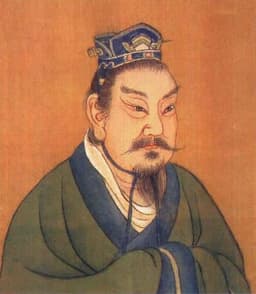
Lian Po
General · Ancient
52.5Total
Basic Information
Born
-160
-327
Died
-104
-243
Era
Ancient
Ancient
Nationality
Numidia
China
Occupation
General
General
Civilization
Other
Eastern
Score Comparison
Military (10%)
61.7
67.3
Political (20%)
26.4
26.4
Influence (20%)
55.7
57.2
Legacy (20%)
48.3
50.0
Leadership (15%)
40.4
61.1
Strategy (15%)
56.2
58.0
TOTAL
47.8
52.5
Jugurtha — Complete Timeline
117 BC
Assassination of HiempsalPolitical Action◆ Major
Jugurtha ordered the assassination of his cousin Hiempsal, a co-heir to the Numidian throne. This act triggered a civil war with his other cousin Adherbal and led to Roman intervention in Numidia, setting the stage for the Jugurthine War.
NumidiaAssassinationCivil War
Impact: regionaldestructive
112 BC
Siege of CirtaWar◆ Major
Jugurtha besieged the city of Cirta, where his rival Adherbal had taken refuge. After capturing the city, Jugurtha executed Adherbal and massacred many Roman and Italian merchants, provoking the Roman Republic to declare war on Numidia.
NumidiaSiegeRoman Republic
Impact: regionaldestructive
109 BC
Battle of the MuthulWar◆ Major
Jugurtha's forces fought the Roman army under Quintus Caecilius Metellus at the Muthul River. Although the battle was tactically indecisive, Jugurtha's guerrilla tactics prevented a decisive Roman victory, prolonging the war and demonstrating his military skill.
Jugurthine WarBattleRoman Republic
Impact: regional
105 BC
Betrayal and capture by BocchusPolitical Action◆ Major
Jugurtha was betrayed by his father-in-law, King Bocchus of Mauretania, who had been allied with him. Bocchus lured Jugurtha into a trap and handed him over to the Roman general Gaius Marius, ending the Jugurthine War.
NumidiaBetrayalJugurthine War
Impact: regionaltragic
104 BC
Execution in the TullianumPolitical Action◆ Major
Jugurtha was paraded in Gaius Marius's triumph in Rome and then thrown into the Tullianum prison, where he was executed by strangulation. His death marked the end of Numidian independence and the consolidation of Roman control over North Africa.
ExecutionRoman RepublicNumidia
Impact: regionaltragic
Lian Po — Complete Timeline
283 BC
Defeated Qi ForcesWar
Lian Po led Zhao armies to victory against the state of Qi, capturing several cities. This campaign expanded Zhao's territory and demonstrated his military prowess as a general.
BattleZhaoQi
Impact: regional
279 BC
Reconciled with Lin XiangruCultural◆ Major
Lian Po, a veteran general of Zhao, initially resented Lin Xiangru's promotion above him. After learning of Lin's selfless behavior for the state, Lian Po apologized by carrying a thorny stick to Lin's residence, and the two became close allies.
ReconciliationZhaoFriendship
Impact: nationalconstructive
260 BC
Replaced by Zhao Kuo at ChangpingPolitical Action◆ Major
King Xiaocheng of Zhao replaced Lian Po with Zhao Kuo as commander at the Battle of Changping, against the advice of Zhao She. Lian Po's defensive strategy was abandoned, leading to a disastrous defeat for Zhao.
ReplacementBattle of ChangpingZhao
Impact: regionaltragic
Expert Analysis
Origins
Jugurtha (c. 160–104 BCE) was a grandson of Masinissa, the first king of unified Numidia. He was born into the royal family but as an illegitimate grandson, he was initially sent to serve as a cavalry commander in the Roman army at the Siege of Numantia (134–133 BCE). There, he gained military experience and Roman connections. His early life was marked by his ambition to claim the throne, which he viewed as his right despite his irregular birth.
Lian Po (c. 3rd century BCE) was a native of Zhao, one of the seven major states of the Warring States period in China. Little is known of his early life, but he rose through the ranks as a military officer. He was known for his physical strength and skill in combat, and his reputation grew during the campaigns against the neighboring states of Qi and Wei.
Rise to Power
Jugurtha's rise began when his uncle Micipsa, the king, sent him to Numantia to serve Rome, hoping the military life would temper his ambition. Instead, Jugurtha made contacts with Roman aristocrats and learned Roman military tactics. Upon Micipsa's death in 118 BCE, the kingdom was divided between Jugurtha and his cousins Hiempsal and Adherbal. Jugurtha soon assassinated Hiempsal and attacked Adherbal, triggering a war. He besieged Cirta, captured it, executed Adherbal, and massacred many Italian merchants, drawing Roman wrath. Despite initial diplomatic efforts, he bribed Roman senators to secure favorable terms, but the massacre forced Rome to declare war in 111 BCE.
Lian Po rose to prominence as a general under King Huiwen of Zhao. His early victories against Qi (c. 283 BCE) and Wei established him as Zhao's foremost military commander. He was appointed as the commander of Zhao's armies and became known for his defensive strategies. However, his most famous moment came when he clashed with the civilian official Lin Xiangru, who was promoted above him. After initially threatening to humiliate Lin, Lian Po was moved by Lin's selfless devotion to the state and publicly apologized in the famous 'carrying a thorny stick' incident, leading to a lasting friendship.
Leadership & Governance
Jugurtha's leadership was characterized by cunning and ruthlessness. He effectively used bribery to manipulate Roman politics, buying favorable treaties and delays. Militarily, he employed guerrilla tactics, avoiding direct confrontation with Rome's superior forces. At the Battle of the Muthul (109 BCE), he fought a tactical draw against Metellus, using the terrain to his advantage. However, his governance was weak; he relied on alliances with other North African kings, which ultimately collapsed.
Lian Po was a disciplined and respected commander who emphasized training and fortifications. He led by example, eating and sleeping with his soldiers. His defensive strategy at Changping (262–260 BCE) successfully stalled the Qin army, forcing a stalemate. However, his political acumen was limited; he was replaced due to court intrigue when the king fell for Qin's ruse that Zhao Kuo was a better general. Lian Po's leadership style was direct and focused on military matters, leaving politics to others.
Triumph & Tragedy
Jugurtha's greatest triumph was his prolonged resistance against Rome. For over seven years, he evaded capture despite multiple Roman campaigns. His use of bribery and guerrilla warfare frustrated Rome's best generals. His tragedy was his ultimate betrayal: his father-in-law Bocchus handed him over to the Romans. Jugurtha was paraded in Marius's triumph and executed in the Tullianum prison in 104 BCE. He died as a symbol of resistance but also of the futility of opposing Rome.
Lian Po's greatest triumph was his defensive stand at Changping. He built strong fortifications and refused to engage the Qin army, buying time and nearly forcing Qin to withdraw. His tragedy came when he was replaced by the inexperienced Zhao Kuo, who launched a disastrous offensive that led to the massacre of 400,000 Zhao troops at Changping. Lian Po later served other states but never regained his former glory. He died in exile in Chu, reportedly longing to return to Zhao.
Character & Destiny
Jugurtha was ambitious and opportunistic, but his reliance on bribery and betrayal ultimately doomed him. He trusted Bocchus, a fatal error. His character was shaped by his Roman exposure, which taught him both military skill and the corruptibility of Roman officials. However, he overestimated his ability to manipulate Rome and underestimated its determination to crush him. His destiny was to be a rebel leader who became a cautionary tale about the limits of defiance.
Lian Po was proud but capable of humility, as shown in his reconciliation with Lin Xiangru. He was a loyal servant of Zhao, but his lack of political maneuvering left him vulnerable. His character was that of a straightforward soldier, which contrasted with the political machinations of the Zhao court. His destiny was to be a great general undone by the very system he served, a victim of the Warring States' ruthless power struggles.
Legacy
Jugurtha's legacy is mixed. He is remembered as a symbol of North African resistance against Roman imperialism, but his methods—especially the massacre of Italian merchants—tarnished his reputation. His war exposed Roman corruption and spurred reforms. In military history, his guerrilla tactics are studied. His overall score of 47.8 reflects his limited long-term impact compared to other figures.
Lian Po's legacy is more positive. He is celebrated in Chinese history as a model general: brave, loyal, and willing to apologize for his pride. The story of his reconciliation with Lin Xiangru is taught as a lesson in putting state above personal grievances. His defensive strategy at Changping is analyzed in military academies. His total score of 52.5 indicates a slightly higher historical rating than Jugurtha, due to his enduring cultural impact and tactical legacy.
Conclusion
Lian Po emerges as the more effective and historically significant figure. While Jugurtha's resistance was impressive, his political naivete and reliance on bribery limited his achievements. Lian Po's military leadership (61.1 vs 40.4) and strategy (58.0 vs 56.2) were superior, and his legacy (50.0 vs 48.3) is more enduring. The score gap of 4.7 points in Lian Po's favor reflects this difference. Jugurtha's story is one of defiance, but Lian Po's tale of loyalty, humility, and tactical brilliance offers more lessons for posterity. Thus, Lian Po had a greater impact on history.
Rankings
🥇
Lian PoLeader
Mil: 67.3Pol: 26.4Inf: 57.2
52.5
🥈
Jugurtha
Mil: 61.7Pol: 26.4Inf: 55.7
47.8
+4.7 behind
How This Comparison Works
Algorithm
Each figure is scored on 6 dimensions (0—100 scale) based on structured historical data: Military (10%), Political (20%), Influence (20%), Legacy (20%), Leadership (15%), Strategy (15%). The weighted total produces the final ranking.
Data Sources
Scores are computed from structured sub-indicators in the database. Scale factors adjust for era (Ancient ×0.85, Modern ×1.0) and civilization size (Eastern ×1.05, Other ×0.80) to account for differences in population and military scale.
Maximum 3 Figures
Comparisons are limited to 2—3 figures to ensure readability and statistical meaningfulness.
Error Margins
±5 points per dimension — Sub-scores are derived from historical records with inherent uncertainty. Two figures within 5 points on a dimension should be considered roughly equivalent in that area.
Total Score Accuracy
±3 points overall — The weighted combination of 6 dimensions produces a total score with approximately ±3 points of uncertainty. Differences of less than 3 points are not statistically significant— the figures are effectively tied.
Known Limitations
- Historical records are incomplete and uneven across civilizations
- Figures from oral-tradition societies may be underrepresented
- Occupation labels can misclassify multi-role figures
- Scores measure capability and impact, not moral character
- Quantitative scoring is a comparison tool, not absolute truth
Capability Radar
Military (10%) — Battles & Warfare
Battles
65
65
Win Rate
55
60
Expansion
45
40
Political (20%) — Governance & Reform
Reform
20
20
Diplomacy
60
60
Economy
25
25
Influence (20%) — Cultural & Global Reach
Cultural
40
55
Global
35
40
Legacy (20%) — Historical Impact
Historical
55
60
Longevity
45
55
Leadership (15%) — Power & Stability
Tenure
55
55
Stability
20
50
Strategy (15%) — Tactics & Innovation
Strategy
68
65
Tactics
70
70
Reform
30
30
Similar Comparisons
Comments & Discussion
No comments yet. Be the first to share your thoughts!