Loading...
Lian Po vs Lu Xun
Lu Xun leads by 7.5 pts · 2 figures compared
…
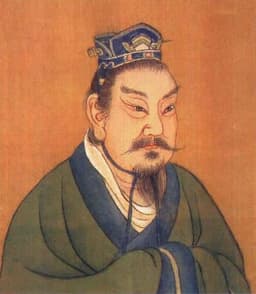
Lian Po
General · Ancient
52.5Total

Lu Xun
General · Ancient
60.0Total
Basic Information
Born
-327
183
Died
-243
245
Era
Ancient
Ancient
Nationality
China
China
Occupation
General
General
Civilization
Eastern
Eastern
Score Comparison
Military (10%)
67.3
65.0
Political (20%)
26.4
57.3
Influence (20%)
57.2
55.0
Legacy (20%)
50.0
52.0
Leadership (15%)
61.1
73.2
Strategy (15%)
58.0
72.0
TOTAL
52.5
60.0
Lian Po — Complete Timeline
283 BC
Defeated Qi ForcesWar
Lian Po led Zhao armies to victory against the state of Qi, capturing several cities. This campaign expanded Zhao's territory and demonstrated his military prowess as a general.
BattleZhaoQi
Impact: regional
279 BC
Reconciled with Lin XiangruCultural◆ Major
Lian Po, a veteran general of Zhao, initially resented Lin Xiangru's promotion above him. After learning of Lin's selfless behavior for the state, Lian Po apologized by carrying a thorny stick to Lin's residence, and the two became close allies.
ReconciliationZhaoFriendship
Impact: nationalconstructive
260 BC
Replaced by Zhao Kuo at ChangpingPolitical Action◆ Major
King Xiaocheng of Zhao replaced Lian Po with Zhao Kuo as commander at the Battle of Changping, against the advice of Zhao She. Lian Po's defensive strategy was abandoned, leading to a disastrous defeat for Zhao.
ReplacementBattle of ChangpingZhao
Impact: regionaltragic
Lu Xun — Complete Timeline
222 AD
Battle of YilingWar
Lu Xun, as commander of Eastern Wu forces, defeated Liu Bei's Shu Han army at Yiling. He used a scorched earth strategy and fire attack, destroying Shu's invasion force. This victory secured Wu's western border.
BattleEastern WuShu HanThree Kingdoms
Impact: regionalconstructive
228 AD
Battle of ShitingWar
Lu Xun defeated a Cao Wei invasion at Shiting, using a feigned retreat to ambush the Wei forces. This victory repelled the Wei attack and maintained Wu's territorial integrity.
BattleEastern WuCao WeiThree Kingdoms
Impact: regionalconstructive
244 AD
Appointment as Chancellor of Eastern WuPolitical Action◆ Major
Sun Quan appointed Lu Xun as Chancellor of Eastern Wu, the highest civil office. Lu Xun served as chancellor until his death, helping to administer the state and maintain stability.
AppointmentEastern WuGovernment
Impact: nationalconstructive
245 AD
Death and LegacyOther
Lu Xun died in 245 AD. His victory at Yiling was a defining moment of the Three Kingdoms period. He was remembered as a brilliant strategist and loyal minister of Eastern Wu.
DeathEastern WuLegacy
Impact: national
Expert Analysis
Origins
Lian Po was born in the late 4th century BCE in the state of Zhao during the Warring States period. His early life is obscure, but he rose through the ranks as a military officer, demonstrating prowess in command. He likely came from a military family, though details are scarce. Lian Po's formative experiences were shaped by the constant warfare among the Seven Warring States, particularly the rivalry with Qin.
Lu Xun was born in 183 AD in Wu Commandery (modern Suzhou) during the late Eastern Han dynasty. His given name was Lu Xun, and he belonged to the prestigious Lu family, which had produced generations of scholars and officials. His father died early, and he was raised by his grandfather, Lu Kang, a respected official. Lu Xun received a Confucian education and was known for his intelligence and strategic thinking from a young age.
Rise to Power
Lian Po's rise began with his appointment as a general of Zhao. His first recorded major success was the defeat of Qi forces, capturing several cities and expanding Zhao's territory. This victory established him as a leading military figure. His reputation grew further when he was promoted to chief military commander, but his rivalry with the civilian minister Lin Xiangru created tension. The famous incident where Lian Po initially resented Lin Xiangru's higher rank, then reconciled after learning of Lin's selfless behavior, showcased Lian Po's ability to put state interests above personal pride. This reconciliation became a model of cooperation between civil and military officials.
Lu Xun rose to prominence during the Three Kingdoms period. He began his career under Sun Quan's regime, serving as a county magistrate and then as a commander in the navy. His strategic acumen caught Sun Quan's attention, and he was tasked with defending against Shu Han's invasion. The turning point came in 222 AD at the Battle of Yiling, where Lu Xun, as supreme commander, faced Liu Bei's massive army. Using a scorched earth strategy and a decisive fire attack, he destroyed the Shu forces, killing many and forcing Liu Bei to flee. This victory made Lu Xun a national hero and secured his position as Wu's top general. In 244 AD, Sun Quan appointed him Chancellor, the highest civil office, a rare honor for a military commander.
Leadership & Governance
Lian Po's leadership style was grounded in experience and caution. At the Battle of Changping (260 BCE), he correctly assessed that the Qin army under Wang He was too strong for a direct confrontation. He adopted a defensive strategy, fortifying positions and avoiding pitched battles, which forced the Qin into a stalemate. This approach conserved Zhao's resources but frustrated King Xiaocheng, who replaced Lian Po with the aggressive Zhao Kuo, leading to disaster. Lian Po's governance was minimal, as he focused on military matters. He was known for his loyalty but lacked political finesse, as seen in his initial conflict with Lin Xiangru.
Lu Xun, in contrast, combined military and political leadership. As a general, he was innovative and adaptable. At Yiling, he recognized the terrain's advantages for defense and used psychological tactics, including a feigned retreat at Shiting to ambush Wei forces. As Chancellor, he implemented policies to stabilize Wu's economy and administration, promoting Confucian values. He also maintained good relations with Sun Quan, though he occasionally clashed with the emperor over succession issues. Lu Xun's political score of 57.3 reflects his effectiveness in civil administration, while Lian Po's 26.4 indicates his limited political role.
Triumph & Tragedy
Lian Po's greatest triumph was his defensive stand at Changping, which prevented an early defeat and demonstrated his strategic wisdom. His reconciliation with Lin Xiangru also stands as a high point of personal integrity. However, his greatest tragedy was his replacement at Changping, leading to the Zhao army's annihilation and the weakening of Zhao. He was later forced to flee to Wei after political intrigue, dying in exile. His military score of 67.3 reflects solid but not exceptional performance.
Lu Xun's triumph was undoubtedly the Battle of Yiling, where he defeated a numerically superior enemy with cunning tactics. This victory preserved Wu's independence and altered the Three Kingdoms balance. He also successfully repelled Wei invasions at Shiting. His tragedy came later in life: he became embroiled in succession disputes, was demoted, and died in 245 AD under a cloud of suspicion. Despite his achievements, he ended his career in relative disgrace. His military score of 65.0 is slightly lower than Lian Po's, but his leadership (73.2) and strategy (72.0) scores are higher.
Character & Destiny
Lian Po was characterized by pride and a sense of honor. His initial resentment of Lin Xiangru was personal, but he ultimately prioritized the state. His caution at Changping was wise, but he lacked the political skill to defend his strategy. His destiny was shaped by the whims of his king, leading to his replacement and exile. Historians view him as a capable but not exceptional general, overshadowed by the disaster at Changping.
Lu Xun was calm, analytical, and politically astute. He understood both military and civil spheres, and his decisions were deliberate. His character allowed him to execute complex strategies and navigate court politics. However, his involvement in succession disputes led to his downfall. He is remembered as one of the great strategists of the Three Kingdoms, with a legacy that includes his writings and military theories.
Legacy
Lian Po's legacy is mixed. He is remembered mainly for the story of his reconciliation with Lin Xiangru, which became a symbol of putting the state first. His defensive tactics at Changping are studied, but his overall impact on Chinese history is limited. His influence score of 57.2 reflects moderate recognition.
Lu Xun's legacy is more substantial. His victory at Yiling is a classic example of strategic brilliance, often cited in military studies. As Chancellor, he contributed to Wu's stability. His descendants continued to serve in Wu for generations. His influence score of 55.0 is slightly lower than Lian Po's, but his total score of 60.0 surpasses Lian Po's 52.5. Lu Xun's political and leadership scores are significantly higher, reflecting a more rounded impact.
Conclusion
Lu Xun had a greater overall impact than Lian Po. While Lian Po was a competent general, his achievements were confined to a single state during a period of decline, and his legacy is overshadowed by the Changping disaster. Lu Xun, on the other hand, shaped the course of the Three Kingdoms period through his decisive victory at Yiling and his effective governance as Chancellor. His higher scores in leadership (73.2 vs 61.1) and strategy (72.0 vs 58.0) demonstrate his superiority in both military and political realms. The 7.5-point gap in total scores (60.0 vs 52.5) reflects Lu Xun's broader influence and more enduring legacy. Therefore, Lu Xun stands as the more significant figure in Chinese history.
Rankings
🥇
Lu XunLeader
Mil: 65.0Pol: 57.3Inf: 55.0
60.0
🥈
Lian Po
Mil: 67.3Pol: 26.4Inf: 57.2
52.5
+7.5 behind
How This Comparison Works
Algorithm
Each figure is scored on 6 dimensions (0—100 scale) based on structured historical data: Military (10%), Political (20%), Influence (20%), Legacy (20%), Leadership (15%), Strategy (15%). The weighted total produces the final ranking.
Data Sources
Scores are computed from structured sub-indicators in the database. Scale factors adjust for era (Ancient ×0.85, Modern ×1.0) and civilization size (Eastern ×1.05, Other ×0.80) to account for differences in population and military scale.
Maximum 3 Figures
Comparisons are limited to 2—3 figures to ensure readability and statistical meaningfulness.
Error Margins
±5 points per dimension — Sub-scores are derived from historical records with inherent uncertainty. Two figures within 5 points on a dimension should be considered roughly equivalent in that area.
Total Score Accuracy
±3 points overall — The weighted combination of 6 dimensions produces a total score with approximately ±3 points of uncertainty. Differences of less than 3 points are not statistically significant— the figures are effectively tied.
Known Limitations
- Historical records are incomplete and uneven across civilizations
- Figures from oral-tradition societies may be underrepresented
- Occupation labels can misclassify multi-role figures
- Scores measure capability and impact, not moral character
- Quantitative scoring is a comparison tool, not absolute truth
Capability Radar
Military (10%) — Battles & Warfare
Battles
65
75
Win Rate
60
80
Expansion
40
65
Political (20%) — Governance & Reform
Reform
20
55
Diplomacy
60
72
Economy
25
60
Influence (20%) — Cultural & Global Reach
Cultural
55
70
Global
40
55
Legacy (20%) — Historical Impact
Historical
60
75
Longevity
55
70
Leadership (15%) — Power & Stability
Tenure
55
70
Stability
50
68
Strategy (15%) — Tactics & Innovation
Strategy
65
82
Tactics
70
85
Reform
30
60
Similar Comparisons
Comments & Discussion
No comments yet. Be the first to share your thoughts!