Loading...
Li Yan vs Umar II
Umar II leads by 8.2 pts · 2 figures compared
…

Li Yan
Emperor · Medieval
47.7Total
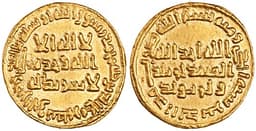
Umar II
Emperor · Medieval
55.9Total
Basic Information
Born
814
682
Died
846
720
Era
Medieval
Medieval
Nationality
China
Umayyad Caliphate
Occupation
Emperor
Emperor
Civilization
Eastern
Middle Eastern
Score Comparison
Military (10%)
35.0
10.2
Political (20%)
46.6
78.0
Influence (20%)
53.3
62.0
Legacy (20%)
45.0
56.0
Leadership (15%)
55.3
71.0
Strategy (15%)
43.3
30.3
TOTAL
47.7
55.9
Li Yan — Complete Timeline
843 AD
Military Campaigns against the UyghursWar◆ Major
Li Yan's forces attacked the remnants of the Uyghur Khaganate, which had been weakened by internal strife and Kyrgyz attacks. Tang armies defeated the Uyghurs and secured the northern border, but the campaigns drained resources.
Uyghur KhaganateBorder WarMilitary Campaign
Impact: regional
845 AD
Great Anti-Buddhist PersecutionReform◆ Major
Li Yan issued edicts ordering the destruction of thousands of Buddhist monasteries and temples. Over 260,000 monks and nuns were forced to return to lay life. Buddhist property was confiscated, and the religion's influence was severely curtailed.
Buddhist PersecutionReligious PolicySecularization
Impact: nationaldestructive
Suppression of Manichaeism and NestorianismReform◆ Major
As part of his anti-religious campaign, Li Yan also suppressed Manichaeism, Zoroastrianism, and Nestorian Christianity. Foreign religions were banned, and their clergy were forced to laicize. This was part of a broader effort to assert Confucian orthodoxy.
Religious PersecutionForeign ReligionsConfucian Orthodoxy
Impact: nationaldestructive
846 AD
Death of Li YanOther
Li Yan died in 846 after consuming alchemical elixirs in pursuit of immortality. His death was likely due to heavy metal poisoning. His successor reversed many of his anti-Buddhist policies.
DeathAlchemyPolicy Reversal
Impact: nationaltragic
Umar II — Complete Timeline
717 AD
Accession as CaliphPolitical Action◆ Major
Umar II became the Umayyad caliph after the death of Sulayman ibn Abd al-Malik. He is often considered the fifth 'Rashidun' (rightly guided) caliph due to his piety and reforms.
SuccessionCaliphate
Impact: global
718 AD
Withdrawal from the Siege of ConstantinopleWar◆ Major
Umar II ordered the withdrawal of Umayyad forces from the prolonged siege of Constantinople, which had failed to capture the city. This ended a major military campaign and saved resources.
SiegeConstantinopleWithdrawal
Impact: regional
Reforms in taxation and justiceReform◆ Major
Umar II implemented reforms that equalized tax treatment between Arab Muslims and non-Arab converts (mawali), abolished discriminatory taxes, and ensured fairer administration of justice. These reforms reduced social tensions.
Tax ReformJusticeEquality
Impact: globalprogressive
720 AD
Death and short reignOther
Umar II died after a reign of only three years, possibly poisoned. His short tenure was marked by significant reforms, and he was later remembered as a model of Islamic piety and justice.
DeathReignPiety
Impact: globaltragic
Expert Analysis
Origins
Li Yan (814-846), posthumously known as Emperor Wuzong of Tang, was born into the imperial Li family of China. He was the fifth son of Emperor Muzong and became emperor in 840 after the death of his brother, Emperor Wenzong. His early education emphasized Confucian classics, but he was heavily influenced by Daoist advisors who promoted alchemy and anti-Buddhist sentiments. Umar II (682-720), born Umar ibn Abd al-Aziz, was a member of the Umayyad dynasty, the ruling family of the Islamic Caliphate. His father was Abd al-Aziz ibn Marwan, governor of Egypt, and his mother was Layla bint Asim, granddaughter of Caliph Umar I. He grew up in Medina, where he studied Islamic jurisprudence under prominent scholars, developing a reputation for piety and justice.
Rise to Power
Li Yan's path to power was marked by court intrigue. He was not the designated heir but ascended after his brother's death, reportedly with the support of eunuchs. His reign began in 840, and he quickly consolidated power by purging rival factions, including eunuchs and Buddhist monks. Umar II became caliph in 717 after his cousin Sulayman ibn Abd al-Malik died. Sulayman had designated Umar as his successor, bypassing his own sons, due to Umar's reputation for piety. Umar's accession was widely accepted, as he was seen as a reformer who could address the empire's internal divisions.
Leadership & Governance
Li Yan's governance was characterized by centralization and religious persecution. He issued edicts in 845 that ordered the destruction of over 4,600 Buddhist monasteries and 40,000 temples, forcing 260,000 monks and nuns to return to secular life. He also suppressed Manichaeism, Zoroastrianism, and Nestorian Christianity, confiscating their property. His economic policies aimed to increase state revenue by seizing monastic lands, but the disruption alienated many subjects. Umar II, in contrast, implemented reforms that equalized tax treatment between Arab Muslims and non-Arab converts (mawali), abolishing discriminatory taxes. He ensured that governors were just and held them accountable, and he withdrew from the costly siege of Constantinople in 718, prioritizing internal stability over expansion. His governance scored 78.0 in political leadership compared to Li Yan's 46.6.
Triumph & Tragedy
Li Yan's greatest success was the destruction of Buddhist institutions, which temporarily increased state control and revenue. However, his reliance on Daoist alchemy led to his death in 846 from heavy metal poisoning, after consuming elixirs seeking immortality. His anti-Buddhist policies were reversed by his successor, who restored Buddhism, rendering Li Yan's achievements ephemeral. Umar II's greatest triumph was his tax reform, which improved relations between Arabs and non-Arabs, fostering social cohesion. His withdrawal from Constantinople ended a failed military campaign, saving resources. However, his reign lasted only three years, and he died in 720, possibly poisoned by rivals. His reforms were largely undone by later Umayyad caliphs, limiting their long-term impact.
Character & Destiny
Li Yan was deeply influenced by Daoist advisors and harbored a fervent animosity toward Buddhism, viewing it as a foreign and corrupting influence. His decision to persecute religions reflected a desire for ideological purity, but his pursuit of immortality through alchemy proved fatal. Historians assess Li Yan as a capable but misguided ruler, whose religious zeal overshadowed pragmatic governance. Umar II was known for his piety, humility, and commitment to justice. He modeled himself after Caliph Umar I, earning the title "fifth Rashidun." His short reign was marked by principled reforms, but his leniency toward opponents may have contributed to his suspected poisoning. His character scored 71.0 in leadership against Li Yan's 55.3.
Legacy
Li Yan is remembered primarily as the Tang emperor who persecuted Buddhism. His policies destroyed vast cultural and religious institutions, but their reversal meant his impact was limited. In Chinese historiography, he is often criticized for his credulity toward alchemy and his harshness. Umar II, despite his short reign, is revered in Islamic history as a just and pious ruler. His tax reforms influenced later Islamic jurisprudence, and he is often cited as a model of righteous governance. His total score of 55.9 exceeds Li Yan's 47.7, reflecting a more balanced and enduring legacy.
Conclusion
Umar II had a greater impact than Li Yan. While Li Yan's persecution of Buddhism was drastic, it was quickly reversed and did not fundamentally alter Chinese society. Umar II's reforms, though partially undone, set a precedent for equitable treatment of converts and just governance that resonated in Islamic tradition. His political score of 78.0 versus Li Yan's 46.6 underscores his superior administrative effectiveness. In the long term, Umar II's example of piety and reform outlasted Li Yan's destructive policies, making him the more influential figure.
Rankings
🥇
Umar IILeader
Mil: 10.2Pol: 78.0Inf: 62.0
55.9
🥈
Li Yan
Mil: 35.0Pol: 46.6Inf: 53.3
47.7
+8.2 behind
How This Comparison Works
Algorithm
Each figure is scored on 6 dimensions (0—100 scale) based on structured historical data: Military (10%), Political (20%), Influence (20%), Legacy (20%), Leadership (15%), Strategy (15%). The weighted total produces the final ranking.
Data Sources
Scores are computed from structured sub-indicators in the database. Scale factors adjust for era (Ancient ×0.85, Modern ×1.0) and civilization size (Eastern ×1.05, Other ×0.80) to account for differences in population and military scale.
Maximum 3 Figures
Comparisons are limited to 2—3 figures to ensure readability and statistical meaningfulness.
Error Margins
±5 points per dimension — Sub-scores are derived from historical records with inherent uncertainty. Two figures within 5 points on a dimension should be considered roughly equivalent in that area.
Total Score Accuracy
±3 points overall — The weighted combination of 6 dimensions produces a total score with approximately ±3 points of uncertainty. Differences of less than 3 points are not statistically significant— the figures are effectively tied.
Known Limitations
- Historical records are incomplete and uneven across civilizations
- Figures from oral-tradition societies may be underrepresented
- Occupation labels can misclassify multi-role figures
- Scores measure capability and impact, not moral character
- Quantitative scoring is a comparison tool, not absolute truth
Capability Radar
Military (10%) — Battles & Warfare
Battles
30
10
Win Rate
30
10
Expansion
20
5
Political (20%) — Governance & Reform
Reform
50
85
Diplomacy
40
70
Economy
40
75
Influence (20%) — Cultural & Global Reach
Cultural
30
60
Global
30
50
Legacy (20%) — Historical Impact
Historical
40
65
Longevity
30
55
Leadership (15%) — Power & Stability
Tenure
40
30
Stability
30
60
Strategy (15%) — Tactics & Innovation
Strategy
30
10
Tactics
30
10
Reform
20
20
Similar Comparisons
Comments & Discussion
No comments yet. Be the first to share your thoughts!