Loading...
Henry IV of England vs Li Yan
Henry IV of England leads by 0.0 pts · 2 figures compared
…
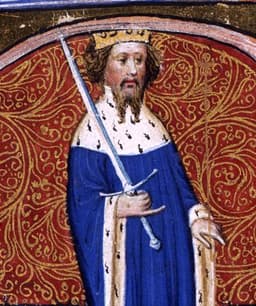
Henry IV of England
Emperor · Medieval
47.7Total

Li Yan
Emperor · Medieval
47.7Total
Basic Information
Born
1367
814
Died
1413
846
Era
Medieval
Medieval
Nationality
England
China
Occupation
Emperor
Emperor
Civilization
Western
Eastern
Score Comparison
Military (10%)
55.0
35.0
Political (20%)
35.1
46.6
Influence (20%)
53.3
53.3
Legacy (20%)
45.8
45.0
Leadership (15%)
55.3
55.3
Strategy (15%)
38.3
43.3
TOTAL
47.7
47.7
Henry IV of England — Complete Timeline
1399 AD
Usurpation of the ThronePolitical Action◆ Major
Henry Bolingbroke deposed Richard II and claimed the English throne as Henry IV. This usurpation established the Lancastrian dynasty but created a legitimacy crisis that led to future conflicts.
UsurpationLancasterSuccession
Impact: national
1403 AD
Battle of ShrewsburyWar◆ Major
Henry IV defeated a rebellion led by Henry Percy (Hotspur) at the Battle of Shrewsbury. Hotspur was killed, and the rebellion was crushed, but the king suffered heavy casualties and ongoing challenges.
BattleRebellionPercy
Impact: nationaldestructive
1405 AD
Execution of Archbishop ScropePolitical Action◆ Major
Henry IV ordered the execution of Richard Scrope, Archbishop of York, for leading a rebellion. This act shocked the church and nobility, damaging Henry's reputation and legitimacy.
ExecutionChurchRebellion
Impact: nationaldestructive
Illness and DeclineOther
Henry IV suffered from a debilitating illness, possibly leprosy or epilepsy, which weakened his rule. He became increasingly unable to govern effectively, leading to factionalism and his son's growing influence.
IllnessDecline
Impact: nationaltragic
Li Yan — Complete Timeline
843 AD
Military Campaigns against the UyghursWar◆ Major
Li Yan's forces attacked the remnants of the Uyghur Khaganate, which had been weakened by internal strife and Kyrgyz attacks. Tang armies defeated the Uyghurs and secured the northern border, but the campaigns drained resources.
Uyghur KhaganateBorder WarMilitary Campaign
Impact: regional
845 AD
Great Anti-Buddhist PersecutionReform◆ Major
Li Yan issued edicts ordering the destruction of thousands of Buddhist monasteries and temples. Over 260,000 monks and nuns were forced to return to lay life. Buddhist property was confiscated, and the religion's influence was severely curtailed.
Buddhist PersecutionReligious PolicySecularization
Impact: nationaldestructive
Suppression of Manichaeism and NestorianismReform◆ Major
As part of his anti-religious campaign, Li Yan also suppressed Manichaeism, Zoroastrianism, and Nestorian Christianity. Foreign religions were banned, and their clergy were forced to laicize. This was part of a broader effort to assert Confucian orthodoxy.
Religious PersecutionForeign ReligionsConfucian Orthodoxy
Impact: nationaldestructive
846 AD
Death of Li YanOther
Li Yan died in 846 after consuming alchemical elixirs in pursuit of immortality. His death was likely due to heavy metal poisoning. His successor reversed many of his anti-Buddhist policies.
DeathAlchemyPolicy Reversal
Impact: nationaltragic
Expert Analysis
Origins
Henry IV of England was born in 1367, the son of John of Gaunt, Duke of Lancaster, and Blanche of Lancaster. He was a grandson of King Edward III, placing him in the royal line. His early life was marked by privilege and education typical of the nobility. He traveled widely, including participation in the Teutonic Crusade in 1390, which enhanced his chivalric reputation. Li Yan, born in 814, was the fifth son of Emperor Muzong of Tang. His early life was overshadowed by the influence of eunuchs and factional struggles at court. He ascended the throne in 840 after the death of his brother, Emperor Wenzong, with the support of powerful eunuchs. Both came from royal backgrounds but faced different challenges: Henry was an ambitious nobleman, while Li Yan was a product of a declining imperial system.
Rise to Power
Henry IV's rise was dramatic: in 1399, while King Richard II was in Ireland, Henry returned from exile and rallied support. He captured Richard, forced his abdication, and claimed the throne. The coronation in October 1399 marked the start of the Lancastrian dynasty. His political score of 35.1 reflects the tenuous nature of his claim. Li Yan's rise was more conventional: after his brother Wenzong's death, eunuchs appointed him emperor in 840. He initially cooperated with eunuchs but later purged them, consolidating power. His political score of 46.6 indicates moderate success. Both faced legitimacy issues: Henry had to constantly defend his throne, while Li Yan struggled against entrenched court factions.
Leadership & Governance
Henry IV governed a fractured England. He faced rebellions from the Percys (Battle of Shrewsbury, 1403), Owain Glyndŵr in Wales, and the execution of Archbishop Scrope in 1405. His leadership score of 55.3 is modest, as he struggled to maintain order. He relied on Parliament for funds, which increased its power. Li Yan's leadership score of 55.3 matches Henry's, but his governance was more autocratic. He centralized authority, suppressed Buddhism (Great Anti-Buddhist Persecution of 845), and sought to strengthen imperial finances. However, his methods were harsh: over 4,600 monasteries were destroyed, and 260,000 monks forced into lay life. His strategy score of 43.3 reflects limited long-term planning, as his policies were reversed after his death.
Triumph & Tragedy
Henry IV's greatest triumph was securing the throne despite usurpation. He defeated major rebellions at Shrewsbury and executed opponents. His tragedy was his illness (possibly leprosy or epilepsy) after 1405, which crippled his rule. He died in 1413, leaving a legacy of instability. Li Yan's triumph was his successful campaigns against the Uyghurs in 842-843, which secured the northern frontier. He also suppressed Manichaeism and Nestorian Christianity. His tragedy was his obsession with immortality: he consumed alchemical elixirs containing heavy metals, leading to his death in 846 at age 32. His anti-Buddhist policies were reversed within a year by his successor. Both had mixed outcomes: Henry's reign weakened the monarchy, while Li Yan's reforms were ephemeral.
Character & Destiny
Henry IV was pragmatic but insecure. His decision to execute Archbishop Scrope alienated the church and nobles, showing his ruthlessness. His illness may have been divine punishment in contemporary eyes. Li Yan was determined but fanatical. His persecution of Buddhism was driven by economic motives (to seize monastery wealth) and Taoist influence. His pursuit of immortality led to his death. Both were shaped by their times: Henry by the feudal crisis of late medieval England, Li Yan by the Tang decline. Their characters led to similar scores (total 47.7 for both), but their impacts diverged.
Legacy
Henry IV's legacy is mixed: he established the Lancastrian dynasty, but his usurpation set a precedent for civil war (Wars of the Roses). His reign saw the rise of Parliament's power. Li Yan's legacy is defined by his persecution: he is remembered as the emperor who destroyed Buddhism in China. However, his policies were short-lived. His military wins against the Uyghurs had lasting impact on the steppe. In terms of influence scores, both have 53.3, indicating comparable historical footprint. Henry's legacy score of 45.8 and Li Yan's 45.0 are similar.
Conclusion
While both Henry IV and Li Yan have identical total scores (47.7), Henry IV had a greater impact on English history. His usurpation triggered a century of conflict and parliamentary development, shaping the political evolution of England. Li Yan's anti-Buddhist campaign, though severe, was reversed immediately, and his military successes were temporary. Therefore, Henry IV's influence, despite his political struggles, was more enduring and consequential.
Rankings
🥇
Henry IV of EnglandLeader
Mil: 55.0Pol: 35.1Inf: 53.3
47.7
🥈
Li Yan
Mil: 35.0Pol: 46.6Inf: 53.3
47.7
How This Comparison Works
Algorithm
Each figure is scored on 6 dimensions (0—100 scale) based on structured historical data: Military (10%), Political (20%), Influence (20%), Legacy (20%), Leadership (15%), Strategy (15%). The weighted total produces the final ranking.
Data Sources
Scores are computed from structured sub-indicators in the database. Scale factors adjust for era (Ancient ×0.85, Modern ×1.0) and civilization size (Eastern ×1.05, Other ×0.80) to account for differences in population and military scale.
Maximum 3 Figures
Comparisons are limited to 2—3 figures to ensure readability and statistical meaningfulness.
Error Margins
±5 points per dimension — Sub-scores are derived from historical records with inherent uncertainty. Two figures within 5 points on a dimension should be considered roughly equivalent in that area.
Total Score Accuracy
±3 points overall — The weighted combination of 6 dimensions produces a total score with approximately ±3 points of uncertainty. Differences of less than 3 points are not statistically significant— the figures are effectively tied.
Known Limitations
- Historical records are incomplete and uneven across civilizations
- Figures from oral-tradition societies may be underrepresented
- Occupation labels can misclassify multi-role figures
- Scores measure capability and impact, not moral character
- Quantitative scoring is a comparison tool, not absolute truth
Capability Radar
Military (10%) — Battles & Warfare
Battles
35
30
Win Rate
40
30
Expansion
15
20
Political (20%) — Governance & Reform
Reform
30
50
Diplomacy
35
40
Economy
25
40
Influence (20%) — Cultural & Global Reach
Cultural
30
30
Global
20
30
Legacy (20%) — Historical Impact
Historical
45
40
Longevity
30
30
Leadership (15%) — Power & Stability
Tenure
50
40
Stability
20
30
Strategy (15%) — Tactics & Innovation
Strategy
25
30
Tactics
30
30
Reform
10
20
Similar Comparisons
Comments & Discussion
No comments yet. Be the first to share your thoughts!