Loading...
Margaret II of Avesnes vs Umar II
Umar II leads by 17.8 pts · 2 figures compared
…
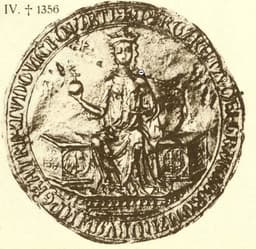
Margaret II of Avesnes
Emperor · Medieval
38.1Total
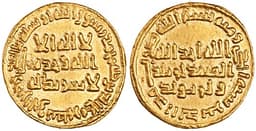
Umar II
Emperor · Medieval
55.9Total
Basic Information
Born
1311
682
Died
1356
720
Era
Medieval
Medieval
Nationality
Hainaut
Umayyad Caliphate
Occupation
Emperor
Emperor
Civilization
Western
Middle Eastern
Score Comparison
Military (10%)
20.0
10.2
Political (20%)
29.3
78.0
Influence (20%)
46.3
62.0
Legacy (20%)
37.5
56.0
Leadership (15%)
41.5
71.0
Strategy (15%)
45.0
30.3
TOTAL
38.1
55.9
Margaret II of Avesnes — Complete Timeline
1345 AD
Inherited Counties of Hainaut, Holland, and ZeelandPolitical Action◆ Major
Margaret II inherited the counties of Hainaut, Holland, and Zeeland after the death of her brother William II at the Battle of Warns. She became the last Avesnes ruler of these territories.
InheritanceAvesnesHainaut
Impact: regional
1350 AD
Conflict with the Wittelsbachs over HollandWar◆ Major
Margaret II fought a war against her son William I of Bavaria (Wittelsbach) for control of Holland and Zeeland. The conflict ended with the Treaty of 1354, where she ceded these territories to William.
WarWittelsbachSuccession
Impact: regionaldestructive
1354 AD
Ceded Holland and Zeeland to the WittelsbachsPolitical Action◆ Major
Margaret II of Avesnes, Countess of Hainaut, ceded the counties of Holland and Zeeland to her son William I of Bavaria (Wittelsbach) after a period of conflict. This transfer ended Avesnes rule in Holland and Zeeland.
CessionWittelsbachHolland
Impact: regionaldestructive
Umar II — Complete Timeline
717 AD
Accession as CaliphPolitical Action◆ Major
Umar II became the Umayyad caliph after the death of Sulayman ibn Abd al-Malik. He is often considered the fifth 'Rashidun' (rightly guided) caliph due to his piety and reforms.
SuccessionCaliphate
Impact: global
718 AD
Withdrawal from the Siege of ConstantinopleWar◆ Major
Umar II ordered the withdrawal of Umayyad forces from the prolonged siege of Constantinople, which had failed to capture the city. This ended a major military campaign and saved resources.
SiegeConstantinopleWithdrawal
Impact: regional
Reforms in taxation and justiceReform◆ Major
Umar II implemented reforms that equalized tax treatment between Arab Muslims and non-Arab converts (mawali), abolished discriminatory taxes, and ensured fairer administration of justice. These reforms reduced social tensions.
Tax ReformJusticeEquality
Impact: globalprogressive
720 AD
Death and short reignOther
Umar II died after a reign of only three years, possibly poisoned. His short tenure was marked by significant reforms, and he was later remembered as a model of Islamic piety and justice.
DeathReignPiety
Impact: globaltragic
Expert Analysis
Origins
Margaret II of Avesnes was born in 1311 as the daughter of William I of Hainaut and Joan of Valois. She inherited the counties of Hainaut, Holland, and Zeeland in 1345 after her brother William II died at the Battle of Warns. Her family, the House of Avesnes, had controlled these territories for decades, but Margaret faced immediate challenges as a female ruler in a medieval feudal system.
Umar II, born in 682 CE (63 AH), was a member of the Umayyad dynasty, the son of Abd al-Aziz ibn Marwan and a descendant of Umar ibn al-Khattab. He grew up in Medina, where he was influenced by pious scholars and developed a reputation for religious devotion. His family background placed him at the center of power, yet his upbringing set him apart from other Umayyad princes.
Rise to Power
Margaret II's rise was sudden and contested. Upon inheriting the counties in 1345, she faced opposition from the Wittelsbach family, to whom her sister had married. Her son William I of Bavaria (Wittelsbach) claimed Holland and Zeeland, leading to a war that lasted from 1350 to 1354. The conflict ended with the Treaty of 1354, by which Margaret ceded Holland and Zeeland to William while retaining Hainaut. This political settlement allowed her to rule Hainaut until her death in 1356.
Umar II became caliph in 717 CE (99 AH) after the death of his cousin Sulayman ibn Abd al-Malik. His accession was unexpected; Sulayman had initially designated another successor but changed his mind on his deathbed. Umar's reputation for piety and justice preceded him, and he quickly set about reforming the caliphate. His rise was peaceful, but his authority was limited by the entrenched interests of the Umayyad elite.
Leadership & Governance
Margaret II's leadership was defined by negotiation and concession. Her political score of 29.3 reflects her struggle to maintain power. She governed Hainaut through traditional feudal mechanisms, relying on noble support. Her major decision was to cede Holland and Zeeland to her son to end the war, a pragmatic move that preserved her rule in Hainaut but reduced her territories. She did not initiate major reforms or institutional changes.
Umar II, with a leadership score of 71.0 and political score of 78.0, implemented sweeping reforms. He equalized tax treatment between Arab Muslims and non-Arab converts (mawali), abolished discriminatory taxes like the jizya for converts, and ensured fair administration of justice. He also ordered the withdrawal from the prolonged Siege of Constantinople in 718 CE, ending a costly military campaign. His governance was centered on justice and equality, earning him the title of the fifth 'Rashidun' (rightly guided) caliph.
Triumph & Tragedy
Margaret II's greatest success was maintaining her rule in Hainaut despite losing Holland and Zeeland. She navigated a difficult political situation and died as countess. Her tragedy was the loss of two of her three counties to her own son, a failure that diminished her power and legacy. Her military score of 20.0 underscores her inability to defend her territories by force.
Umar II's triumph was his successful reform program, which improved the status of non-Arab Muslims and reduced corruption. His greatest failure was the brevity of his reign—only three years—which limited the depth of his reforms. He died in 720 CE, possibly poisoned, and many of his policies were reversed by his successors. His strategy score of 30.3 indicates a lack of military ambition, but his political and leadership scores highlight his moral authority.
Character & Destiny
Margaret II was pragmatic and willing to compromise to retain power. Her decision to cede territories shows a focus on survival rather than expansion. Her character was shaped by the realities of medieval politics, where female rulers often had to rely on male relatives. Her destiny was to be a transitional figure, overshadowed by the Wittelsbachs.
Umar II was deeply pious and reform-minded, often at odds with the Umayyad establishment. His character was marked by integrity and a commitment to Islamic principles. His destiny was to be remembered as a saintly figure, but his short reign prevented lasting institutional change. Historians note that his reforms were ahead of their time and faced resistance from the ruling class.
Legacy
Margaret II's legacy is minor. She is remembered primarily for ceding Holland and Zeeland, which strengthened the Wittelsbach dynasty. Her influence score of 46.3 and legacy score of 37.5 reflect her limited long-term impact. She is not a major figure in European history.
Umar II's legacy is significant in Islamic history. He is revered as a model of just rule and is often compared to the first four caliphs. His reforms influenced later Islamic governance, and his reputation for piety endured. His influence score of 62.0 and legacy score of 56.0 are higher than Margaret's, reflecting his lasting moral authority.
Conclusion
Umar II had a greater impact than Margaret II of Avesnes. His total score of 55.9 versus her 38.1 reflects this disparity. While Margaret's actions affected only a small region for a short time, Umar's reforms set a standard for Islamic governance that resonated for centuries. Margaret's pragmatic cession of territories was a political necessity, but Umar's principled reforms were a moral achievement. Umar II's influence on religious and legal thought far outweighs Margaret II's feudal maneuvering. The clear position is that Umar II's impact was more profound and enduring.
Rankings
🥇
Umar IILeader
Mil: 10.2Pol: 78.0Inf: 62.0
55.9
🥈
Margaret II of Avesnes
Mil: 20.0Pol: 29.3Inf: 46.3
38.1
+17.8 behind
How This Comparison Works
Algorithm
Each figure is scored on 6 dimensions (0—100 scale) based on structured historical data: Military (10%), Political (20%), Influence (20%), Legacy (20%), Leadership (15%), Strategy (15%). The weighted total produces the final ranking.
Data Sources
Scores are computed from structured sub-indicators in the database. Scale factors adjust for era (Ancient ×0.85, Modern ×1.0) and civilization size (Eastern ×1.05, Other ×0.80) to account for differences in population and military scale.
Maximum 3 Figures
Comparisons are limited to 2—3 figures to ensure readability and statistical meaningfulness.
Error Margins
±5 points per dimension — Sub-scores are derived from historical records with inherent uncertainty. Two figures within 5 points on a dimension should be considered roughly equivalent in that area.
Total Score Accuracy
±3 points overall — The weighted combination of 6 dimensions produces a total score with approximately ±3 points of uncertainty. Differences of less than 3 points are not statistically significant— the figures are effectively tied.
Known Limitations
- Historical records are incomplete and uneven across civilizations
- Figures from oral-tradition societies may be underrepresented
- Occupation labels can misclassify multi-role figures
- Scores measure capability and impact, not moral character
- Quantitative scoring is a comparison tool, not absolute truth
Capability Radar
Military (10%) — Battles & Warfare
Battles
5
10
Win Rate
5
10
Expansion
5
5
Political (20%) — Governance & Reform
Reform
20
85
Diplomacy
30
70
Economy
20
75
Influence (20%) — Cultural & Global Reach
Cultural
10
60
Global
5
50
Legacy (20%) — Historical Impact
Historical
15
65
Longevity
10
55
Leadership (15%) — Power & Stability
Tenure
30
30
Stability
20
60
Strategy (15%) — Tactics & Innovation
Strategy
5
10
Tactics
5
10
Reform
5
20
Similar Comparisons
Comments & Discussion
No comments yet. Be the first to share your thoughts!