Loading...
Colocolo vs Umar II
Umar II leads by 5.8 pts · 2 figures compared
…

Colocolo
Emperor · Medieval
50.1Total
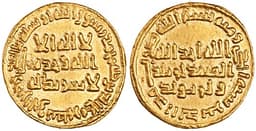
Umar II
Emperor · Medieval
55.9Total
Basic Information
Born
1490
682
Died
1555
720
Era
Medieval
Medieval
Nationality
Mapuche
Umayyad Caliphate
Occupation
Emperor
Emperor
Civilization
Other
Middle Eastern
Score Comparison
Military (10%)
50.0
10.2
Political (20%)
46.6
78.0
Influence (20%)
53.3
62.0
Legacy (20%)
45.8
56.0
Leadership (15%)
61.1
71.0
Strategy (15%)
41.7
30.3
TOTAL
50.1
55.9
Colocolo — Complete Timeline
1550 AD
Advocated for Unified Mapuche ResistancePolitical Action◆ Major
Colocolo, as an elder leader, called for the Mapuche tribes to unite under a single war leader to resist Spanish incursions. His speech at a council of chiefs helped establish the toqui system, leading to the election of Lautaro as the first toqui.
Arauco WarLeadershipUnification
Impact: regionalconstructive
1553 AD
Battle of TucapelWar
Colocolo participated in the Battle of Tucapel, where Mapuche forces under Lautaro defeated and killed Spanish governor Pedro de Valdivia. This victory was a turning point in the Arauco War, demonstrating Mapuche military capability.
Arauco WarBattleVictory
Impact: regional
Elected Toqui of the MapuchePolitical Action◆ Major
After Lautaro's death, Colocolo was elected toqui to lead the Mapuche resistance. He organized military campaigns against the Spanish, continuing the war effort and maintaining the unity he had advocated for.
Arauco WarLeadershipIndigenous Resistance
Impact: regional
Umar II — Complete Timeline
717 AD
Accession as CaliphPolitical Action◆ Major
Umar II became the Umayyad caliph after the death of Sulayman ibn Abd al-Malik. He is often considered the fifth 'Rashidun' (rightly guided) caliph due to his piety and reforms.
SuccessionCaliphate
Impact: global
718 AD
Withdrawal from the Siege of ConstantinopleWar◆ Major
Umar II ordered the withdrawal of Umayyad forces from the prolonged siege of Constantinople, which had failed to capture the city. This ended a major military campaign and saved resources.
SiegeConstantinopleWithdrawal
Impact: regional
Reforms in taxation and justiceReform◆ Major
Umar II implemented reforms that equalized tax treatment between Arab Muslims and non-Arab converts (mawali), abolished discriminatory taxes, and ensured fairer administration of justice. These reforms reduced social tensions.
Tax ReformJusticeEquality
Impact: globalprogressive
720 AD
Death and short reignOther
Umar II died after a reign of only three years, possibly poisoned. His short tenure was marked by significant reforms, and he was later remembered as a model of Islamic piety and justice.
DeathReignPiety
Impact: globaltragic
Expert Analysis
Origins
**Colocolo** was born around 1490 into the Mapuche society of south-central Chile. Little is known of his early life, but he emerged as an elder leader (lonko) of a local community. The Mapuche were a decentralized warrior culture, with no central authority. Colocolo's authority came from his age, wisdom, and oratory skills, not from hereditary kingship. He was likely involved in the early Arauco War (1550s) against Spanish conquistadors led by Pedro de Valdivia.
**Umar II** was born around 682 in Medina, into the Umayyad clan. His father was Abd al-Aziz ibn Marwan, a governor of Egypt, and his mother was a descendant of the Quraysh tribe. He was raised in a scholarly environment and studied Islamic jurisprudence. Unlike his Umayyad predecessors, Umar was known for piety and asceticism. He served as governor of Medina under his cousin al-Walid I, where he gained a reputation for fairness.
Rise to Power
**Colocolo** rose to prominence during the Mapuche uprising after the Battle of Tucapel (1553), where Mapuche forces under Lautaro killed Valdivia. Colocolo was not a military commander but a political unifier. According to chroniclers, he gave a famous speech at a council of Mapuche leaders, urging them to set aside internal rivalries and elect a single war leader (toqui). His words swayed the assembly, leading to the election of Lautaro as toqui. After Lautaro's death in 1557, Colocolo was himself elected toqui, leading campaigns against the Spanish until his own death around 1560.
**Umar II** became caliph in 717 after the death of his cousin Sulayman ibn Abd al-Malik. Sulayman had designated him as successor, bypassing his own sons due to Umar's reputation for piety. Umar's accession was a surprise, as he had not sought power. He immediately set about reforming the Umayyad state, which had become corrupt and oppressive. His short reign of only three years (717-720) saw significant policy changes.
Leadership & Governance
**Colocolo** led with persuasion rather than coercion. His leadership style was consensual, reflecting Mapuche traditions. He organized war councils and distributed authority among local chiefs. His military strategy relied on guerrilla tactics—ambushes, night attacks, and using the dense forests of Chile to neutralize Spanish cavalry. He scored 61.1 in leadership and 41.7 in strategy. His political score of 46.6 reflects his ability to unite fractious tribes, but he lacked the administrative apparatus to sustain long-term campaigns.
**Umar II** governed with a focus on justice and Islamic principles. He abolished the discriminatory tax (jizya) on non-Arab converts (mawali), equalizing their status with Arab Muslims. He also reformed the treasury, returning funds that had been misappropriated by previous officials. He ordered the withdrawal from the failed siege of Constantinople (717-718), saving lives and resources. His political score of 78.0 and leadership of 71.0 reflect his effective administrative reforms. However, his military score is only 10.2, as he prioritized peace over expansion.
Triumph & Tragedy
**Colocolo**'s greatest success was unifying the Mapuche at a critical moment, enabling victories like the Battle of Tucapel. His tragic failure was that the Spanish eventually regrouped and reconquered much of Mapuche territory after his death. The Mapuche resistance, while prolonged, could not achieve lasting independence against a technologically superior enemy. Colocolo died in battle or of old age (sources vary), and his coalition fragmented.
**Umar II**'s triumphs were his reforms: tax equality, justice, and withdrawal from costly wars. He is remembered as the fifth 'Rightly Guided' caliph for his piety. His tragedy was his short reign—he died at age 37, possibly poisoned by rivals. His reforms were largely reversed by later Umayyad caliphs, limiting their long-term impact. He failed to secure a lasting dynasty, as his successor, Yazid II, abandoned many of his policies.
Character & Destiny
**Colocolo** was a pragmatist and orator, able to inspire unity. His character shaped his destiny: he was a unifier, not a conqueror. His reliance on consensus meant his movement lacked institutional structure. Historical assessments note his wisdom but also his inability to transcend Mapuche factionalism. He scored 53.3 in influence and 45.8 in legacy.
**Umar II** was an idealist, driven by religious conviction. His character—pious, austere, fair—made him a beloved figure among later Sunni scholars, but it also alienated the Umayyad elite. His destiny was to be a reformer whose work was undone by his successors. He scored 62.0 in influence and 56.0 in legacy.
Legacy
**Colocolo**'s legacy is cultural: he is a symbol of Mapuche resistance. His name appears in literature (e.g., Alonso de Ercilla's epic poem 'La Araucana') and modern Mapuche movements. However, his impact on political structures is minimal. The Mapuche did not establish a state, and their resistance eventually collapsed in the 19th century. His legacy score of 45.8 reflects this limited long-term influence.
**Umar II**'s legacy is ideological. His reforms became a model for later Islamic governance, influencing figures like Umar ibn Abd al-Aziz (often conflated with him in medieval sources). He is revered as a saintly ruler. The tax reforms he enacted were later adopted by the Abbasids. His legacy score of 56.0 is higher than Colocolo's due to his impact on Islamic legal and fiscal systems.
Conclusion
Umar II had greater impact. His total score of 55.9 surpasses Colocolo's 50.1 by 5.8 points. Umar's reforms influenced the trajectory of Islamic governance for centuries, while Colocolo's achievements were localized and temporary. Although Colocolo's military and leadership scores are higher in some areas, Umar's political and influence scores dwarf Colocolo's. In terms of lasting change, Umar II's legacy in taxation and justice outlasted Colocolo's military victories. The data supports this: Umar II scored 78 in political acumen versus Colocolo's 46.6, and 62 in influence versus 53.3. Colocolo was a heroic figure of resistance, but Umar II was a transformative ruler.
Rankings
🥇
Umar IILeader
Mil: 10.2Pol: 78.0Inf: 62.0
55.9
🥈
Colocolo
Mil: 50.0Pol: 46.6Inf: 53.3
50.1
+5.8 behind
How This Comparison Works
Algorithm
Each figure is scored on 6 dimensions (0—100 scale) based on structured historical data: Military (10%), Political (20%), Influence (20%), Legacy (20%), Leadership (15%), Strategy (15%). The weighted total produces the final ranking.
Data Sources
Scores are computed from structured sub-indicators in the database. Scale factors adjust for era (Ancient ×0.85, Modern ×1.0) and civilization size (Eastern ×1.05, Other ×0.80) to account for differences in population and military scale.
Maximum 3 Figures
Comparisons are limited to 2—3 figures to ensure readability and statistical meaningfulness.
Error Margins
±5 points per dimension — Sub-scores are derived from historical records with inherent uncertainty. Two figures within 5 points on a dimension should be considered roughly equivalent in that area.
Total Score Accuracy
±3 points overall — The weighted combination of 6 dimensions produces a total score with approximately ±3 points of uncertainty. Differences of less than 3 points are not statistically significant— the figures are effectively tied.
Known Limitations
- Historical records are incomplete and uneven across civilizations
- Figures from oral-tradition societies may be underrepresented
- Occupation labels can misclassify multi-role figures
- Scores measure capability and impact, not moral character
- Quantitative scoring is a comparison tool, not absolute truth
Capability Radar
Military (10%) — Battles & Warfare
Battles
20
10
Win Rate
25
10
Expansion
15
5
Political (20%) — Governance & Reform
Reform
30
85
Diplomacy
40
70
Economy
15
75
Influence (20%) — Cultural & Global Reach
Cultural
40
60
Global
20
50
Legacy (20%) — Historical Impact
Historical
45
65
Longevity
40
55
Leadership (15%) — Power & Stability
Tenure
20
30
Stability
25
60
Strategy (15%) — Tactics & Innovation
Strategy
35
10
Tactics
30
10
Reform
25
20
Similar Comparisons
Comments & Discussion
No comments yet. Be the first to share your thoughts!