Loading...
Li Keyong vs Yamana Sozen
Li Keyong leads by 1.0 pts · 2 figures compared
…
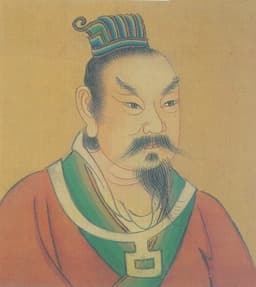
Li Keyong
General · Medieval
53.6Total
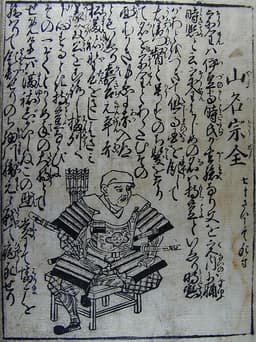
Yamana Sozen
General · Medieval
52.6Total
Basic Information
Born
856
1404
Died
908
1473
Era
Medieval
Medieval
Nationality
China
Japan
Occupation
General
General
Civilization
Eastern
Eastern
Score Comparison
Military (10%)
76.0
72.5
Political (20%)
39.4
37.9
Influence (20%)
51.0
51.0
Legacy (20%)
44.2
46.7
Leadership (15%)
65.0
57.6
Strategy (15%)
65.4
66.3
TOTAL
53.6
52.6
Li Keyong — Complete Timeline
883 AD
Became Prince of JinPolitical Action◆ Major
Li Keyong was appointed Prince of Jin by the Tang court for his role in suppressing the Huang Chao rebellion. He established a power base in Shanxi and became a major warlord during the late Tang period.
AppointmentWarlordTang Dynasty
Impact: regionalconstructive
901 AD
Defeated by Zhu Wen at the Battle of the Yellow RiverWar◆ Major
Li Keyong was defeated by the forces of Zhu Wen (later Emperor Taizu of Later Liang) at the Yellow River. This defeat weakened his position and allowed Zhu Wen to dominate the Central Plains.
BattleDefeatZhu Wen
Impact: regionaldestructive
908 AD
Death from illnessOther◆ Major
Li Keyong died of illness. His son Li Cunxu succeeded him and later founded the Later Tang dynasty, fulfilling Li Keyong's ambition to restore Tang rule.
DeathSuccessionLater Tang
Impact: regionaltragic
Yamana Sozen — Complete Timeline
1440 AD
Became a Buddhist MonkCultural
Yamana Sozen became a Buddhist monk and took the name Sozen, though he remained politically and militarily active. His nickname 'Red Monk' (Aka Nyudo) came from his red monk's robes and his warlike nature.
BuddhismMonkNickname
1450 AD
Expanded Yamana Clan TerritoryWar◆ Major
Sozen led military campaigns that expanded Yamana control to 11 provinces, making him one of the most powerful daimyo in Japan. His aggressive expansion alarmed other clans, particularly the Hosokawa.
Territorial ExpansionDaimyoYamana Clan
Impact: regionaldestructive
1464 AD
Feud with Hosokawa KatsumotoPolitical Action◆ Major
Sozen's rivalry with Hosokawa Katsumoto intensified over control of the shogunate. The two kanrei clashed over succession and policy, with Sozen supporting Shogun Yoshimasa's son while Katsumoto backed his brother.
RivalryHosokawa KatsumotoPower Struggle
Impact: nationaldestructive
1467 AD
Led the Western Army in the Onin WarWar
Sozen commanded the Western Army (Seigun) in the Onin War, opposing Katsumoto's Eastern Army. His forces fought fierce battles in Kyoto, burning temples and palaces, and the war spread chaos across Japan.
Onin WarWestern ArmyKyoto
Impact: nationaldestructive
1473 AD
Death During the Onin WarOther◆ Major
Sozen died of illness in 1473, the same year as his rival Katsumoto. His death did not end the Onin War, which continued until 1477, but it removed one of the key instigators of the conflict.
DeathOnin WarYamana Clan
Impact: nationaltragic
Expert Analysis
Origins
Li Keyong (856-908) was born into the Shatuo Turk tribe, a group that had migrated into China's northern frontier. His father, Li Guochang, was a military governor under the Tang dynasty. Keyong inherited his father's command and was known for his distinctive eyesight—he was blind in one eye, earning the nickname "One-Eyed Dragon." His early life was shaped by the decline of the Tang central authority and the rise of regional warlords.
Yamana Sozen (1404-1473) was born into the Yamana clan, a powerful samurai family in Japan. His father, Yamana Tokihiro, was a shugo (military governor) of multiple provinces. Sozen became a Buddhist monk later in life, adopting the name Sozen, but remained politically and militarily active. His nickname "Red Monk" (Aka Nyudo) derived from his red armor and fierce reputation.
Rise to Power
Li Keyong rose to prominence by suppressing the Huang Chao Rebellion (874-884). In 883, he defeated Huang Chao's forces and recaptured the Tang capital Chang'an. For this, he was appointed Prince of Jin (Jin Wang) by the Tang court in 883, gaining control of Shanxi. His base in Taiyuan became a stronghold. However, his rivalry with Zhu Wen, another former rebel commander, deepened. In 901, Zhu Wen defeated Keyong at the Battle of the Yellow River, forcing him to retreat. Keyong's ambition to restore Tang rule remained unfulfilled at his death.
Yamana Sozen expanded his clan's territory through military campaigns, controlling 11 provinces by the mid-15th century. His feud with Hosokawa Katsumoto, the kanrei (shogunal deputy), escalated over control of the Ashikaga shogunate. Sozen supported Yoshimi, while Katsumoto supported Yoshihisa for shogun. This rivalry culminated in the Onin War (1467-1477), where Sozen led the Western Army (Seigun). His forces fought in Kyoto, burning temples and destroying the city's infrastructure.
Leadership & Governance
Li Keyong scored 65.0 in leadership and 65.4 in strategy. He maintained a loyal following among his Shatuo troops and Chinese officials. His governance in Shanxi was pragmatic, focusing on military readiness and alliances. He allowed his son Li Cunxu to succeed him, which led to the founding of the Later Tang dynasty in 923. However, his political score of 39.4 reflects his inability to outmaneuver Zhu Wen in the political arena.
Yamana Sozen scored 57.6 in leadership and 66.3 in strategy. He was a fierce commander but lacked administrative depth. His aggressive expansion created enemies, and his feud with Katsumoto paralyzed the shogunate. Sozen's political score of 37.9 indicates poor statecraft; his reliance on military force rather than diplomacy prolonged the Onin War, which devastated Kyoto and weakened central authority.
Triumph & Tragedy
Li Keyong's greatest success was suppressing the Huang Chao rebellion and establishing the Jin state. His son later fulfilled his dream by founding the Later Tang. However, his defeat by Zhu Wen in 901 was a major setback. He died of illness in 908, before achieving his ultimate goal. His total score of 53.6 reflects a mixed legacy: strong military but limited political impact.
Yamana Sozen's triumph was expanding Yamana territory to 11 provinces, making him a major daimyo. He also shaped the Onin War, which, though destructive, led to the Sengoku period of warring states. His tragedy was that his feud with Katsumoto did not achieve decisive victory; both died in 1473, and the war continued without him. His total score of 52.6 is slightly lower than Keyong's.
Character & Destiny
Li Keyong was known for his personal bravery and loyalty to the Tang dynasty, even as it crumbled. His one-eyed appearance and fierce reputation earned him respect. He was a capable military leader but politically naive. His destiny was to be a transitional figure: his son built the dynasty he envisioned.
Yamana Sozen, the Red Monk, was aggressive and uncompromising. His decision to become a monk did not temper his ambition. His feud with Katsumoto was personal and political, and his death removed a key figure but did not end the chaos. Historical assessments note his role in triggering the Onin War, which marked the end of the Muromachi period.
Legacy
Li Keyong's legacy is the Later Tang dynasty (923-936), which his son founded. He is remembered as a founder of a dynasty, even if posthumously. His military scores (76.0) and influence (51.0) reflect his role in Chinese history. The Later Tang was one of the Five Dynasties, and Keyong's Shatuo heritage influenced later Turkic-Chinese relations.
Yamana Sozen's legacy is more destructive: his feud sparked the Onin War, which destroyed Kyoto and ushered in the Sengoku period. His influence score (51.0) matches Keyong's, but his legacy (46.7) is lower, as he is seen as a catalyst for chaos rather than a builder. Japan's warring states period reshaped the country, but Sozen's direct impact was limited to the war's early phase.
Conclusion
Li Keyong had a greater overall impact than Yamana Sozen. His total score of 53.6 exceeds Sozen's 52.6, but more importantly, his son founded a dynasty, while Sozen's actions led to prolonged conflict without a clear successor. Keyong's military leadership (76.0) was stronger, and his legacy (44.2) includes a dynasty that ruled for 13 years. Sozen's feud, though historically significant, was destructive and did not achieve his political goals. Therefore, Li Keyong emerges as the more impactful figure.
Rankings
🥇
Li KeyongLeader
Mil: 76.0Pol: 39.4Inf: 51.0
53.6
🥈
Yamana Sozen
Mil: 72.5Pol: 37.9Inf: 51.0
52.6
+1.0 behind
How This Comparison Works
Algorithm
Each figure is scored on 6 dimensions (0—100 scale) based on structured historical data: Military (10%), Political (20%), Influence (20%), Legacy (20%), Leadership (15%), Strategy (15%). The weighted total produces the final ranking.
Data Sources
Scores are computed from structured sub-indicators in the database. Scale factors adjust for era (Ancient ×0.85, Modern ×1.0) and civilization size (Eastern ×1.05, Other ×0.80) to account for differences in population and military scale.
Maximum 3 Figures
Comparisons are limited to 2—3 figures to ensure readability and statistical meaningfulness.
Error Margins
±5 points per dimension — Sub-scores are derived from historical records with inherent uncertainty. Two figures within 5 points on a dimension should be considered roughly equivalent in that area.
Total Score Accuracy
±3 points overall — The weighted combination of 6 dimensions produces a total score with approximately ±3 points of uncertainty. Differences of less than 3 points are not statistically significant— the figures are effectively tied.
Known Limitations
- Historical records are incomplete and uneven across civilizations
- Figures from oral-tradition societies may be underrepresented
- Occupation labels can misclassify multi-role figures
- Scores measure capability and impact, not moral character
- Quantitative scoring is a comparison tool, not absolute truth
Capability Radar
Military (10%) — Battles & Warfare
Battles
75
55
Win Rate
70
50
Expansion
65
45
Political (20%) — Governance & Reform
Reform
35
35
Diplomacy
55
50
Economy
30
30
Influence (20%) — Cultural & Global Reach
Cultural
45
40
Global
30
35
Legacy (20%) — Historical Impact
Historical
55
60
Longevity
40
50
Leadership (15%) — Power & Stability
Tenure
60
60
Stability
40
20
Strategy (15%) — Tactics & Innovation
Strategy
68
55
Tactics
72
60
Reform
40
30
Similar Comparisons
Comments & Discussion
No comments yet. Be the first to share your thoughts!