Loading...
Li Shiji vs Yamana Sozen
Li Shiji leads by 5.6 pts · 2 figures compared
…

Li Shiji
General · Medieval
58.2Total
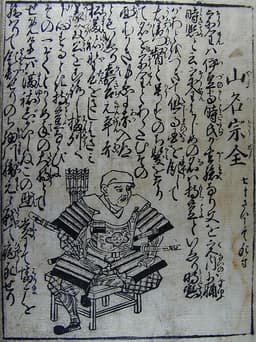
Yamana Sozen
General · Medieval
52.6Total
Basic Information
Born
594
1404
Died
669
1473
Era
Medieval
Medieval
Nationality
China
Japan
Occupation
General
General
Civilization
Eastern
Eastern
Score Comparison
Military (10%)
85.0
72.5
Political (20%)
68.0
37.9
Influence (20%)
52.5
51.0
Legacy (20%)
47.5
46.7
Leadership (15%)
48.8
57.6
Strategy (15%)
72.0
66.3
TOTAL
58.2
52.6
Li Shiji — Complete Timeline
630 AD
Defeated the Eastern Tujue (Göktürks) at the Battle of YinshanWar◆ Major
Li Shiji, serving under Li Jing, commanded a Tang army that defeated the Eastern Tujue forces at the Battle of Yinshan. He pursued the fleeing Tujue khagan and captured him. This victory contributed to the collapse of the Eastern Tujue Khaganate and expanded Tang influence.
Tujue CampaignBattle of YinshanTang Expansion
Impact: regional
641 AD
Campaigned against the XueyantuoWar◆ Major
Li Shiji led a Tang army against the Xueyantuo (Syr Tardush) Khaganate, which had risen to power after the fall of the Eastern Tujue. He defeated the Xueyantuo forces at the Battle of Nuozhen River, forcing their khagan to flee. This campaign secured Tang dominance in the steppe.
Xueyantuo CampaignSteppe WarfareTang Dominance
Impact: regional
645 AD
Campaigned against GoguryeoWar◆ Major
Li Shiji served as a field commander in Emperor Taizong's campaign against Goguryeo. He led the Tang army in the siege of Liaodong (modern Liaoyang) and captured the city. However, the overall campaign failed to conquer Goguryeo due to logistical difficulties and stiff resistance.
Goguryeo CampaignSiege of LiaodongTang Taizong
Impact: regional
649 AD
Appointed Grand Chancellor under Emperor GaozongPolitical Action◆ Major
After Emperor Taizong's death, Li Shiji was appointed Grand Chancellor (Shangshu Zu Pushe) by Emperor Gaozong. He served as a key advisor and administrator, helping to maintain stability during the transition of power. He held this position until his death in 669.
Grand ChancellorEmperor GaozongTang Government
Impact: nationalconstructive
668 AD
Conquered GoguryeoWar
Li Shiji, now in his 70s, commanded the Tang army that finally conquered Goguryeo. He led a combined land and naval force, capturing the capital Pyongyang and the last Goguryeo king. This victory ended the Goguryeo kingdom and brought its territory under Tang control.
Conquest of GoguryeoTang ExpansionKorean Peninsula
Impact: regional
Yamana Sozen — Complete Timeline
1440 AD
Became a Buddhist MonkCultural
Yamana Sozen became a Buddhist monk and took the name Sozen, though he remained politically and militarily active. His nickname 'Red Monk' (Aka Nyudo) came from his red monk's robes and his warlike nature.
BuddhismMonkNickname
1450 AD
Expanded Yamana Clan TerritoryWar◆ Major
Sozen led military campaigns that expanded Yamana control to 11 provinces, making him one of the most powerful daimyo in Japan. His aggressive expansion alarmed other clans, particularly the Hosokawa.
Territorial ExpansionDaimyoYamana Clan
Impact: regionaldestructive
1464 AD
Feud with Hosokawa KatsumotoPolitical Action◆ Major
Sozen's rivalry with Hosokawa Katsumoto intensified over control of the shogunate. The two kanrei clashed over succession and policy, with Sozen supporting Shogun Yoshimasa's son while Katsumoto backed his brother.
RivalryHosokawa KatsumotoPower Struggle
Impact: nationaldestructive
1467 AD
Led the Western Army in the Onin WarWar
Sozen commanded the Western Army (Seigun) in the Onin War, opposing Katsumoto's Eastern Army. His forces fought fierce battles in Kyoto, burning temples and palaces, and the war spread chaos across Japan.
Onin WarWestern ArmyKyoto
Impact: nationaldestructive
1473 AD
Death During the Onin WarOther◆ Major
Sozen died of illness in 1473, the same year as his rival Katsumoto. His death did not end the Onin War, which continued until 1477, but it removed one of the key instigators of the conflict.
DeathOnin WarYamana Clan
Impact: nationaltragic
Expert Analysis
Origins
**Li Shiji** (594–669), originally named Xu Shiji, was born into a wealthy landowning family in Cao Prefecture (modern Heze, Shandong). His father, Xu Gai, was a local magnate. Li Shiji joined the Wagang Army during the Sui collapse, serving under Zhai Rang and later Li Mi. He impressed Li Mi with his loyalty and military acumen. After Li Mi's defeat, he submitted to the Tang dynasty and was granted the imperial surname Li by Emperor Gaozu. His early experiences in the chaotic transition from Sui to Tang shaped his pragmatic and decisive military style.
**Yamana Sozen** (1404–1473), also known as the "Red Monk" (Aka Nyudo), was born into the Yamana clan, a powerful samurai family in western Honshu. His father, Yamana Tokihiro, was a shugo (military governor) of several provinces. Sozen became a Buddhist monk later in life, but remained deeply involved in military and political affairs. His nickname derived from his red robes and fierce temperament. He inherited control of the clan's territories and ambitions, which set the stage for his role in the Onin War.
Rise to Power
Li Shiji rose to prominence as a key general under Emperor Taizong. In 630, he served under Li Jing in the campaign against the Eastern Tujue, commanding a wing of the army at the Battle of Yinshan. The Tang victory broke the Eastern Tujue khaganate, and Li Shiji pursued the fleeing khagan to the edge of the Gobi Desert. This victory earned him high rank and trust. He later led campaigns against the Xueyantuo in 641 and 646, defeating them and securing Tang dominance over the steppe. By the 640s, Li Shiji was one of Taizong's most trusted commanders, often given independent command.
Yamana Sozen expanded his clan's territory through aggressive military campaigns, bringing eleven provinces under Yamana control by the 1440s. He became a key power broker in the Ashikaga shogunate, serving as kanrei (deputy shogun) alongside his rival Hosokawa Katsumoto. The rivalry intensified over the shogunal succession dispute between Ashikaga Yoshihisa and Ashikaga Yoshimi. Sozen supported Yoshimi, while Katsumoto supported Yoshihisa. In 1467, the conflict erupted into the Onin War, with Sozen leading the Western Army from his fortified mansion in Kyoto.
Leadership & Governance
Li Shiji's leadership style was characterized by strategic patience and strict discipline. He was known for his careful planning and ability to coordinate large-scale combined operations. During the Goguryeo campaigns, he managed logistics and sieges with precision, avoiding unnecessary risks. He also demonstrated political acumen, serving as Grand Chancellor under Emperor Gaozong and advising on policy. His governance focused on maintaining stability in conquered territories, integrating former enemies into the Tang administration. His military score of 85.0 reflects his effectiveness, while his political score of 68.0 shows his skill in court politics.
Yamana Sozen's leadership was more aggressive and charismatic. He inspired fierce loyalty among his retainers but also provoked intense opposition. His feud with Hosokawa Katsumoto paralyzed the shogunate and led to the Onin War, which devastated Kyoto. Sozen's governance of his territories was feudal, relying on traditional samurai bonds. He did not implement significant administrative reforms. His political score of 37.9 indicates his inability to achieve lasting political stability, while his military score of 72.5 shows his capability as a warlord.
Triumph & Tragedy
Li Shiji's greatest triumph was the conquest of Goguryeo in 668, when he was in his 70s. He led a combined land and naval force, capturing Pyongyang and ending the kingdom's independence. This fulfilled a long-standing Tang ambition and expanded Chinese influence into Korea. However, his earlier campaign under Emperor Taizong in 645 had failed due to harsh winter conditions and logistical problems, a rare setback. Li Shiji also faced criticism for his role in the succession after Taizong's death, where he was accused of being overly cautious.
Yamana Sozen's greatest triumph was expanding the Yamana clan to control eleven provinces, making him one of the most powerful daimyo. His leadership of the Western Army in the Onin War kept the conflict going for years. However, his tragedy was that the war did not achieve his goals; it destroyed Kyoto and weakened the shogunate, leading to the Sengoku period. Sozen died of illness in 1473, the same year as Katsumoto, but the war continued until 1477, outliving his ambitions.
Character & Destiny
Li Shiji was pragmatic, disciplined, and loyal to the Tang, but also cautious and calculating. He avoided risky moves and focused on achievable objectives. His character allowed him to survive the turbulent transitions from Sui to Tang and through multiple emperors. He died of natural causes in 669, having served as Grand Chancellor. His destiny was to be a reliable instrument of imperial expansion.
Yamana Sozen was fiery, ambitious, and uncompromising. His nickname "Red Monk" reflected his fierce temperament. His feud with Katsumoto consumed his later years, and his death during the Onin War meant he did not see its end. His character contributed to the chaos that defined the war, ultimately leading to the decline of the Yamana clan.
Legacy
Li Shiji's legacy is as a key architect of Tang military dominance in East Asia. The conquest of Goguryeo secured Tang control over Korea for a time and influenced later Chinese-Korean relations. He is remembered as one of the greatest generals of the Tang, with his strategies studied for centuries. His total score of 58.2 places him as a significant but not transcendent figure.
Yamana Sozen's legacy is tied to the Onin War, which marked the beginning of the Sengoku period. He is remembered as a catalyst for chaos, not a builder of lasting institutions. The war destroyed the old order, leading to the rise of new daimyo. His legacy score of 46.7 reflects his role as a destructive force.
Conclusion
Li Shiji had a greater impact than Yamana Sozen. His military achievements (85.0 vs 72.5) directly expanded the Tang Empire and reshaped East Asian geopolitics. Sozen's Onin War triggered centuries of conflict, but his personal gains were ephemeral. Li Shiji's disciplined, strategic approach produced lasting results, while Sozen's feud-driven warfare led to destruction without enduring success. The data supports Li Shiji as the more effective and consequential figure.
Rankings
🥇
Li ShijiLeader
Mil: 85.0Pol: 68.0Inf: 52.5
58.2
🥈
Yamana Sozen
Mil: 72.5Pol: 37.9Inf: 51.0
52.6
+5.6 behind
How This Comparison Works
Algorithm
Each figure is scored on 6 dimensions (0—100 scale) based on structured historical data: Military (10%), Political (20%), Influence (20%), Legacy (20%), Leadership (15%), Strategy (15%). The weighted total produces the final ranking.
Data Sources
Scores are computed from structured sub-indicators in the database. Scale factors adjust for era (Ancient ×0.85, Modern ×1.0) and civilization size (Eastern ×1.05, Other ×0.80) to account for differences in population and military scale.
Maximum 3 Figures
Comparisons are limited to 2—3 figures to ensure readability and statistical meaningfulness.
Error Margins
±5 points per dimension — Sub-scores are derived from historical records with inherent uncertainty. Two figures within 5 points on a dimension should be considered roughly equivalent in that area.
Total Score Accuracy
±3 points overall — The weighted combination of 6 dimensions produces a total score with approximately ±3 points of uncertainty. Differences of less than 3 points are not statistically significant— the figures are effectively tied.
Known Limitations
- Historical records are incomplete and uneven across civilizations
- Figures from oral-tradition societies may be underrepresented
- Occupation labels can misclassify multi-role figures
- Scores measure capability and impact, not moral character
- Quantitative scoring is a comparison tool, not absolute truth
Capability Radar
Military (10%) — Battles & Warfare
Battles
75
55
Win Rate
80
50
Expansion
70
45
Political (20%) — Governance & Reform
Reform
55
35
Diplomacy
70
50
Economy
50
30
Influence (20%) — Cultural & Global Reach
Cultural
45
40
Global
40
35
Legacy (20%) — Historical Impact
Historical
60
60
Longevity
55
50
Leadership (15%) — Power & Stability
Tenure
65
60
Stability
60
20
Strategy (15%) — Tactics & Innovation
Strategy
82
55
Tactics
78
60
Reform
60
30
Similar Comparisons
Comments & Discussion
No comments yet. Be the first to share your thoughts!