Loading...
Li Keyong vs Napoleon Bonaparte
Napoleon Bonaparte leads by 17.3 pts · 2 figures compared
…
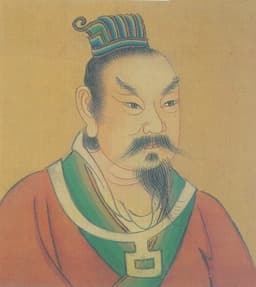
Li Keyong
General · Medieval
53.6Total

Napoleon Bonaparte
General · Modern
70.9Total
Basic Information
Born
856
1769
Died
908
1821
Era
Medieval
Modern
Nationality
China
France
Occupation
General
General
Civilization
Eastern
Western
Score Comparison
Military (10%)
76.0
94.0
Political (20%)
39.4
72.0
Influence (20%)
51.0
40.0
Legacy (20%)
44.2
80.0
Leadership (15%)
65.0
78.0
Strategy (15%)
65.4
90.0
TOTAL
53.6
70.9
Li Keyong — Complete Timeline
883 AD
Became Prince of JinPolitical Action◆ Major
Li Keyong was appointed Prince of Jin by the Tang court for his role in suppressing the Huang Chao rebellion. He established a power base in Shanxi and became a major warlord during the late Tang period.
AppointmentWarlordTang Dynasty
Impact: regionalconstructive
901 AD
Defeated by Zhu Wen at the Battle of the Yellow RiverWar◆ Major
Li Keyong was defeated by the forces of Zhu Wen (later Emperor Taizu of Later Liang) at the Yellow River. This defeat weakened his position and allowed Zhu Wen to dominate the Central Plains.
BattleDefeatZhu Wen
Impact: regionaldestructive
908 AD
Death from illnessOther◆ Major
Li Keyong died of illness. His son Li Cunxu succeeded him and later founded the Later Tang dynasty, fulfilling Li Keyong's ambition to restore Tang rule.
DeathSuccessionLater Tang
Impact: regionaltragic
Napoleon Bonaparte — Complete Timeline
1799 AD
Coup of 18 BrumaireOther◆ Major
Napoleon Bonaparte, with support from his brother Lucien and key political figures, overthrew the Directory in a bloodless coup. He established the Consulate with himself as First Consul, effectively becoming the ruler of France. This event ended the French Revolution's most unstable period.
French RevolutionCoupRise to Power
Impact: regional
1804 AD
Promulgation of the Napoleonic CodeOther◆ Major
Napoleon enacted the Civil Code of the French, known as the Napoleonic Code, a comprehensive set of laws that replaced the fragmented feudal legal systems. The code established legal equality, protected property rights, and secularized law. It became the basis for legal systems in many European and world countries.
Legal ReformNapoleonic CodeCivil Law
Impact: globalconstructive
1805 AD
Battle of AusterlitzWar◆ Major
Napoleon's Grande Arm
Napoleonic WarsBattleDecisive Victory
Impact: global
1812 AD
Invasion of RussiaWar◆ Major
Napoleon led the Grande Arm
Napoleonic WarsInvasionDisaster
Impact: globaldestructive
1815 AD
Battle of WaterlooWar◆ Major
Napoleon's French army was defeated by the combined forces of the Duke of Wellington's Anglo-Allied army and Gebhard Leberecht von Bl
Napoleonic WarsBattleFinal Defeat
Impact: globaldestructive
Expert Analysis
li-keyong-vs-napoleon-bonaparte
# The Conqueror and the Warlord: Napoleon and Li Keyong
On a June morning in 1815, Napoleon Bonaparte watched his Imperial Guard march into the muddy fields of Waterloo, confident that one last charge would break the British line. He was wrong. Ninety kilometers away, a different kind of farewell was unfolding: Li Keyong, the one-eyed Shatuo Turk general, lay dying in his tent near Taiyuan in 908, whispering to his son to complete what he had begun. Two warriors, separated by a thousand years and half a world, yet bound by the same ambition—to build an empire from chaos. Why did one crown himself emperor of Europe while the other died a prince, his dream unfinished?
Origins
Napoleon was born in 1769 on Corsica, an island recently annexed by France. His family was minor nobility, Italian-speaking, and resentful of French rule. The French Revolution erupted when he was twenty, shattering the old order and creating opportunities for ambitious young men. Napoleon absorbed Enlightenment ideas—meritocracy, law, rational organization—and the brutal realities of revolutionary warfare. He was a child of both the ancien régime and the modern age.
Li Keyong, born in 856, came from a different world entirely. He was a Shatuo Turk, a nomadic warrior from the steppes north of China. His people served the Tang dynasty as mercenaries, and Li Keyong grew up in the saddle, fighting alongside his father against rebels and rivals. The Tang empire, once the most sophisticated civilization on earth, was collapsing. Corruption, famine, and the massive Huang Chao rebellion (874–884) had reduced the imperial court to a puppet government in Chang’an. Li Keyong’s world was one of personal loyalty, clan honor, and constant warfare—not ideas, but swords.
Rise to Power
Napoleon’s rise was meteoric. In 1793, at age twenty-four, he drove British forces from Toulon, earning promotion to brigadier general. By 1796, he commanded the Army of Italy and won a series of stunning victories against Austria. His 1798 Egyptian campaign was a strategic failure but a propaganda triumph—he returned to France in 1799 as a national hero. In November of that year, he staged a coup and became First Consul, effectively dictator. By 1804, he crowned himself Emperor. His path was one of calculated ambition, using revolutionary institutions to legitimize personal power.
Li Keyong’s rise was slower and more precarious. In 883, the Tang court appointed him Prince of Jin for his role in suppressing the Huang Chao rebellion. But this title was hollow—the Tang had no real power to give. Li Keyong controlled only a small territory in modern Shanxi province, surrounded by rivals, most notably Zhu Wen, a former rebel who had turned against the Tang. Li Keyong spent decades fighting to hold his ground, never achieving the sweeping conquests Napoleon enjoyed. His power came from tribal loyalty, not institutional genius.
Leadership & Governance
Napoleon was a reformer as much as a conqueror. His Napoleonic Code (1804) standardized French law, abolished feudalism, and established principles of equality before the law—though women’s rights were curtailed. He created a centralized bureaucracy, a national education system, and the Bank of France. His military genius lay in speed, mobility, and the use of corps—self-contained armies that could converge on a battlefield. At Austerlitz in 1805, he destroyed a Russo-Austrian army with a feigned retreat and a devastating flank attack. His political wisdom, however, was flawed: he placed family members on European thrones, provoking endless rebellion, and his Continental System (1806) tried to starve Britain economically but instead alienated his allies.
Li Keyong governed as a tribal chieftain. He rewarded loyalty with land and titles, built fortresses in the Taihang Mountains, and relied on his Shatuo cavalry for military strength. His strategic insight was defensive: he knew he could not defeat Zhu Wen in open battle, so he avoided decisive engagements. At the Battle of the Yellow River in 901, Zhu Wen caught him off guard and routed his army. Li Keyong retreated to Taiyuan and never again challenged his rival directly. He lacked Napoleon’s administrative vision—there was no code, no bureaucracy, no empire to build. He was a warlord in a dying age, not a founder of a new order.
Triumph & Tragedy
Napoleon’s greatest moment was the Battle of Austerlitz, where he crushed the Third Coalition and forced Austria to sue for peace. His empire stretched from Spain to Poland. His greatest failure was the 1812 invasion of Russia. He entered Moscow in September, expecting surrender, but found it abandoned and burning. He waited five weeks, then retreated through the Russian winter. Of 600,000 men who crossed the Niemen, fewer than 100,000 returned. He was exiled to Elba in 1814, escaped in 1815, and was finally defeated at Waterloo. His tragedy was hubris—he could not stop.
Li Keyong’s triumph was survival. He held his small kingdom for twenty-five years against overwhelming odds. His tragedy was that he never saw his vision fulfilled. In 908, he died of illness, knowing that Zhu Wen had declared himself emperor of the Later Liang dynasty, ending the Tang. But Li Keyong’s son, Li Cunxu, inherited his father’s army and his cause. In 923, fifteen years after Li Keyong’s death, Li Cunxu conquered the Later Liang and founded the Later Tang dynasty, fulfilling his father’s dream.
Character & Destiny
Napoleon was restless, brilliant, and arrogant. He believed in destiny and in his own genius. “I am not a man,” he once said. “I am a thing.” He trusted no one fully and micromanaged everything from battle plans to tax codes. His personality drove him to conquer, but also to overreach. He could not accept limits, and that refusal destroyed him.
Li Keyong was pragmatic, patient, and loyal to his clan. He accepted defeat without despair and prepared his son for a victory he would not live to see. His personality was shaped by the steppe tradition of endurance and collective honor. He did not need to be the emperor himself—he needed his bloodline to rule.
Legacy
Napoleon’s legacy is immense. The Napoleonic Code influenced legal systems across Europe and the world. He redrew the map of Europe, ended the Holy Roman Empire, and inspired nationalism in Germany and Italy. He is remembered as both a tyrant and a reformer, a military genius and a cautionary tale.
Li Keyong’s legacy is narrower. He is remembered in Chinese history as a loyal Tang general who fought against usurpers. His son’s Later Tang dynasty lasted only thirteen years, but it established the precedent that Shatuo Turks could rule China. Li Keyong is a footnote in the grand narrative of Chinese dynasties, but a crucial one.
Conclusion
Napoleon and Li Keyong both faced a collapsing order and tried to build something new. Napoleon succeeded spectacularly, then failed spectacularly, because he could not stop. Li Keyong succeeded modestly, then passed the torch, because he knew his limits. One died in exile on a remote island, the other in his own tent, surrounded by his sons. Both were warriors, but their worlds were different—one of revolutionary ambition, the other of tribal endurance. In the end, history judges not by who conquered more, but by what they left behind. Napoleon left a code; Li Keyong left a dynasty. Which legacy lasts longer? The answer depends on whether you measure in years or in ideas.
Rankings
🥇
Napoleon BonaparteLeader
Mil: 94.0Pol: 72.0Inf: 40.0
70.9
🥈
Li Keyong
Mil: 76.0Pol: 39.4Inf: 51.0
53.6
+17.3 behind
How This Comparison Works
Algorithm
Each figure is scored on 6 dimensions (0—100 scale) based on structured historical data: Military (10%), Political (20%), Influence (20%), Legacy (20%), Leadership (15%), Strategy (15%). The weighted total produces the final ranking.
Data Sources
Scores are computed from structured sub-indicators in the database. Scale factors adjust for era (Ancient ×0.85, Modern ×1.0) and civilization size (Eastern ×1.05, Other ×0.80) to account for differences in population and military scale.
Maximum 3 Figures
Comparisons are limited to 2—3 figures to ensure readability and statistical meaningfulness.
Error Margins
±5 points per dimension — Sub-scores are derived from historical records with inherent uncertainty. Two figures within 5 points on a dimension should be considered roughly equivalent in that area.
Total Score Accuracy
±3 points overall — The weighted combination of 6 dimensions produces a total score with approximately ±3 points of uncertainty. Differences of less than 3 points are not statistically significant— the figures are effectively tied.
Known Limitations
- Historical records are incomplete and uneven across civilizations
- Figures from oral-tradition societies may be underrepresented
- Occupation labels can misclassify multi-role figures
- Scores measure capability and impact, not moral character
- Quantitative scoring is a comparison tool, not absolute truth
Capability Radar
Military (10%) — Battles & Warfare
Battles
75
95
Win Rate
70
90
Expansion
65
95
Political (20%) — Governance & Reform
Reform
35
95
Diplomacy
55
80
Economy
30
85
Influence (20%) — Cultural & Global Reach
Cultural
45
85
Global
30
90
Legacy (20%) — Historical Impact
Historical
55
95
Longevity
40
90
Leadership (15%) — Power & Stability
Tenure
60
85
Stability
40
70
Strategy (15%) — Tactics & Innovation
Strategy
68
95
Tactics
72
98
Reform
40
92
Similar Comparisons
Comments & Discussion
No comments yet. Be the first to share your thoughts!