Loading...
Guo Ziyi vs Yamana Sozen
Guo Ziyi leads by 10.5 pts · 2 figures compared
…

Guo Ziyi
General · Medieval
63.1Total
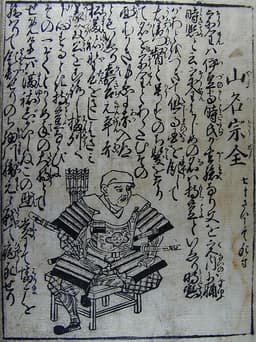
Yamana Sozen
General · Medieval
52.6Total
Basic Information
Born
697
1404
Died
781
1473
Era
Medieval
Medieval
Nationality
China
Japan
Occupation
General
General
Civilization
Eastern
Eastern
Score Comparison
Military (10%)
78.5
72.5
Political (20%)
45.0
37.9
Influence (20%)
61.0
51.0
Legacy (20%)
58.0
46.7
Leadership (15%)
77.2
57.6
Strategy (15%)
72.0
66.3
TOTAL
63.1
52.6
Guo Ziyi — Complete Timeline
756 AD
Appointment as Commander-in-ChiefPolitical Action◆ Major
Emperor Suzong appointed Guo Ziyi as commander-in-chief of Tang forces to suppress the An Lushan Rebellion. This appointment gave him authority over all imperial armies and marked the start of his decisive role in the war.
AppointmentTang DynastyMilitary Command
Impact: nationalconstructive
757 AD
Suppression of the An Lushan RebellionWar
Guo Ziyi, as commander of Tang forces, recaptured Chang'an and Luoyang from rebel forces. This campaign restored the Tang emperor to the throne and preserved the dynasty's rule over China.
An Lushan RebellionTang DynastyMilitary Campaign
Impact: nationalconstructive
Battle of XiangzhouWar◆ Major
Guo Ziyi led Tang and allied Uyghur forces to victory against the rebel army of An Qingxu at Xiangzhou. This battle broke the back of the rebellion and led to the recapture of the eastern capital Luoyang.
An Lushan RebellionBattleTang Dynasty
Impact: nationalconstructive
765 AD
Defense against Tibetan incursionsWar◆ Major
Guo Ziyi, with a small force, faced a Tibetan army that had captured Chang'an. Through diplomacy and a show of force, he persuaded the Tibetans to withdraw without a major battle, restoring order.
Tibetan IncursionTang DynastyDefense
Impact: nationalconstructive
Yamana Sozen — Complete Timeline
1440 AD
Became a Buddhist MonkCultural
Yamana Sozen became a Buddhist monk and took the name Sozen, though he remained politically and militarily active. His nickname 'Red Monk' (Aka Nyudo) came from his red monk's robes and his warlike nature.
BuddhismMonkNickname
1450 AD
Expanded Yamana Clan TerritoryWar◆ Major
Sozen led military campaigns that expanded Yamana control to 11 provinces, making him one of the most powerful daimyo in Japan. His aggressive expansion alarmed other clans, particularly the Hosokawa.
Territorial ExpansionDaimyoYamana Clan
Impact: regionaldestructive
1464 AD
Feud with Hosokawa KatsumotoPolitical Action◆ Major
Sozen's rivalry with Hosokawa Katsumoto intensified over control of the shogunate. The two kanrei clashed over succession and policy, with Sozen supporting Shogun Yoshimasa's son while Katsumoto backed his brother.
RivalryHosokawa KatsumotoPower Struggle
Impact: nationaldestructive
1467 AD
Led the Western Army in the Onin WarWar
Sozen commanded the Western Army (Seigun) in the Onin War, opposing Katsumoto's Eastern Army. His forces fought fierce battles in Kyoto, burning temples and palaces, and the war spread chaos across Japan.
Onin WarWestern ArmyKyoto
Impact: nationaldestructive
1473 AD
Death During the Onin WarOther◆ Major
Sozen died of illness in 1473, the same year as his rival Katsumoto. His death did not end the Onin War, which continued until 1477, but it removed one of the key instigators of the conflict.
DeathOnin WarYamana Clan
Impact: nationaltragic
Expert Analysis
Origins
Guo Ziyi (born 697 CE) hailed from a military family in Huazhou, Tang China. His father, Guo Jingzhi, was a prefectural governor, providing Guo Ziyi with a privileged upbringing and access to military education. He passed the military imperial examinations in 721 CE, beginning his career as a minor officer. His early postings along the northern frontier honed his skills in cavalry warfare and diplomacy with Turkic tribes.
Yamana Sozen (born 1404 CE) was born into the powerful Yamana clan, which controlled significant territories in western Japan. His father, Yamana Tokihiro, was a shugo daimyo, and Sozen inherited the clan leadership at a young age. He became a Buddhist monk in 1450, taking the name Sozen, but remained deeply involved in military and political affairs. His nickname "Red Monk" (Aka Nyudo) reflected his monk's robes and his ruthless tactics.
Rise to Power
Guo Ziyi's rise came during the An Lushan Rebellion (755-763 CE). After rebel forces captured Chang'an, Emperor Suzong appointed Guo Ziyi as Commander-in-Chief of Tang forces in 757 CE. He organized a counteroffensive, coordinating with Uyghur allies to recapture both Chang'an and Luoyang by 758 CE. His victory at the Battle of Xiangzhou (759 CE) against An Qingxu's rebel army cemented his reputation. Guo Ziyi scored 72.0 in strategy, reflecting his ability to orchestrate large-scale campaigns.
Yamana Sozen expanded his clan's territory through aggressive military campaigns, increasing Yamana control to 11 provinces by the mid-15th century. He served as kanrei (shogun's deputy) but clashed with rival Hosokawa Katsumoto over succession within the Ashikaga shogunate. Sozen's support for Ashikaga Yoshihisa against Katsumoto's candidate led to the outbreak of the Onin War in 1467 CE. He commanded the Western Army, fighting fierce battles in Kyoto that destroyed much of the city.
Leadership & Governance
Guo Ziyi's leadership style emphasized diplomacy and coalition-building. He integrated Uyghur and other allied forces into his armies, rewarding them with plunder and titles. He was known for his loyalty to the Tang emperor, never seeking personal power despite his military successes. His governance approach focused on restoring imperial authority and rebuilding infrastructure after the rebellion. He avoided political intrigue, which contributed to his longevity in service.
Yamana Sozen's leadership was more aggressive and factional. He used military force to expand his domains and challenge rivals. As a monk, he maintained a fearsome reputation, employing scorched-earth tactics in Kyoto. His feud with Katsumoto paralyzed the shogunate, and his willingness to use violence to achieve political ends escalated the Onin War into a decade-long conflict. Sozen's political score of 37.9 reflects his inability to build stable alliances.
Triumph & Tragedy
Guo Ziyi's greatest triumph was suppressing the An Lushan Rebellion, restoring the Tang dynasty to power. He also successfully defended against Tibetan incursions in 763 CE, using diplomacy and a show of force to persuade them to withdraw from Chang'an. His tragedy was that despite his efforts, the Tang dynasty continued to decline due to internal weaknesses. He died in 781 CE at age 85, having served under multiple emperors.
Yamana Sozen's triumph was making the Yamana clan one of the most powerful in Japan, controlling 11 provinces at his peak. He also played a key role in the Onin War, which reshaped Japan's political landscape. His tragedy was that the war he started outlasted him; he died in 1473 CE, the same year as Katsumoto, but the war continued until 1477, leading to the collapse of central authority and the onset of the Sengoku period. His aggressive expansion created enemies that ultimately weakened his clan.
Character & Destiny
Guo Ziyi was pragmatic and cautious, avoiding unnecessary risks. His decision to remain loyal to the emperor, even when he could have seized power, reflected his understanding of the importance of legitimacy. Historical assessments praise his integrity and strategic patience. He scored 77.2 in leadership, indicating his ability to inspire loyalty and manage diverse forces.
Yamana Sozen was impulsive and ruthless, driven by ambition and a desire for dominance. His nickname "Red Monk" symbolized his dual nature: a religious ascetic who was also a brutal warlord. His feud with Katsumoto was personal and destructive, leading to a war that neither could win. Sozen's leadership score of 57.6 reflects his failure to unify even his own faction.
Legacy
Guo Ziyi is remembered as a loyal general who saved the Tang dynasty. His military campaigns are studied in Chinese military history, and he is often compared to other great generals like Li Jing. His legacy of loyalty and competence endured, influencing later Chinese military thought. He scored 58.0 in legacy.
Yamana Sozen's legacy is more ambiguous. He is a key figure in the Onin War, which marked the beginning of the Sengoku period. The war's devastation of Kyoto and the collapse of shogunal authority are directly linked to his actions. While he expanded his clan's territory, the war ultimately weakened the Yamana, and they declined after his death. His influence score of 51.0 reflects his role in a transformative but destructive event.
Conclusion
Guo Ziyi had a greater impact on history than Yamana Sozen. His military achievements preserved the Tang dynasty for another century, maintaining Chinese unity and stability. Sozen's actions, while significant, contributed to the fragmentation of Japan and a century of civil war. Guo Ziyi's total score of 63.1 vs Sozen's 52.6 reflects his superior military (78.5 vs 72.5) and leadership (77.2 vs 57.6). While Sozen's Onin War was a pivotal event, it was ultimately destructive, whereas Guo Ziyi's campaigns were restorative. Thus, Guo Ziyi's legacy is more positive and enduring.
Rankings
🥇
Guo ZiyiLeader
Mil: 78.5Pol: 45.0Inf: 61.0
63.1
🥈
Yamana Sozen
Mil: 72.5Pol: 37.9Inf: 51.0
52.6
+10.5 behind
How This Comparison Works
Algorithm
Each figure is scored on 6 dimensions (0—100 scale) based on structured historical data: Military (10%), Political (20%), Influence (20%), Legacy (20%), Leadership (15%), Strategy (15%). The weighted total produces the final ranking.
Data Sources
Scores are computed from structured sub-indicators in the database. Scale factors adjust for era (Ancient ×0.85, Modern ×1.0) and civilization size (Eastern ×1.05, Other ×0.80) to account for differences in population and military scale.
Maximum 3 Figures
Comparisons are limited to 2—3 figures to ensure readability and statistical meaningfulness.
Error Margins
±5 points per dimension — Sub-scores are derived from historical records with inherent uncertainty. Two figures within 5 points on a dimension should be considered roughly equivalent in that area.
Total Score Accuracy
±3 points overall — The weighted combination of 6 dimensions produces a total score with approximately ±3 points of uncertainty. Differences of less than 3 points are not statistically significant— the figures are effectively tied.
Known Limitations
- Historical records are incomplete and uneven across civilizations
- Figures from oral-tradition societies may be underrepresented
- Occupation labels can misclassify multi-role figures
- Scores measure capability and impact, not moral character
- Quantitative scoring is a comparison tool, not absolute truth
Capability Radar
Military (10%) — Battles & Warfare
Battles
85
55
Win Rate
80
50
Expansion
70
45
Political (20%) — Governance & Reform
Reform
60
35
Diplomacy
85
50
Economy
65
30
Influence (20%) — Cultural & Global Reach
Cultural
70
40
Global
65
35
Legacy (20%) — Historical Impact
Historical
80
60
Longevity
75
50
Leadership (15%) — Power & Stability
Tenure
75
60
Stability
80
20
Strategy (15%) — Tactics & Innovation
Strategy
85
55
Tactics
75
60
Reform
60
30
Similar Comparisons
Comments & Discussion
No comments yet. Be the first to share your thoughts!