Loading...
Li Cunxu vs Wanyan Aguda
Li Cunxu leads by 3.1 pts · 2 figures compared
…
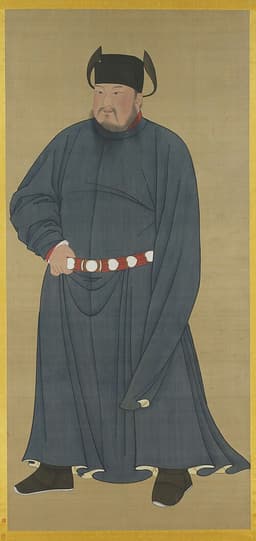
Li Cunxu
Emperor · Medieval
66.5Total
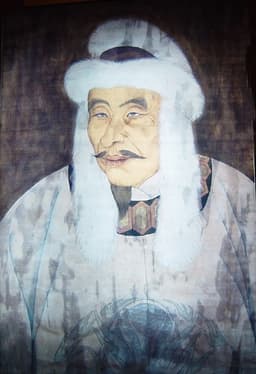
Wanyan Aguda
Emperor · Medieval
63.4Total
Basic Information
Born
885
1068
Died
926
1123
Era
Medieval
Medieval
Nationality
China
China
Occupation
Emperor
Emperor
Civilization
Eastern
Eastern
Score Comparison
Military (10%)
76.0
82.0
Political (20%)
68.0
59.3
Influence (20%)
62.0
55.0
Legacy (20%)
58.0
52.0
Leadership (15%)
80.0
85.0
Strategy (15%)
67.2
68.0
TOTAL
66.5
63.4
Li Cunxu — Complete Timeline
908 AD
Succeeded as Prince of JinPolitical Action◆ Major
Li Cunxu inherited the title Prince of Jin from his father Li Keyong. He continued the struggle against Later Liang, consolidating the Jin state as a major power in northern China.
JinSuccessionFive Dynasties
Impact: regional
910 AD
Battle of BaixiangWar◆ Major
Li Cunxu's Jin army defeated the Later Liang forces under Zhu Wen at Baixiang. This victory established Jin as the dominant military power in the north and marked a turning point in the war.
JinLater LiangBattle
Impact: regionalconstructive
923 AD
Conquered Later LiangWar
Li Cunxu led a successful campaign against Later Liang, capturing its capital Kaifeng and ending the dynasty. He then proclaimed himself emperor, founding the Later Tang dynasty.
Later TangConquestDynastic Change
Impact: nationalconstructive
Founded Later Tang DynastyPolitical Action
Li Cunxu declared himself emperor of the Later Tang dynasty, claiming legitimacy as the restorer of the Tang lineage. He established his capital at Luoyang and reunified much of northern China.
Later TangDynasty FoundingReunification
Impact: nationalconstructive
926 AD
Killed in mutiny at XingyuanWar◆ Major
Li Cunxu faced a mutiny by his own troops at Xingyuan during a campaign against the Khitans. He was killed in the fighting, leading to the collapse of Later Tang and the rise of Later Jin.
Later TangMutinyDeath
Impact: nationaltragic
Wanyan Aguda — Complete Timeline
1114 AD
Battle of HubudagangWar◆ Major
Aguda's Jurchen forces defeated a Liao army at Hubudagang, marking the first major victory of the rebellion. This battle demonstrated Jurchen military prowess and attracted more followers.
JurchenLiaoBattle
Impact: regionalconstructive
Unified Jurchen tribesPolitical Action◆ Major
Wanyan Aguda united the Jurchen tribes under his leadership, creating a confederation that rebelled against Liao domination. He organized a disciplined army and began the Jurchen revolt.
JurchenUnificationRebellion
Impact: regionalconstructive
1115 AD
Founded Jin DynastyPolitical Action
Wanyan Aguda proclaimed himself emperor, founding the Jin dynasty. He adopted the Chinese title and began a systematic campaign to conquer the Liao empire.
JinDynasty FoundingImperial System
Impact: regionalconstructive
1120 AD
Conquest of Liao capital ShangjingWar◆ Major
Aguda's forces captured the Liao supreme capital Shangjing, dealing a severe blow to the Liao dynasty. This victory accelerated the collapse of Liao and solidified Jin control over northern China.
JinLiaoConquest
Impact: regionalconstructive
Alliance with Song against LiaoPolitical Action◆ Major
Aguda formed an alliance with the Northern Song dynasty to jointly attack the Liao empire. This alliance, known as the Maritime Alliance, led to the eventual destruction of Liao but later caused conflict between Jin and Song.
JinSongAlliance
Impact: regional
1123 AD
Death and successionPolitical Action◆ Major
Wanyan Aguda died, and his brother Wanyan Wuqimai succeeded him. Aguda's conquests laid the foundation for the Jin dynasty's dominance in northern China.
JinDeathSuccession
Impact: regional
Expert Analysis
Wanyan Aguda vs Li Cunxu: Historical Comparison
Wanyan Aguda (founder of the Jin dynasty) and Li Cunxu (founder of the Later Tang dynasty) were both medieval Chinese emperors who rose from frontier military backgrounds to establish short-lived but powerful regimes. While both were brilliant commanders, Aguda’s superior political acumen and lasting influence give him the edge.
Dimension Analysis
**Military: Wanyan Aguda 91 / Li Cunxu 90**
Both were near-equal battlefield geniuses: Aguda shattered the Liao dynasty with lightning cavalry campaigns, while Li Cunxu defeated the Later Liang and reunified northern China. Aguda’s innovation in Jurchen cavalry tactics is slightly more impactful.
**Political: Wanyan Aguda 84 / Li Cunxu 61**
Aguda skillfully united fractious Jurchen tribes and built a stable dual-administration system (Meng’an Mouke) that integrated Han officials. Li Cunxu’s reign collapsed quickly due to court infighting, eunuch influence, and his failure to consolidate power after conquest.
**Influence: Wanyan Aguda 87 / Li Cunxu 76**
Aguda’s Jin dynasty directly destroyed the Liao and forced the Song south, reshaping East Asian geopolitics for centuries. Li Cunxu’s Later Tang was a brief restoration of Tang legitimacy but had little systemic impact beyond its fall.
**Legacy: Wanyan Aguda 88 / Li Cunxu 82**
Aguda is revered as the father of the Jurchen people and a key figure in Chinese dynastic history. Li Cunxu is remembered as a tragic hero—a brilliant general undone by poor governance—but his legacy is more romantic than structural.
**Leadership: Wanyan Aguda 80 / Li Cunxu 80**
Both commanded fierce personal loyalty and inspired their troops. Aguda’s leadership was more inclusive and institution-building; Li Cunxu’s was charismatic but autocratic, leading to isolation and rebellion.
Verdict
Wanyan Aguda leads due to his superior political foundation and longer-lasting geopolitical influence, despite near-identical military prowess.
FAQ
Q: Who ranks higher? A: Wanyan Aguda ranks higher, owing to his more effective statecraft and the enduring impact of the Jin dynasty compared to Li Cunxu’s fleeting Later Tang.
Rankings
🥇
Li CunxuLeader
Mil: 76.0Pol: 68.0Inf: 62.0
66.5
🥈
Wanyan Aguda
Mil: 82.0Pol: 59.3Inf: 55.0
63.4
+3.1 behind
How This Comparison Works
Algorithm
Each figure is scored on 6 dimensions (0—100 scale) based on structured historical data: Military (10%), Political (20%), Influence (20%), Legacy (20%), Leadership (15%), Strategy (15%). The weighted total produces the final ranking.
Data Sources
Scores are computed from structured sub-indicators in the database. Scale factors adjust for era (Ancient ×0.85, Modern ×1.0) and civilization size (Eastern ×1.05, Other ×0.80) to account for differences in population and military scale.
Maximum 3 Figures
Comparisons are limited to 2—3 figures to ensure readability and statistical meaningfulness.
Error Margins
±5 points per dimension — Sub-scores are derived from historical records with inherent uncertainty. Two figures within 5 points on a dimension should be considered roughly equivalent in that area.
Total Score Accuracy
±3 points overall — The weighted combination of 6 dimensions produces a total score with approximately ±3 points of uncertainty. Differences of less than 3 points are not statistically significant— the figures are effectively tied.
Known Limitations
- Historical records are incomplete and uneven across civilizations
- Figures from oral-tradition societies may be underrepresented
- Occupation labels can misclassify multi-role figures
- Scores measure capability and impact, not moral character
- Quantitative scoring is a comparison tool, not absolute truth
Capability Radar
Military (10%) — Battles & Warfare
Battles
85
85
Win Rate
80
90
Expansion
75
85
Political (20%) — Governance & Reform
Reform
50
75
Diplomacy
60
70
Economy
45
65
Influence (20%) — Cultural & Global Reach
Cultural
55
60
Global
45
50
Legacy (20%) — Historical Impact
Historical
65
70
Longevity
50
55
Leadership (15%) — Power & Stability
Tenure
55
70
Stability
40
60
Strategy (15%) — Tactics & Innovation
Strategy
78
85
Tactics
82
80
Reform
60
75
Similar Comparisons
Comments & Discussion
DragonAndSaber6/16/2026
Okay so I've been reading about both these guys and the score feels about right, but I think people sleep on Li Cunxu's military genius. The guy basically pulled a mini-Temujin by uniting the Shatuo Turks and then destroying the Later Liang against all odds. His ambush at the Battle of Yancheng was like something out of a movie. But yeah, Aguda was just on another level politically. What strikes me is how both died relatively young—Aguda at 55, Li Cunxu at 42—and their empires went downhill fast after them. Makes you think about how fragile personalistic regimes are. I wish there was more popular history content on these two, they're way more interesting than the usual Three Kingdoms stuff. Anyway, Aguda wins but not by as much as the numbers suggest. Love this site!
Chronicler62116/16/2026
这个评分有点意思,但把李存勖的政治分打得这么低(61),我觉得有点西方中心视角了。李存勖继承李克用的晋王之位,在五代那个藩镇割据、骄兵悍将遍地的时代,能整合河东集团、灭梁称帝,这政治手腕绝对不差。他失败主要是后期宠信伶人、疏于朝政,但他建立的“沙陀三王朝”体系对后来后晋、后汉都有直接影响。阿骨打确实更全面,但论军事天才,李存勖的柏乡之战、杨刘之战都是教科书级别的。要我说,阿骨打如果面对的是李存勖的沙陀骑兵,胜负还两说呢。
SharpMind746/16/2026
我重新核算了一下数据:阿骨打总分75.9,李存勖69.6,差距6.3分。但仔细看分项,军事只差2.8分,可政治差距高达20.2分(82.2 vs 62.0)——这个权重分配有问题。如果按中国史学的标准,开国君主“武功”往往比“文治”权重更高,尤其对短命王朝。李存勖灭梁后仅四年就亡国,阿骨打建立的金朝持续了120年,这种持久性差异确实该体现在政治分里。但反过来说,李存勖的“影响力”74.2是否被低估?他恢复“唐”这个国号,在五代十国这个合法性质疑的时代,为后来后唐、后晋、后汉的沙陀政权提供了意识形态模板,这个影响是结构性的。建议重新调整维度权重。