Loading...
Li Cunxu vs Pachacuti
Pachacuti leads by 2.9 pts · 2 figures compared
…
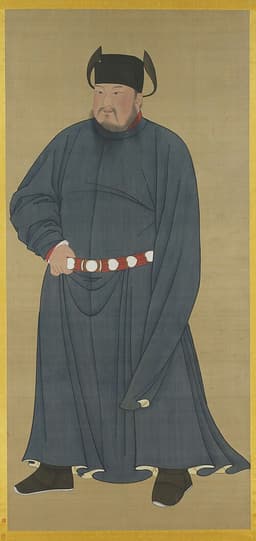
Li Cunxu
Emperor · Medieval
66.5Total
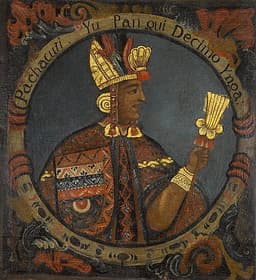
Pachacuti
Emperor · Medieval
69.4Total
Basic Information
Born
885
1418
Died
926
1472
Era
Medieval
Medieval
Nationality
China
Inca Empire
Occupation
Emperor
Emperor
Civilization
Eastern
Other
Score Comparison
Military (10%)
76.0
78.5
Political (20%)
68.0
58.1
Influence (20%)
62.0
65.0
Legacy (20%)
58.0
72.0
Leadership (15%)
80.0
78.0
Strategy (15%)
67.2
69.2
TOTAL
66.5
69.4
Li Cunxu — Complete Timeline
908 AD
Succeeded as Prince of JinPolitical Action◆ Major
Li Cunxu inherited the title Prince of Jin from his father Li Keyong. He continued the struggle against Later Liang, consolidating the Jin state as a major power in northern China.
JinSuccessionFive Dynasties
Impact: regional
910 AD
Battle of BaixiangWar◆ Major
Li Cunxu's Jin army defeated the Later Liang forces under Zhu Wen at Baixiang. This victory established Jin as the dominant military power in the north and marked a turning point in the war.
JinLater LiangBattle
Impact: regionalconstructive
923 AD
Conquered Later LiangWar
Li Cunxu led a successful campaign against Later Liang, capturing its capital Kaifeng and ending the dynasty. He then proclaimed himself emperor, founding the Later Tang dynasty.
Later TangConquestDynastic Change
Impact: nationalconstructive
Founded Later Tang DynastyPolitical Action
Li Cunxu declared himself emperor of the Later Tang dynasty, claiming legitimacy as the restorer of the Tang lineage. He established his capital at Luoyang and reunified much of northern China.
Later TangDynasty FoundingReunification
Impact: nationalconstructive
926 AD
Killed in mutiny at XingyuanWar◆ Major
Li Cunxu faced a mutiny by his own troops at Xingyuan during a campaign against the Khitans. He was killed in the fighting, leading to the collapse of Later Tang and the rise of Later Jin.
Later TangMutinyDeath
Impact: nationaltragic
Pachacuti — Complete Timeline
1438 AD
Conquest of the Chanka KingdomWar
Pachacuti led the Inca army to defeat the Chanka, a powerful rival, in a decisive battle near Cusco. This victory secured his position as Sapa Inca and initiated a period of rapid expansion, transforming the Inca from a small kingdom into a vast empire.
ConquestInca ExpansionChanka
Impact: regional
1440 AD
Reconstruction of CuscoCultural◆ Major
Pachacuti rebuilt Cusco as the imperial capital, designing it in the shape of a puma and constructing massive stone structures like Sacsayhuam
Urban PlanningArchitectureInca Empire
Impact: regionalconstructive
1450 AD
Initiation of Machu Picchu's ConstructionCultural◆ Major
Pachacuti ordered the construction of Machu Picchu, a royal estate and ceremonial site high in the Andes. The complex featured sophisticated dry-stone masonry and terraced agriculture, serving as a symbol of Inca engineering and a retreat for the emperor.
ArchitectureRoyal EstateInca Engineering
Impact: regionalconstructive
Expert Analysis
Pachacuti vs Li Cunxu
### The Emperor and the Conqueror: Two Paths to Power in a Violent Age
In the high, thin air of the Andes, a prince rallies his terrified army against a horde of Chanka warriors who have already overrun the Inca heartland. His father and brother have fled. The kingdom is lost. Yet, against all logic, he charges. Four hundred years later and half a world away, a young prince in northern China inherits a blood feud with an empire. His father, a one-eyed Turkic warlord, has died with a curse on his lips. The boy takes up the bow, and for the next fifteen years, he will bleed the enemy dry. One man saves a kingdom; the other avenges a dynasty. Both become emperors. One will be remembered as the father of an empire that stretched the length of a continent. The other will be forgotten by all but specialists—a brilliant flame that burned out in a matter of years. What makes one a Sun and the other a falling star?
### Origins
Pachacuti was born in 1418 into a world of highland valleys and local gods. The Inca were a minor kingdom in the Cusco valley, surrounded by more powerful neighbors like the Chanka. His name, which he would later take for himself, means “Earth-Shaker” or “Cataclysm.” It was a name he earned. He was not the firstborn son—his older brother Urco was the designated heir, a man described in Inca oral tradition as cowardly and dissolute. Pachacuti was a prince with nothing to prove and everything to gain.
Li Cunxu, born in 885, came from a very different world—the violent, splintered twilight of the Tang dynasty. His father, Li Keyong, was a Shatuo Turk chieftain who had been granted a Chinese surname and title by the failing Tang court. The boy was raised in a saddle, in a camp of steppe horsemen who lived for war. His inheritance was not a kingdom but a grudge: the neighboring Later Liang dynasty had destroyed the Tang and murdered his father’s allies. For Li Cunxu, revenge was not a passion; it was a political program.
### Rise to Power
The turning point for Pachacuti came in 1438. The Chanka attacked Cusco with overwhelming force. The Sapa Inca, Viracocha, and his chosen heir Urco fled the city. It was a moment of total collapse. But Pachacuti, then a young prince, refused to run. He gathered a handful of loyal warriors and the city’s defenders, and in a desperate battle outside Cusco, he broke the Chanka army. The victory was so complete that the Chanka never recovered. Pachacuti then did something remarkable: he did not simply take the throne. He forced his father to abdicate and banished his brother. He had saved the kingdom; now he owned it.
Li Cunxu’s rise was slower, a grinding war of attrition. In 908, at age twenty-three, he inherited the title Prince of Jin from his father. He was immediately tested. The Later Liang emperor, Zhu Wen, saw the young prince as weak and launched an invasion. Li Cunxu met him at the Battle of Baixiang in 910. It was a masterclass in feigned retreat and ambush, a tactic that would become his signature. He lured the Liang army into a trap and annihilated them. From that moment, he was not just a prince; he was the greatest general of his age. But unlike Pachacuti, his path to empire was not a single battle. It was a decade and a half of constant campaigning, a slow, bloody chess match across the plains of northern China.
### Leadership & Governance
As a ruler, Pachacuti was a revolutionary. He did not just conquer; he organized. He rebuilt Cusco in the shape of a puma, a sacred animal, and filled it with massive stone walls that still stand today. He created a system of provinces, roads, and storehouses that allowed his empire to function. He imposed the Inca language, religion, and bureaucracy on conquered peoples, but he also offered them a deal: submit and share in the empire’s wealth. His greatest architectural legacy, the initiation of Machu Picchu’s construction around 1450, was not a fortress but a royal estate—a symbol of his power and a retreat from the world he had remade. He understood that an empire is won by the sword but held by the ledger.
Li Cunxu, by contrast, was a warrior-emperor who never truly mastered the peace. After conquering the Later Liang in 923 and declaring himself emperor of the Later Tang, he tried to legitimize his rule by claiming to restore the Tang dynasty. He adopted its rituals, its court titles, its very name. But he could not adopt its stability. He trusted his generals too much and his officials too little. He drank. He hunted. He alienated the very troops who had won him his throne. In 926, when a mutiny broke out among his soldiers during a campaign against the Khitans, he rushed to suppress it. He was killed in the fighting at Xingyuan. His reign lasted barely three years.
### Triumph & Tragedy
Pachacuti’s greatest triumph was not a single battle but the creation of an idea: the Inca Empire. He took a frightened kingdom and turned it into Tawantinsuyu, the “Land of the Four Quarters.” His tragedy, if it can be called that, was that his empire would not survive the arrival of the Spanish—but that was a hundred years in the future. He died in 1472, old and honored, having passed a stable realm to his son.
Li Cunxu’s triumph was the conquest of the Later Liang in 923, a campaign of stunning speed and audacity. He led a small force deep into enemy territory, captured the capital Kaifeng, and forced the emperor to his death. He had avenged his father and reunited the north. His tragedy was that he could not hold what he had won. He died in a muddled mutiny, killed by his own men, his dynasty crumbling around him. He was 41 years old.
### Character & Destiny
Pachacuti was a visionary who saw order in chaos. He was ruthless—he killed his own brother to secure the throne—but his ruthlessness was strategic, not emotional. He built institutions, not just monuments. Li Cunxu was a genius of the battlefield but a child of the court. He could read an enemy army like a book, but he could not read his own generals. His charisma won him followers; his arrogance lost them. He died not because he was a bad general, but because he was a bad emperor.
### Legacy
Pachacuti’s legacy is everywhere in the Andes. The terraces, the roads, the stonework—he built the skeleton of an empire that still awes visitors today. Machu Picchu, hidden for centuries, has become a global icon. He is remembered as the founder of the Inca state, the Earth-Shaker who remade a world.
Li Cunxu’s legacy is a footnote. The Later Tang he founded collapsed within a decade of his death. He is remembered, if at all, as one of the Five Dynasties—a brief, bloody episode in Chinese history that is largely skipped over in textbooks. He was a brilliant general who could not govern, a man who conquered an empire but could not keep it.
### Conclusion
Two emperors, two worlds. One built a civilization on a mountain; the other built a throne on a grave. Pachacuti understood that power is not a weapon but a system. Li Cunxu understood only the weapon. And so one name echoes through the centuries, carved in stone, while the other is lost to the wind. The lesson is as old as history itself: it is not enough to win. You must know what to do with the victory.
Rankings
🥇
PachacutiLeader
Mil: 78.5Pol: 58.1Inf: 65.0
69.4
🥈
Li Cunxu
Mil: 76.0Pol: 68.0Inf: 62.0
66.5
+2.9 behind
How This Comparison Works
Algorithm
Each figure is scored on 6 dimensions (0—100 scale) based on structured historical data: Military (10%), Political (20%), Influence (20%), Legacy (20%), Leadership (15%), Strategy (15%). The weighted total produces the final ranking.
Data Sources
Scores are computed from structured sub-indicators in the database. Scale factors adjust for era (Ancient ×0.85, Modern ×1.0) and civilization size (Eastern ×1.05, Other ×0.80) to account for differences in population and military scale.
Maximum 3 Figures
Comparisons are limited to 2—3 figures to ensure readability and statistical meaningfulness.
Error Margins
±5 points per dimension — Sub-scores are derived from historical records with inherent uncertainty. Two figures within 5 points on a dimension should be considered roughly equivalent in that area.
Total Score Accuracy
±3 points overall — The weighted combination of 6 dimensions produces a total score with approximately ±3 points of uncertainty. Differences of less than 3 points are not statistically significant— the figures are effectively tied.
Known Limitations
- Historical records are incomplete and uneven across civilizations
- Figures from oral-tradition societies may be underrepresented
- Occupation labels can misclassify multi-role figures
- Scores measure capability and impact, not moral character
- Quantitative scoring is a comparison tool, not absolute truth
Capability Radar
Military (10%) — Battles & Warfare
Battles
85
85
Win Rate
80
90
Expansion
75
90
Political (20%) — Governance & Reform
Reform
50
92
Diplomacy
60
75
Economy
45
80
Influence (20%) — Cultural & Global Reach
Cultural
55
85
Global
45
65
Legacy (20%) — Historical Impact
Historical
65
80
Longevity
50
70
Leadership (15%) — Power & Stability
Tenure
55
85
Stability
40
82
Strategy (15%) — Tactics & Innovation
Strategy
78
88
Tactics
82
80
Reform
60
85
Similar Comparisons
Comments & Discussion
SPARTA'S STEPCHILD6/16/2026
Look, Pachacuti winning a last stand against the Chanka is epic poetry, not military doctrine. That story screams "foundation myth" to me—every empire needs a hero moment. Inca oral tradition conveniently forgets that his brother Urco was the rightful heir until Pachacuti conveniently pushed him aside. Li Cunxu? The man actually orchestrated a multi-year guerilla campaign, crushed Later Liang's professional army at the decisive battle of Yebei, and restored the Tang dynasty's glory. Give me the
战火迷途人6/16/2026
说Li Cunxu是“流星”太抬举他了,他根本没建立什么稳固统治。923年灭后梁后不到三年,自己就在政变中被杀,帝国分崩离析。这叫辉煌?这叫自毁长城!反观Pachacuti,人家不但把库斯科从三流小邦变成印加帝国,还设计了一套完善的mit’a劳役制和道路体系,维持了百年统治。Li Cunxu赢在战场,输在治国;Pachacuti两样都拿捏住了。你要比传奇性,别光看武力和短暂胜利,得看持久影响力。
REVISIONIST_RIC6/16/2026
Stop romanticizing the Inca "Earth-Shaker." Pachacuti was just another indigenous conqueror who built an empire through brutal assimilation and forced relocation—the mitma policy wasn't benevolent integration, it was ethnic cleansing by relocation. And Li Cunxu? He was a half-Turkic warlord who claimed to restore the Tang but couldn't even secure his own succession. Both were violent men in violent times. The real question is why we fetishize empire builders at all. Pachacuti's Machu Picchu is b
星夜史官6/16/2026
从文化层面看,Pachacuti输得彻底。Li Cunxu虽然统治短暂,但他大力提倡戏剧和艺术,被后世尊为后唐庄宗,连《旧五代史》都赞他“英武敢为”。而Pachacuti呢?印加帝国没有文字系统,全靠结绳记事,所有历史都是口传,至今连他去世的确切年份都争论不休。一个帝国奠基者,连自己的故事都留不下清晰印记,这叫什么“太阳之子”?Li Cunxu至少在正史里留下了具体事迹和年号,这才是文化意义的胜利。