Loading...
This comparison has not been analyzed yet.
One-time AI generation (~1 minute). Scores and timeline are already available below.
Li Ang vs Wenceslaus I of Luxembourg
Wenceslaus I of Luxembourg leads by 2.2 pts · 2 figures compared
…

Li Ang
Emperor · Medieval
44.1Total
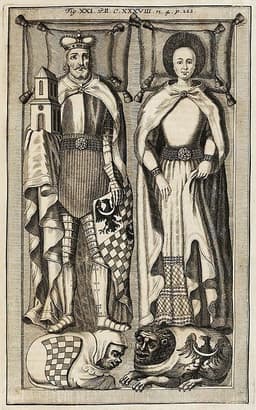
Wenceslaus I of Luxembourg
Emperor · Medieval
46.3Total
Basic Information
Born
809
1337
Died
840
1383
Era
Medieval
Medieval
Nationality
China
Luxembourg
Occupation
Emperor
Emperor
Civilization
Eastern
Western
Score Comparison
Military (10%)
51.5
50.0
Political (20%)
35.0
35.1
Influence (20%)
45.5
52.5
Legacy (20%)
35.8
42.5
Leadership (15%)
44.5
55.3
Strategy (15%)
67.5
39.6
TOTAL
44.1
46.3
Li Ang — Complete Timeline
835 AD
Sweet Dew IncidentPolitical Action
Li Ang conspired with Chancellor Li Xun and general Zheng Zhu to massacre the powerful eunuch faction. The plot failed when eunuchs discovered the ambush. They retaliated by killing many officials and placing Li Ang under effective house arrest.
Sweet Dew IncidentEunuch PowerFailed Coup
Impact: nationaldestructive
Eunuch Domination of the CourtPolitical Action◆ Major
After the Sweet Dew Incident, the eunuch faction led by Qiu Shiliang gained complete control over the imperial court. They controlled the emperor's communications, appointed officials, and even decided succession, reducing Li Ang to a figurehead.
Eunuch PowerCourt PoliticsDecadence
Impact: nationaldestructive
840 AD
Death of Li AngOther
Li Ang died in 840, possibly poisoned by eunuchs. His reign was marked by his inability to govern independently, and his death further entrenched eunuch control over the Tang court.
DeathEunuch PowerWeak Emperor
Impact: nationaltragic
Wenceslaus I of Luxembourg — Complete Timeline
1354 AD
Elevation of Luxembourg to DuchyPolitical Action◆ Major
Wenceslaus I, through his marriage to Joanna of Brabant and his family's influence, secured the elevation of the County of Luxembourg to a Duchy by Holy Roman Emperor Charles IV. This increased Luxembourg's status and Wenceslaus's prestige.
Territorial ElevationLuxembourgHoly Roman Empire
Impact: regionalconstructive
1356 AD
War of the Brabant SuccessionWar◆ Major
Wenceslaus I, as Duke of Brabant through his wife Joanna, fought against Louis of Male, Count of Flanders, who claimed Brabant. The war ended with the Treaty of Ath in 1357, which confirmed Wenceslaus's rule but ceded some territories.
WarBrabantFlanders
Impact: regional
1370 AD
Patronage of Literature and the ArtsCultural
Wenceslaus I was a noted poet and patron of the arts, commissioning works such as the 'Roman de la Rose' and supporting the development of courtly literature in Luxembourg and Brabant. His court became a center of cultural activity.
PatronageLiteratureMedieval Culture
Impact: regionalconstructive
This comparison has not been analyzed yet.
One-time AI generation (~1 minute). Scores and timeline are already available below.
Rankings
🥇
Wenceslaus I of LuxembourgLeader
Mil: 50.0Pol: 35.1Inf: 52.5
46.3
🥈
Li Ang
Mil: 51.5Pol: 35.0Inf: 45.5
44.1
+2.2 behind
How This Comparison Works
Algorithm
Each figure is scored on 6 dimensions (0—100 scale) based on structured historical data: Military (10%), Political (20%), Influence (20%), Legacy (20%), Leadership (15%), Strategy (15%). The weighted total produces the final ranking.
Data Sources
Scores are computed from structured sub-indicators in the database. Scale factors adjust for era (Ancient ×0.85, Modern ×1.0) and civilization size (Eastern ×1.05, Other ×0.80) to account for differences in population and military scale.
Maximum 3 Figures
Comparisons are limited to 2—3 figures to ensure readability and statistical meaningfulness.
Error Margins
±5 points per dimension — Sub-scores are derived from historical records with inherent uncertainty. Two figures within 5 points on a dimension should be considered roughly equivalent in that area.
Total Score Accuracy
±3 points overall — The weighted combination of 6 dimensions produces a total score with approximately ±3 points of uncertainty. Differences of less than 3 points are not statistically significant— the figures are effectively tied.
Known Limitations
- Historical records are incomplete and uneven across civilizations
- Figures from oral-tradition societies may be underrepresented
- Occupation labels can misclassify multi-role figures
- Scores measure capability and impact, not moral character
- Quantitative scoring is a comparison tool, not absolute truth
Capability Radar
Military (10%) — Battles & Warfare
Battles
42
15
Win Rate
47
15
Expansion
52
20
Political (20%) — Governance & Reform
Reform
5
25
Diplomacy
10
35
Economy
5
30
Influence (20%) — Cultural & Global Reach
Cultural
5
35
Global
5
20
Legacy (20%) — Historical Impact
Historical
10
30
Longevity
5
25
Leadership (15%) — Power & Stability
Tenure
15
40
Stability
5
30
Strategy (15%) — Tactics & Innovation
Strategy
55
10
Tactics
57
10
Reform
62
5
Similar Comparisons
Comments & Discussion
No comments yet. Be the first to share your thoughts!