Loading...
Li Ang vs Matope Nyanhehwe
Matope Nyanhehwe leads by 9.8 pts · 2 figures compared
…

Li Ang
Emperor · Medieval
44.1Total
Matope Nyanhehwe
Emperor · Medieval
53.9Total
Basic Information
Born
809
1440
Died
840
1480
Era
Medieval
Medieval
Nationality
China
Mutapa Empire
Occupation
Emperor
Emperor
Civilization
Eastern
Other
Score Comparison
Military (10%)
51.5
63.3
Political (20%)
35.0
68.0
Influence (20%)
45.5
53.3
Legacy (20%)
35.8
45.8
Leadership (15%)
44.5
40.0
Strategy (15%)
67.5
66.3
TOTAL
44.1
53.9
Li Ang — Complete Timeline
835 AD
Sweet Dew IncidentPolitical Action
Li Ang conspired with Chancellor Li Xun and general Zheng Zhu to massacre the powerful eunuch faction. The plot failed when eunuchs discovered the ambush. They retaliated by killing many officials and placing Li Ang under effective house arrest.
Sweet Dew IncidentEunuch PowerFailed Coup
Impact: nationaldestructive
Eunuch Domination of the CourtPolitical Action◆ Major
After the Sweet Dew Incident, the eunuch faction led by Qiu Shiliang gained complete control over the imperial court. They controlled the emperor's communications, appointed officials, and even decided succession, reducing Li Ang to a figurehead.
Eunuch PowerCourt PoliticsDecadence
Impact: nationaldestructive
840 AD
Death of Li AngOther
Li Ang died in 840, possibly poisoned by eunuchs. His reign was marked by his inability to govern independently, and his death further entrenched eunuch control over the Tang court.
DeathEunuch PowerWeak Emperor
Impact: nationaltragic
Matope Nyanhehwe — Complete Timeline
1460 AD
Expansion of the Mutapa EmpireWar
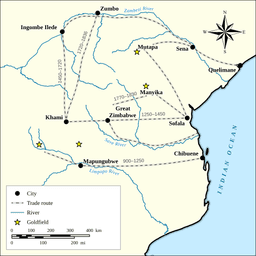
Matope Nyanhehwe expanded the Mutapa Empire to its greatest territorial extent, conquering lands from the Zambezi River to the Indian Ocean. He incorporated the kingdoms of Manyika and Danda.
ExpansionConquestImperial Peak
Impact: regional
1465 AD
Conquest of the Manyika KingdomWar◆ Major
Matope Nyanhehwe defeated the Manyika kingdom, gaining control of gold-producing regions. This conquest boosted Mutapa's wealth and trade with Swahili merchants on the coast.
Gold TradeConquestManyika
Impact: regional
1470 AD
Consolidation of Trade NetworksPolitical Action◆ Major
Matope Nyanhehwe established trade agreements with Swahili city-states, exporting gold, ivory, and slaves in exchange for cloth and beads. This integrated Mutapa into the Indian Ocean trade network.
TradeIndian OceanEconomic Integration
Impact: regionalconstructive
1475 AD
Administrative ReformsReform
Matope Nyanhehwe reorganized the Mutapa administration, appointing provincial governors (makurukota) to oversee conquered territories. This system improved tax collection and imperial control.
AdministrationGovernanceCentralization
Impact: regionalconstructive
Expert Analysis
Origins
Li Ang (809–840), born as Li Han, was the second son of Emperor Muzong of the Tang dynasty. He was installed as emperor in 827 after the death of his brother Emperor Jingzong, who was assassinated by eunuchs. Li Ang grew up in a palace dominated by powerful eunuch factions that controlled appointments and succession. His reign was marked by a weak family background: his father and brother had both been manipulated by eunuchs, leaving him with little independent authority.
Matope Nyanhehwe (c. 1430–1480) was the son of Nyatsimba Mutota, the founder of the Mutapa Empire in present-day Zimbabwe and Mozambique. Matope inherited a growing state centered on the Zimbabwe Plateau. His upbringing involved training in military strategy and governance, as his father had expanded the empire from its core and established tribute relationships with neighboring peoples. Unlike Li Ang, Matope came from a nascent dynasty with expanding power.
Rise to Power
Li Ang ascended the throne at age 18, but real power lay with the eunuch faction led by Wang Shoucheng and later Qiu Shiliang. In 835, Li Ang attempted to break free by plotting the Sweet Dew Incident. He conspired with Chancellor Li Xun and general Zheng Zhu to ambush the eunuchs during a ceremony. The plot failed when eunuchs discovered the ambush, leading to a brutal crackdown: thousands were executed, and Li Ang was placed under virtual house arrest. His score for political skill (35.0) reflects his inability to execute this coup effectively.
Matope Nyanhehwe rose to power upon his father's death around 1450. He quickly consolidated control by launching military campaigns to expand the empire. His first major conquest was the Manyika kingdom in the east, which controlled gold mines. By 1460, Matope had expanded Mutapa to its greatest territorial extent, stretching from the Zambezi River to the Indian Ocean. His military score (63.3) and strategy score (66.3) reflect his effective use of force and diplomacy.
Leadership & Governance
Li Ang's leadership was constrained by eunuch control. After the Sweet Dew Incident, he became a figurehead; eunuchs issued decrees in his name and controlled access to him. He attempted minor reforms, such as reducing taxes and promoting Confucian scholars, but these had limited impact. His governance score (35.0) indicates his inability to implement meaningful change.
Matope Nyanhehwe reorganized the Mutapa administration by appointing provincial governors (makurukota) to oversee conquered territories. This system improved tax collection and loyalty. He established trade agreements with Swahili city-states like Kilwa and Sofala, exporting gold, ivory, and slaves for cloth and beads. His political score (68.0) highlights his effective governance and economic integration.
Triumph & Tragedy
Li Ang's triumph was his attempt to reclaim power, which, though failed, demonstrated resistance. His tragedy was total loss of authority: he died in 840, possibly poisoned by eunuchs, and his death further entrenched eunuch power. His total score of 44.1 reflects a reign of frustration and failure.
Matope's triumph was the expansion of Mutapa to its peak, incorporating gold-rich regions and boosting trade. His tragedy was that his empire was overextended; after his death, succession struggles and revolts weakened it. Nonetheless, his legacy score (45.8) is higher than Li Ang's (35.8) due to lasting territorial and administrative changes.
Character & Destiny
Li Ang was cautious but driven by a desire to restore imperial authority. He was indecisive and relied on untrustworthy allies, leading to the Sweet Dew fiasco. His character—timid yet desperate—led to his downfall. Historical assessments view him as a tragic figure, unable to overcome structural constraints.
Matope was ambitious and strategic, with a clear vision for expansion. He was ruthless in conquest but diplomatic in trade. His personality—assertive and pragmatic—shaped his destiny as a successful empire builder. Historians credit him with creating a stable, prosperous state.
Legacy
Li Ang's legacy is cautionary: his failed coup highlighted the dangers of eunuch power. The Tang dynasty continued its decline, and eunuchs remained dominant until its fall. He is remembered as a weak emperor, with a legacy score of 35.8.
Matope's legacy is more positive. He expanded Mutapa to its greatest extent, and his administrative and trade systems endured for decades. The empire remained a major power in southern Africa until the 17th century. His influence score (53.3) reflects his lasting impact on the region.
Conclusion
Matope Nyanhehwe achieved more significant and lasting impact than Li Ang. With a total score of 53.9 versus Li Ang's 44.1, Matope excelled in military (63.3 vs 51.5), political (68.0 vs 35.0), and influence (53.3 vs 45.5). Li Ang's reign was defined by failure to overcome eunuch control, while Matope actively shaped his empire's destiny. Matope's expansion, administrative reforms, and trade networks created a legacy that outlasted his reign, whereas Li Ang's attempts at reform were crushed and his death only worsened his dynasty's plight. Therefore, Matope Nyanhehwe had greater impact as a ruler.
Rankings
🥇
Matope NyanhehweLeader
Mil: 63.3Pol: 68.0Inf: 53.3
53.9
🥈
Li Ang
Mil: 51.5Pol: 35.0Inf: 45.5
44.1
+9.8 behind
How This Comparison Works
Algorithm
Each figure is scored on 6 dimensions (0—100 scale) based on structured historical data: Military (10%), Political (20%), Influence (20%), Legacy (20%), Leadership (15%), Strategy (15%). The weighted total produces the final ranking.
Data Sources
Scores are computed from structured sub-indicators in the database. Scale factors adjust for era (Ancient ×0.85, Modern ×1.0) and civilization size (Eastern ×1.05, Other ×0.80) to account for differences in population and military scale.
Maximum 3 Figures
Comparisons are limited to 2—3 figures to ensure readability and statistical meaningfulness.
Error Margins
±5 points per dimension — Sub-scores are derived from historical records with inherent uncertainty. Two figures within 5 points on a dimension should be considered roughly equivalent in that area.
Total Score Accuracy
±3 points overall — The weighted combination of 6 dimensions produces a total score with approximately ±3 points of uncertainty. Differences of less than 3 points are not statistically significant— the figures are effectively tied.
Known Limitations
- Historical records are incomplete and uneven across civilizations
- Figures from oral-tradition societies may be underrepresented
- Occupation labels can misclassify multi-role figures
- Scores measure capability and impact, not moral character
- Quantitative scoring is a comparison tool, not absolute truth
Capability Radar
Military (10%) — Battles & Warfare
Battles
42
60
Win Rate
47
65
Expansion
52
75
Political (20%) — Governance & Reform
Reform
5
50
Diplomacy
10
55
Economy
5
50
Influence (20%) — Cultural & Global Reach
Cultural
5
40
Global
5
20
Legacy (20%) — Historical Impact
Historical
10
45
Longevity
5
30
Leadership (15%) — Power & Stability
Tenure
15
60
Stability
5
55
Strategy (15%) — Tactics & Innovation
Strategy
55
70
Tactics
57
55
Reform
62
50
Similar Comparisons
Comments & Discussion
No comments yet. Be the first to share your thoughts!