Loading...
King Jeongjong of Joseon vs Li Ang
Li Ang leads by 7.7 pts · 2 figures compared
…
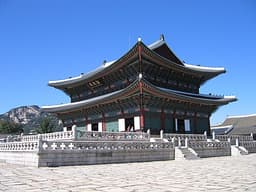
King Jeongjong of Joseon
Emperor · Medieval
36.4Total

Li Ang
Emperor · Medieval
44.1Total
Basic Information
Born
1357
809
Died
1419
840
Era
Medieval
Medieval
Nationality
Korea
China
Occupation
Emperor
Emperor
Civilization
Eastern
Eastern
Score Comparison
Military (10%)
20.0
51.5
Political (20%)
26.4
35.0
Influence (20%)
46.3
45.5
Legacy (20%)
37.5
35.8
Leadership (15%)
33.6
44.5
Strategy (15%)
45.0
67.5
TOTAL
36.4
44.1
King Jeongjong of Joseon — Complete Timeline
1398 AD
Participated in Prince's RebellionWar◆ Major
King Jeongjong (then Prince Yi Bang-gwa) supported his father Yi Seong-gye in suppressing the First Prince's Rebellion, a conflict among Yi's sons over succession. The rebellion resulted in the deaths of several princes and weakened the early Joseon court.
RebellionSuccession ConflictJoseon
Impact: nationaldestructive
Ascended Throne as Second Joseon KingPolitical Action◆ Major
King Jeongjong became the second king of Joseon after his father Yi Seong-gye abdicated following the First Prince's Rebellion. His reign was marked by instability and ongoing power struggles among the royal princes.
SuccessionJoseon DynastyAbdication
Impact: national
1399 AD
Moved Capital to GaegyeongPolitical Action
King Jeongjong moved the Joseon capital from Hanyang (Seoul) back to Gaegyeong (Kaesong), the former Goryeo capital, in an attempt to reduce factional tensions. This move was unpopular and was reversed by his successor.
Capital MovePolitical StrategyJoseon
Impact: national
1400 AD
Abdicated in Favor of Yi Bang-wonPolitical Action◆ Major
King Jeongjong abdicated after only two years on the throne, following the Second Prince's Rebellion. He ceded power to his younger brother Yi Bang-won (later King Taejong), who had emerged victorious in the succession struggle.
AbdicationSuccessionPower Struggle
Impact: national
Li Ang — Complete Timeline
835 AD
Sweet Dew IncidentPolitical Action
Li Ang conspired with Chancellor Li Xun and general Zheng Zhu to massacre the powerful eunuch faction. The plot failed when eunuchs discovered the ambush. They retaliated by killing many officials and placing Li Ang under effective house arrest.
Sweet Dew IncidentEunuch PowerFailed Coup
Impact: nationaldestructive
Eunuch Domination of the CourtPolitical Action◆ Major
After the Sweet Dew Incident, the eunuch faction led by Qiu Shiliang gained complete control over the imperial court. They controlled the emperor's communications, appointed officials, and even decided succession, reducing Li Ang to a figurehead.
Eunuch PowerCourt PoliticsDecadence
Impact: nationaldestructive
840 AD
Death of Li AngOther
Li Ang died in 840, possibly poisoned by eunuchs. His reign was marked by his inability to govern independently, and his death further entrenched eunuch control over the Tang court.
DeathEunuch PowerWeak Emperor
Impact: nationaltragic
Expert Analysis
Origins
King Jeongjong of Joseon (born 1357) was the second son of Yi Seong-gye, the founder of the Joseon dynasty. His early life was shaped by the turbulent transition from Goryeo to Joseon. He received a Confucian education and served as a prince during his father's campaigns. His background was deeply rooted in the military aristocracy of late Goryeo.
Li Ang (born 809) was the eldest son of Emperor Muzong of Tang China. He grew up in the imperial palace, surrounded by eunuch influence and court intrigue. His education was typical for a Tang prince, but he lacked military experience. His early life was marked by the dominance of eunuch factions that had controlled the Tang court for decades.
Rise to Power
Jeongjong rose to power primarily through his father's abdication in 1398 after the First Prince's Rebellion. His older brother Yi Bang-seok was killed in the conflict, and Jeongjong, as the eldest surviving son, was appointed crown prince and ascended the throne later that year. His rise was not due to personal ambition but to the violent power struggles among his brothers.
Li Ang became emperor in 827 after his father Muzong died, likely from elixir poisoning. He was the fifth son, but his older brothers died young or were passed over. His accession was orchestrated by eunuch officials who controlled the succession. Unlike Jeongjong, Li Ang did not have to fight for the throne; he was a pawn of the eunuchs from the start.
Leadership & Governance
Jeongjong's governance was marked by an attempt to stabilize the new dynasty. He moved the capital from Hanyang (Seoul) back to Gaegyeong (Kaesong) to reduce factional tensions. However, his reign lasted only two years (1398-1400). He lacked the political will to assert authority, scoring only 26.4 in political skill. His leadership score of 33.6 reflects his passive style; he often deferred to his younger brother Yi Bang-won, who was more decisive.
Li Ang, despite scoring higher in leadership (44.5) and strategy (67.5), was also powerless against eunuchs. He attempted to regain control through the Sweet Dew Incident in 835, a plot to massacre eunuch leaders. The plan failed, and eunuchs retaliated by killing many officials and placing Li Ang under virtual house arrest. His political score of 35.0 shows his inability to govern effectively, though he tried more actively than Jeongjong.
Triumph & Tragedy
Jeongjong's greatest success was maintaining peace during a turbulent transition. He abdicated peacefully in 1400, preventing further bloodshed among his brothers. His tragedy was his lack of agency; he was a king in name only, overshadowed by his father and brother. His total score of 36.4 reflects his minimal impact.
Li Ang's greatest attempt was the Sweet Dew Incident, showing his desire to free the court from eunuch control. However, its failure was his tragedy: it led to tighter eunuch domination and his own death in 840, possibly poisoned. His total score of 44.1 is higher than Jeongjong's, but his legacy is one of failure to achieve meaningful reform.
Character & Destiny
Jeongjong was cautious and conciliatory. He chose abdication over conflict, a decision that preserved his life but erased his historical significance. His character was shaped by the violent fraternal strife of his family; he sought to avoid becoming a victim.
Li Ang was idealistic but reckless. He trusted unreliable allies (Li Xun and Zheng Zhu) and failed to secure military support. His character was marked by frustration and desperation, leading to a poorly planned coup. Historians note that his strategy score (67.5) was not matched by execution.
Legacy
Jeongjong's legacy is minimal. He is often forgotten in Korean history, overshadowed by his father Yi Seong-gye and his brother King Taejong. His brief reign did not establish any lasting reforms or institutions. His legacy score is 37.5.
Li Ang's legacy is as a cautionary tale of imperial impotence. The Sweet Dew Incident is remembered as a failed attempt to curb eunuch power, which only strengthened it. His reign accelerated the decline of the Tang dynasty. His legacy score of 35.8 is slightly lower than Jeongjong's, but his historical impact is more notable due to the dramatic incident.
Conclusion
Li Ang had a greater impact than King Jeongjong, despite his failure. His total score of 44.1 versus Jeongjong's 36.4 reflects his higher strategic ability and the significance of his attempted coup. While Jeongjong's abdication was a peaceful act, it had no lasting consequences. Li Ang's failed Sweet Dew Incident epitomized the eunuch problem that plagued late Tang, making him a more instructive figure in medieval Asian history. Therefore, Li Ang holds greater historical importance.
Rankings
🥇
Li AngLeader
Mil: 51.5Pol: 35.0Inf: 45.5
44.1
🥈
King Jeongjong of Joseon
Mil: 20.0Pol: 26.4Inf: 46.3
36.4
+7.7 behind
How This Comparison Works
Algorithm
Each figure is scored on 6 dimensions (0—100 scale) based on structured historical data: Military (10%), Political (20%), Influence (20%), Legacy (20%), Leadership (15%), Strategy (15%). The weighted total produces the final ranking.
Data Sources
Scores are computed from structured sub-indicators in the database. Scale factors adjust for era (Ancient ×0.85, Modern ×1.0) and civilization size (Eastern ×1.05, Other ×0.80) to account for differences in population and military scale.
Maximum 3 Figures
Comparisons are limited to 2—3 figures to ensure readability and statistical meaningfulness.
Error Margins
±5 points per dimension — Sub-scores are derived from historical records with inherent uncertainty. Two figures within 5 points on a dimension should be considered roughly equivalent in that area.
Total Score Accuracy
±3 points overall — The weighted combination of 6 dimensions produces a total score with approximately ±3 points of uncertainty. Differences of less than 3 points are not statistically significant— the figures are effectively tied.
Known Limitations
- Historical records are incomplete and uneven across civilizations
- Figures from oral-tradition societies may be underrepresented
- Occupation labels can misclassify multi-role figures
- Scores measure capability and impact, not moral character
- Quantitative scoring is a comparison tool, not absolute truth
Capability Radar
Military (10%) — Battles & Warfare
Battles
5
42
Win Rate
5
47
Expansion
5
52
Political (20%) — Governance & Reform
Reform
15
5
Diplomacy
20
10
Economy
15
5
Influence (20%) — Cultural & Global Reach
Cultural
10
5
Global
5
5
Legacy (20%) — Historical Impact
Historical
15
10
Longevity
10
5
Leadership (15%) — Power & Stability
Tenure
20
15
Stability
10
5
Strategy (15%) — Tactics & Innovation
Strategy
5
55
Tactics
5
57
Reform
5
62
Similar Comparisons
Comments & Discussion
No comments yet. Be the first to share your thoughts!