Loading...
This comparison has not been analyzed yet.
One-time AI generation (~1 minute). Scores and timeline are already available below.
Jochi vs Wenceslaus I of Luxembourg
Jochi leads by 2.8 pts · 2 figures compared
…
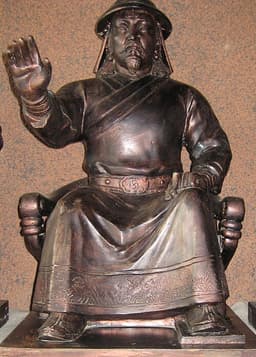
Jochi
Emperor · Medieval
49.1Total
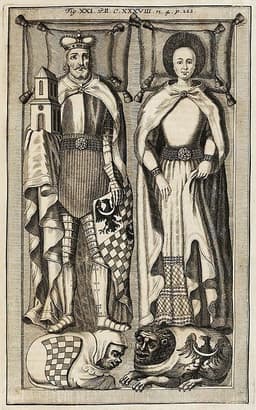
Wenceslaus I of Luxembourg
Emperor · Medieval
46.3Total
Basic Information
Born
1182
1337
Died
1227
1383
Era
Medieval
Medieval
Nationality
Mongol Empire
Luxembourg
Occupation
Emperor
Emperor
Civilization
Eastern
Western
Score Comparison
Military (10%)
40.0
50.0
Political (20%)
29.3
35.1
Influence (20%)
58.0
52.5
Legacy (20%)
54.0
42.5
Leadership (15%)
45.0
55.3
Strategy (15%)
60.0
39.6
TOTAL
49.1
46.3
Jochi — Complete Timeline
1219 AD
Participation in the Conquest of KhwarezmWar◆ Major
Jochi commanded a Mongol army during the invasion of the Khwarezmian Empire. He led campaigns in the northern regions, capturing cities such as Jand and Yangikent, and securing the Syr Darya basin for the Mongols.
Mongol ConquestKhwarezm
Impact: regional
1225 AD
Dispute over SuccessionPolitical Action◆ Major
Jochi's legitimacy as Genghis Khan's eldest son was questioned by his brothers, particularly Chagatai. This dispute led to Jochi being passed over for succession, with Ogedei chosen as Great Khan instead, fueling tensions.
Mongol SuccessionFamily Feud
Impact: globaldestructive
1227 AD
Appointed as Ruler of the Jochi UlusPolitical Action◆ Major
After Genghis Khan's death, Jochi's sons inherited his territories in the western Mongol Empire, forming the Jochi Ulus, which later became the Golden Horde. Jochi himself died before Genghis, so his sons ruled in his stead.
Mongol EmpireGolden HordeSuccession
Impact: regional
Wenceslaus I of Luxembourg — Complete Timeline
1354 AD
Elevation of Luxembourg to DuchyPolitical Action◆ Major
Wenceslaus I, through his marriage to Joanna of Brabant and his family's influence, secured the elevation of the County of Luxembourg to a Duchy by Holy Roman Emperor Charles IV. This increased Luxembourg's status and Wenceslaus's prestige.
Territorial ElevationLuxembourgHoly Roman Empire
Impact: regionalconstructive
1356 AD
War of the Brabant SuccessionWar◆ Major
Wenceslaus I, as Duke of Brabant through his wife Joanna, fought against Louis of Male, Count of Flanders, who claimed Brabant. The war ended with the Treaty of Ath in 1357, which confirmed Wenceslaus's rule but ceded some territories.
WarBrabantFlanders
Impact: regional
1370 AD
Patronage of Literature and the ArtsCultural
Wenceslaus I was a noted poet and patron of the arts, commissioning works such as the 'Roman de la Rose' and supporting the development of courtly literature in Luxembourg and Brabant. His court became a center of cultural activity.
PatronageLiteratureMedieval Culture
Impact: regionalconstructive
This comparison has not been analyzed yet.
One-time AI generation (~1 minute). Scores and timeline are already available below.
Rankings
🥇
JochiLeader
Mil: 40.0Pol: 29.3Inf: 58.0
49.1
🥈
Wenceslaus I of Luxembourg
Mil: 50.0Pol: 35.1Inf: 52.5
46.3
+2.8 behind
How This Comparison Works
Algorithm
Each figure is scored on 6 dimensions (0—100 scale) based on structured historical data: Military (10%), Political (20%), Influence (20%), Legacy (20%), Leadership (15%), Strategy (15%). The weighted total produces the final ranking.
Data Sources
Scores are computed from structured sub-indicators in the database. Scale factors adjust for era (Ancient ×0.85, Modern ×1.0) and civilization size (Eastern ×1.05, Other ×0.80) to account for differences in population and military scale.
Maximum 3 Figures
Comparisons are limited to 2—3 figures to ensure readability and statistical meaningfulness.
Error Margins
±5 points per dimension — Sub-scores are derived from historical records with inherent uncertainty. Two figures within 5 points on a dimension should be considered roughly equivalent in that area.
Total Score Accuracy
±3 points overall — The weighted combination of 6 dimensions produces a total score with approximately ±3 points of uncertainty. Differences of less than 3 points are not statistically significant— the figures are effectively tied.
Known Limitations
- Historical records are incomplete and uneven across civilizations
- Figures from oral-tradition societies may be underrepresented
- Occupation labels can misclassify multi-role figures
- Scores measure capability and impact, not moral character
- Quantitative scoring is a comparison tool, not absolute truth
Capability Radar
Military (10%) — Battles & Warfare
Battles
40
15
Win Rate
45
15
Expansion
50
20
Political (20%) — Governance & Reform
Reform
15
25
Diplomacy
35
35
Economy
20
30
Influence (20%) — Cultural & Global Reach
Cultural
40
35
Global
50
20
Legacy (20%) — Historical Impact
Historical
55
30
Longevity
60
25
Leadership (15%) — Power & Stability
Tenure
30
40
Stability
25
30
Strategy (15%) — Tactics & Innovation
Strategy
40
10
Tactics
35
10
Reform
20
5
Similar Comparisons
Comments & Discussion
No comments yet. Be the first to share your thoughts!