Loading...
This comparison has not been analyzed yet.
One-time AI generation (~1 minute). Scores and timeline are already available below.
Leopold II of Belgium vs Pratap Singh of Jaipur
Leopold II of Belgium leads by 1.2 pts · 2 figures compared
…
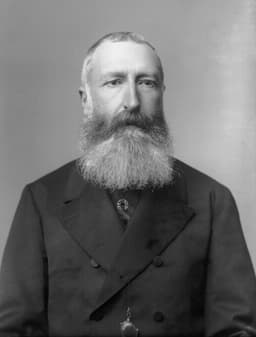
Leopold II of Belgium
Emperor · Modern
50.0Total

Pratap Singh of Jaipur
Emperor · Modern
48.8Total
Basic Information
Born
1835
1764
Died
1909
1803
Era
Modern
Modern
Nationality
Belgium
India
Occupation
Emperor
Emperor
Civilization
Western
Indian
Score Comparison
Military (10%)
35.0
50.0
Political (20%)
45.1
54.7
Influence (20%)
54.1
51.0
Legacy (20%)
45.8
39.2
Leadership (15%)
72.0
67.0
Strategy (15%)
39.6
30.3
TOTAL
50.0
48.8
Leopold II of Belgium — Complete Timeline
1885 AD
Creation of the Congo Free StatePolitical Action
Leopold II established the Congo Free State as his personal colony at the Berlin Conference. He gained international recognition for his claim to the Congo Basin, ruling it as private property rather than a Belgian colony.
ColonialismCongoExploitation
Impact: globaldestructive
1890 AD
Congo Free State AtrocitiesOther
Leopold II's regime in the Congo Free State enforced rubber quotas through forced labor, mutilation, and murder. Millions of Congolese died from violence, disease, and starvation between 1885 and 1908.
AtrocitiesHuman RightsColonialism
Impact: globaltragic
1897 AD
Architectural Projects in BelgiumCultural
Leopold II commissioned grand buildings in Brussels, including the Cinquantenaire Arcades, the Royal Museum for Central Africa, and the Mont des Arts. These projects aimed to glorify his reign and colonial achievements.
ArchitecturePatronageLegacy
1900 AD
International Campaign Against Congo AbusesPolitical Action◆ Major
Edmund Dene Morel and Roger Casement launched a campaign exposing Congo atrocities. The Congo Reform Association pressured governments, leading to international condemnation of Leopold II's rule.
ReformHuman RightsActivism
Impact: globalprogressive
1908 AD
Annexation of Congo by BelgiumPolitical Action◆ Major
Under international pressure, Leopold II ceded the Congo Free State to Belgium. It became the Belgian Congo, a colony governed by the Belgian state, ending Leopold's personal rule but continuing colonial exploitation.
ColonialismTransferBelgium
Impact: global
Pratap Singh of Jaipur — Complete Timeline
1778 AD
Accession to the Throne of JaipurPolitical Action◆ Major
Pratap Singh became Maharaja of Jaipur after the death of his father, Madho Singh I. His reign was marked by the declining power of the Mughal Empire and the rising influence of the British East India Company.
SuccessionJaipurBritish Era
Impact: regional
1790 AD
Conflict with the MarathasWar
Pratap Singh engaged in military conflicts with the Maratha Empire, which sought to expand its influence into Rajputana. Jaipur faced Maratha invasions and was forced to pay tribute, weakening the state's finances and autonomy.
Maratha ConflictWarTribute
Impact: regional
1803 AD
Treaty with the British East India CompanyPolitical Action◆ Major
Pratap Singh signed a subsidiary alliance treaty with the British East India Company, accepting British protection and agreeing to pay tribute. This treaty made Jaipur a princely state under British suzerainty, limiting its sovereignty.
TreatyBritish AlliancePrincely State
Impact: regional
This comparison has not been analyzed yet.
One-time AI generation (~1 minute). Scores and timeline are already available below.
Rankings
🥇
Leopold II of BelgiumLeader
Mil: 35.0Pol: 45.1Inf: 54.1
50.0
🥈
Pratap Singh of Jaipur
Mil: 50.0Pol: 54.7Inf: 51.0
48.8
+1.2 behind
How This Comparison Works
Algorithm
Each figure is scored on 6 dimensions (0—100 scale) based on structured historical data: Military (10%), Political (20%), Influence (20%), Legacy (20%), Leadership (15%), Strategy (15%). The weighted total produces the final ranking.
Data Sources
Scores are computed from structured sub-indicators in the database. Scale factors adjust for era (Ancient ×0.85, Modern ×1.0) and civilization size (Eastern ×1.05, Other ×0.80) to account for differences in population and military scale.
Maximum 3 Figures
Comparisons are limited to 2—3 figures to ensure readability and statistical meaningfulness.
Error Margins
±5 points per dimension — Sub-scores are derived from historical records with inherent uncertainty. Two figures within 5 points on a dimension should be considered roughly equivalent in that area.
Total Score Accuracy
±3 points overall — The weighted combination of 6 dimensions produces a total score with approximately ±3 points of uncertainty. Differences of less than 3 points are not statistically significant— the figures are effectively tied.
Known Limitations
- Historical records are incomplete and uneven across civilizations
- Figures from oral-tradition societies may be underrepresented
- Occupation labels can misclassify multi-role figures
- Scores measure capability and impact, not moral character
- Quantitative scoring is a comparison tool, not absolute truth
Capability Radar
Military (10%) — Battles & Warfare
Battles
10
20
Win Rate
10
15
Expansion
60
10
Political (20%) — Governance & Reform
Reform
10
30
Diplomacy
40
45
Economy
30
35
Influence (20%) — Cultural & Global Reach
Cultural
15
25
Global
50
10
Legacy (20%) — Historical Impact
Historical
55
20
Longevity
20
15
Leadership (15%) — Power & Stability
Tenure
70
40
Stability
10
30
Strategy (15%) — Tactics & Innovation
Strategy
15
20
Tactics
5
25
Reform
5
10
Similar Comparisons
Comments & Discussion
No comments yet. Be the first to share your thoughts!