Loading...
Charles II of England vs Leopold II of Belgium
Charles II of England leads by 2.7 pts · 2 figures compared
…
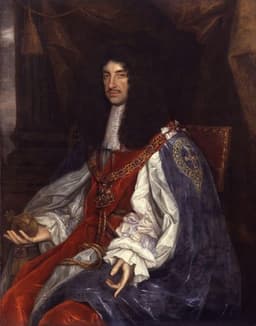
Charles II of England
Emperor · Modern
52.7Total
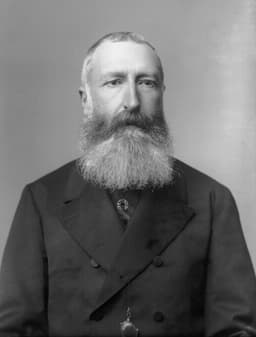
Leopold II of Belgium
Emperor · Modern
50.0Total
Basic Information
Born
1630
1835
Died
1685
1909
Era
Modern
Modern
Nationality
England
Belgium
Occupation
Emperor
Emperor
Civilization
Western
Western
Score Comparison
Military (10%)
10.2
35.0
Political (20%)
60.0
45.1
Influence (20%)
62.0
54.1
Legacy (20%)
52.0
45.8
Leadership (15%)
68.0
72.0
Strategy (15%)
39.6
39.6
TOTAL
52.7
50.0
Charles II of England — Complete Timeline
1660 AD
Restoration of the MonarchyPolitical Action
Charles II was invited back to England by Parliament, restoring the monarchy after the death of Oliver Cromwell. The Declaration of Breda promised amnesty and religious tolerance, leading to a peaceful transition and the end of the Commonwealth.
RestorationMonarchyCommonwealth
Impact: nationalconstructive
1666 AD
Great Fire of LondonOther◆ Major
A massive fire destroyed much of London, including St. Paul's Cathedral and thousands of homes. Charles II oversaw the rebuilding efforts, appointing Christopher Wren to redesign the city, which modernized London's architecture.
DisasterRebuildingLondon
Impact: nationaltragic
1670 AD
Secret Treaty of DoverPolitical Action◆ Major
Charles II signed the Secret Treaty of Dover with Louis XIV of France, agreeing to convert to Catholicism and support French wars in exchange for subsidies. This secret pact undermined English Protestant interests and sparked political controversy.
TreatyCatholicismFrance
Impact: regional
1673 AD
Test Act of 1673Reform
Parliament passed the Test Act, requiring all officeholders to receive Anglican communion and renounce transubstantiation. Charles II reluctantly accepted it, which excluded Catholics from public office and deepened religious divisions.
Religious LegislationAnglicanismCatholic Exclusion
Impact: national
1678 AD
Popish PlotPolitical Action◆ Major
Titus Oates fabricated a conspiracy alleging a Catholic plot to assassinate Charles II and install his Catholic brother James. The resulting hysteria led to the execution of innocent Catholics and a political crisis, though Charles remained skeptical.
ConspiracyAnti-CatholicismPolitical Crisis
Impact: nationaldestructive
Leopold II of Belgium — Complete Timeline
1885 AD
Creation of the Congo Free StatePolitical Action
Leopold II established the Congo Free State as his personal colony at the Berlin Conference. He gained international recognition for his claim to the Congo Basin, ruling it as private property rather than a Belgian colony.
ColonialismCongoExploitation
Impact: globaldestructive
1890 AD
Congo Free State AtrocitiesOther
Leopold II's regime in the Congo Free State enforced rubber quotas through forced labor, mutilation, and murder. Millions of Congolese died from violence, disease, and starvation between 1885 and 1908.
AtrocitiesHuman RightsColonialism
Impact: globaltragic
1897 AD
Architectural Projects in BelgiumCultural
Leopold II commissioned grand buildings in Brussels, including the Cinquantenaire Arcades, the Royal Museum for Central Africa, and the Mont des Arts. These projects aimed to glorify his reign and colonial achievements.
ArchitecturePatronageLegacy
1900 AD
International Campaign Against Congo AbusesPolitical Action◆ Major
Edmund Dene Morel and Roger Casement launched a campaign exposing Congo atrocities. The Congo Reform Association pressured governments, leading to international condemnation of Leopold II's rule.
ReformHuman RightsActivism
Impact: globalprogressive
1908 AD
Annexation of Congo by BelgiumPolitical Action◆ Major
Under international pressure, Leopold II ceded the Congo Free State to Belgium. It became the Belgian Congo, a colony governed by the Belgian state, ending Leopold's personal rule but continuing colonial exploitation.
ColonialismTransferBelgium
Impact: global
Expert Analysis
Origins
Charles II of England was born on May 29, 1630, to King Charles I and Henrietta Maria of France. His early life was marked by the English Civil War; he fled to France after his father's execution in 1649. He spent years in exile, relying on European courts for support. Leopold II of Belgium was born on April 9, 1835, to King Leopold I and Louise of Orléans. He inherited a small, neutral kingdom and was educated in military and political affairs. From a young age, Leopold coveted overseas colonies, frustrated by Belgium's lack of imperial power.
Rise to Power
Charles II's path to power was the Restoration of 1660. After Oliver Cromwell's death, the Protectorate collapsed. General George Monck invited Charles back, and the Declaration of Breda promised amnesty and religious tolerance. He entered London on May 29, 1660, his 30th birthday, and was crowned on April 23, 1661. Leopold II became king on December 17, 1865, upon his father's death. He immediately sought to expand Belgian influence, but the government opposed colonial ventures. Undeterred, he used the 1876 Brussels Conference to pose as a philanthropist, then employed Henry Morton Stanley to sign treaties with Congolese chiefs. At the Berlin Conference (1884-85), he secured recognition of the Congo Free State as his personal property.
Leadership & Governance
Charles II's leadership was pragmatic and conciliatory. He restored the monarchy with the Cavalier Parliament, which reversed many Puritan laws. He supported the Royal Society and the arts, earning the nickname "Merry Monarch." However, his Secret Treaty of Dover (1670) with Louis XIV promised conversion to Catholicism for French subsidies, a risky move that undermined trust. He ruled with a light touch, avoiding major conflicts. Leopold II governed the Congo Free State as a brutal autocrat. He created a system of forced labor for rubber extraction, enforced by the Force Publique. Villages that failed quotas were razed, and workers had hands cut off as punishment. His governance scored 72.0 in leadership, reflecting his ruthless efficiency, but his political score was 45.1 due to international condemnation.
Triumph & Tragedy
Charles II's greatest triumph was the Restoration itself, which ended a decade of republican rule and brought stability. He oversaw the rebuilding of London after the Great Fire of 1666, appointing Christopher Wren to design new churches. His greatest failure was the Popish Plot (1678-81), a fabricated conspiracy that led to anti-Catholic hysteria and execution of innocents. He failed to secure a legitimate heir, leaving the throne to his Catholic brother James, which led to the Glorious Revolution. Leopold II's triumph was the creation of the Congo Free State, a vast territory that enriched him personally. He funded grand architectural projects in Brussels, like the Cinquantenaire Arcades. His tragedy was the Congo atrocities: between 5 and 10 million Congolese died from violence, disease, and famine. The international campaign led by Edmund Morel forced him to cede the colony to Belgium in 1908.
Character & Destiny
Charles II was charming, intelligent, and lazy. He avoided conflict, preferring negotiation and duplicity. His character shaped his fate: he survived political crises by compromising, but his lack of direct action allowed problems to fester. Historians rate his political skill at 60.0. Leopold II was ambitious, manipulative, and ruthless. He saw the Congo as a personal asset, using propaganda to hide his crimes. His character led to his downfall: the atrocities became undeniable, and he died in 1909 a reviled figure. His influence score of 54.1 reflects his impact, but his legacy is overwhelmingly negative.
Legacy
Charles II's legacy is the restored monarchy and the cultural flourishing of the Restoration. His reign saw the birth of the Royal Society and the rise of modern science. He is remembered as the "Merry Monarch," though his political legacy is mixed. His total score is 52.7. Leopold II's legacy is one of colonial exploitation and genocide. The Congo Free State's atrocities became a symbol of imperial greed. He scored 50.0 overall, but his impact on the Congo is catastrophic. His monuments in Belgium are now contested, and his name is synonymous with cruelty.
Conclusion
Charles II had a greater overall impact because he restored a stable monarchy and fostered cultural progress, while Leopold II's impact was destructive and short-lived. Though Leopold scored higher in leadership (72.0 vs. 68.0), Charles's political and influence scores (60.0 and 62.0) outweigh Leopold's (45.1 and 54.1). Charles's legacy is one of rebuilding and renewal; Leopold's is one of ruin. The score gap of 2.7 points reflects this: Charles's total of 52.7 surpasses Leopold's 50.0. In the balance of history, Charles II's restoration of the British monarchy and his patronage of science left a more enduring positive mark than Leopold's brutal colonial enterprise.
Rankings
🥇
Charles II of EnglandLeader
Mil: 10.2Pol: 60.0Inf: 62.0
52.7
🥈
Leopold II of Belgium
Mil: 35.0Pol: 45.1Inf: 54.1
50.0
+2.7 behind
How This Comparison Works
Algorithm
Each figure is scored on 6 dimensions (0—100 scale) based on structured historical data: Military (10%), Political (20%), Influence (20%), Legacy (20%), Leadership (15%), Strategy (15%). The weighted total produces the final ranking.
Data Sources
Scores are computed from structured sub-indicators in the database. Scale factors adjust for era (Ancient ×0.85, Modern ×1.0) and civilization size (Eastern ×1.05, Other ×0.80) to account for differences in population and military scale.
Maximum 3 Figures
Comparisons are limited to 2—3 figures to ensure readability and statistical meaningfulness.
Error Margins
±5 points per dimension — Sub-scores are derived from historical records with inherent uncertainty. Two figures within 5 points on a dimension should be considered roughly equivalent in that area.
Total Score Accuracy
±3 points overall — The weighted combination of 6 dimensions produces a total score with approximately ±3 points of uncertainty. Differences of less than 3 points are not statistically significant— the figures are effectively tied.
Known Limitations
- Historical records are incomplete and uneven across civilizations
- Figures from oral-tradition societies may be underrepresented
- Occupation labels can misclassify multi-role figures
- Scores measure capability and impact, not moral character
- Quantitative scoring is a comparison tool, not absolute truth
Capability Radar
Military (10%) — Battles & Warfare
Battles
10
10
Win Rate
10
10
Expansion
5
60
Political (20%) — Governance & Reform
Reform
60
10
Diplomacy
65
40
Economy
55
30
Influence (20%) — Cultural & Global Reach
Cultural
60
15
Global
50
50
Legacy (20%) — Historical Impact
Historical
65
55
Longevity
55
20
Leadership (15%) — Power & Stability
Tenure
55
70
Stability
50
10
Strategy (15%) — Tactics & Innovation
Strategy
5
15
Tactics
5
5
Reform
15
5
Similar Comparisons
Comments & Discussion
No comments yet. Be the first to share your thoughts!