Loading...
Leopold II of Belgium vs Napoleon Bonaparte
Napoleon Bonaparte leads by 20.9 pts · 2 figures compared
…
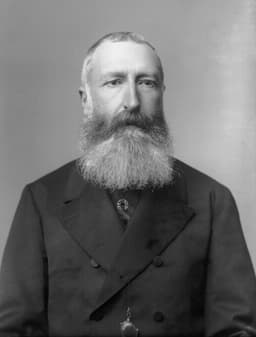
Leopold II of Belgium
Emperor · Modern
50.0Total

Napoleon Bonaparte
General · Modern
70.9Total
Basic Information
Born
1835
1769
Died
1909
1821
Era
Modern
Modern
Nationality
Belgium
France
Occupation
Emperor
General
Civilization
Western
Western
Score Comparison
Military (10%)
35.0
94.0
Political (20%)
45.1
72.0
Influence (20%)
54.1
40.0
Legacy (20%)
45.8
80.0
Leadership (15%)
72.0
78.0
Strategy (15%)
39.6
90.0
TOTAL
50.0
70.9
Leopold II of Belgium — Complete Timeline
1885 AD
Creation of the Congo Free StatePolitical Action
Leopold II established the Congo Free State as his personal colony at the Berlin Conference. He gained international recognition for his claim to the Congo Basin, ruling it as private property rather than a Belgian colony.
ColonialismCongoExploitation
Impact: globaldestructive
1890 AD
Congo Free State AtrocitiesOther
Leopold II's regime in the Congo Free State enforced rubber quotas through forced labor, mutilation, and murder. Millions of Congolese died from violence, disease, and starvation between 1885 and 1908.
AtrocitiesHuman RightsColonialism
Impact: globaltragic
1897 AD
Architectural Projects in BelgiumCultural
Leopold II commissioned grand buildings in Brussels, including the Cinquantenaire Arcades, the Royal Museum for Central Africa, and the Mont des Arts. These projects aimed to glorify his reign and colonial achievements.
ArchitecturePatronageLegacy
1900 AD
International Campaign Against Congo AbusesPolitical Action◆ Major
Edmund Dene Morel and Roger Casement launched a campaign exposing Congo atrocities. The Congo Reform Association pressured governments, leading to international condemnation of Leopold II's rule.
ReformHuman RightsActivism
Impact: globalprogressive
1908 AD
Annexation of Congo by BelgiumPolitical Action◆ Major
Under international pressure, Leopold II ceded the Congo Free State to Belgium. It became the Belgian Congo, a colony governed by the Belgian state, ending Leopold's personal rule but continuing colonial exploitation.
ColonialismTransferBelgium
Impact: global
Napoleon Bonaparte — Complete Timeline
1799 AD
Coup of 18 BrumaireOther◆ Major
Napoleon Bonaparte, with support from his brother Lucien and key political figures, overthrew the Directory in a bloodless coup. He established the Consulate with himself as First Consul, effectively becoming the ruler of France. This event ended the French Revolution's most unstable period.
French RevolutionCoupRise to Power
Impact: regional
1804 AD
Promulgation of the Napoleonic CodeOther◆ Major
Napoleon enacted the Civil Code of the French, known as the Napoleonic Code, a comprehensive set of laws that replaced the fragmented feudal legal systems. The code established legal equality, protected property rights, and secularized law. It became the basis for legal systems in many European and world countries.
Legal ReformNapoleonic CodeCivil Law
Impact: globalconstructive
1805 AD
Battle of AusterlitzWar◆ Major
Napoleon's Grande Arm
Napoleonic WarsBattleDecisive Victory
Impact: global
1812 AD
Invasion of RussiaWar◆ Major
Napoleon led the Grande Arm
Napoleonic WarsInvasionDisaster
Impact: globaldestructive
1815 AD
Battle of WaterlooWar◆ Major
Napoleon's French army was defeated by the combined forces of the Duke of Wellington's Anglo-Allied army and Gebhard Leberecht von Bl
Napoleonic WarsBattleFinal Defeat
Impact: globaldestructive
Expert Analysis
leopold-ii-of-belgium-vs-napoleon-bonaparte
# The Emperor and the King: Two Faces of European Ambition
On a June evening in 1815, Napoleon Bonaparte stood on a ridge near Waterloo, watching his Imperial Guard march into the muzzles of British cannon. Less than a century later, in 1908, another European monarch—Leopold II of Belgium—surrendered not a battle but a colony, signing away the Congo Free State under a storm of international outrage. Both men sought to reshape the world in their image. One conquered armies; the other enslaved a continent. Their stories, separated by decades, reveal how ambition, when unchecked by morality, can produce either glory or infamy—and how history judges each with a different scale.
Origins
Napoleon was born in 1769 on Corsica, an island recently annexed by France. His family was minor nobility, impoverished and resentful of French rule. Yet young Napoleon absorbed the Enlightenment ideals of Rousseau and Voltaire, and when the French Revolution erupted in 1789, he saw opportunity. The revolution had shattered the old aristocratic order, opening military command to talent over birth. Napoleon, short, intense, and fiercely intelligent, was perfectly shaped by his era—a child of revolution who would become its most brilliant general.
Leopold II, born in 1835, was the opposite: a prince of the House of Saxe-Coburg and Gotha, heir to a small, neutral kingdom. Belgium itself was barely five years old when he was born, a patchwork of French and Dutch speakers stitched together by European diplomacy. Leopold grew up in the gilded cages of royal palaces, tutored in statecraft but never in war. His era was the age of empire, when European powers carved up Africa and Asia with little regard for native peoples. Leopold watched Britain, France, and Germany build overseas empires and grew consumed by a single desire: to have one of his own.
Rise to Power
Napoleon’s ascent was a series of lightning strikes. At 24, he captured Toulon from British forces. At 26, he crushed a royalist uprising in Paris with a “whiff of grapeshot.” By 1796, he commanded the Army of Italy, where his speed and audacity stunned the Austrians. In 1799, he seized power in a coup, becoming First Consul. Five years later, he crowned himself Emperor. His path was forged by genius, luck, and the chaos of revolution—a world where a Corsican outsider could become master of Europe.
Leopold’s rise was quieter but no less calculating. He became King of the Belgians in 1865, but his kingdom was hemmed in by powerful neighbors. Frustrated, he turned his gaze to Africa. In 1876, he convened the Brussels Geographic Conference, posing as a philanthropist eager to “civilize” the Congo. He hired the explorer Henry Morton Stanley to carve a path through the jungle. At the Berlin Conference of 1885, Leopold charmed and deceived the great powers into recognizing the Congo Free State as his personal property—not a colony, but a private fiefdom. He had become an emperor without a crown.
Leadership & Governance
Napoleon ruled with a blend of iron will and revolutionary reform. He centralized the French state, created the Napoleonic Code—a legal framework that influenced civil law across Europe—and established the Bank of France. On the battlefield, his genius was unmatched: he won sixty battles, from Austerlitz in 1805 to Jena in 1806, by maneuvering armies with speed and striking at enemy weak points. His political wisdom, however, faltered. He placed family members on European thrones, alienated allies, and invaded Russia in 1812—a catastrophic overreach that cost half a million men.
Leopold governed the Congo as a business enterprise. He built railways, extracted ivory, and then rubber, which became the colony’s lifeblood. But his system was brutal. To meet rubber quotas, Congolese villagers were forced into labor; those who failed were mutilated—hands cut off—or killed. Leopold’s administration was a machine of terror, run by mercenaries and company agents. Unlike Napoleon, he never led troops in battle. His “military” score of 34.7 reflects not cowardice but irrelevance: he waged war not on armies, but on defenseless people.
Triumph & Tragedy
Napoleon’s greatest triumph was Austerlitz, where he crushed the combined Russian and Austrian armies in December 1805. His greatest tragedy was the Russian campaign, followed by exile to Elba, a brief return in 1815, and final defeat at Waterloo. He died in 1821 on Saint Helena, a prisoner of the British.
Leopold’s triumph was the Congo itself—a territory eighty times the size of Belgium, from which he extracted immense wealth. His tragedy was the human cost: by some estimates, ten million Congolese died from murder, starvation, and disease during his rule. The international campaign led by Edmund Dene Morel and Roger Casement forced him to cede the colony to Belgium in 1908. He died the next year, 1909, reviled abroad but still honored at home.
Character & Destiny
Napoleon was driven by ambition and a belief in his own destiny. “I am not a man, but a thing,” he once said. He saw himself as a force of history, and his decisions—brilliant or disastrous—flowed from that conviction. His personality shaped his fate: his arrogance led to overreach, but his genius created a legend.
Leopold was driven by greed and a cold, calculating pragmatism. He saw the Congo not as a nation but as a resource. His personality—secretive, ruthless, detached—allowed him to ignore suffering on a scale that still shocks the conscience. His destiny was to be remembered not as a builder, but as a butcher.
Legacy
Napoleon’s legacy is complex. He is remembered as a military genius, a reformer, and a tyrant. His Napoleonic Code survives in legal systems worldwide. His influence score of 82.0 reflects his lasting impact on European borders, law, and nationalism. Yet his legacy is also one of war and destruction.
Leopold’s legacy is almost entirely negative. His influence score of 74.8 masks a dark truth: he is a symbol of colonial brutality. In Belgium, statues of him have been vandalized; in the Congo, his name is a curse. His “legacy” score of 63.0 is generous, for history has judged him harshly—and rightly so.
Conclusion
Napoleon and Leopold II both sought to leave a mark on the world. One did so through conquest and reform, the other through exploitation and terror. Their differences are not merely of degree but of kind. Napoleon, for all his flaws, fought on battlefields where men met as equals. Leopold fought against the unarmed, the enslaved, the forgotten. History remembers Napoleon with awe, Leopold with horror. The question their lives pose remains urgent: What do we admire in power, and what do we condemn? The answer, perhaps, lies not in the scale of ambition, but in the humanity of its application.
Rankings
🥇
Napoleon BonaparteLeader
Mil: 94.0Pol: 72.0Inf: 40.0
70.9
🥈
Leopold II of Belgium
Mil: 35.0Pol: 45.1Inf: 54.1
50.0
+20.9 behind
How This Comparison Works
Algorithm
Each figure is scored on 6 dimensions (0—100 scale) based on structured historical data: Military (10%), Political (20%), Influence (20%), Legacy (20%), Leadership (15%), Strategy (15%). The weighted total produces the final ranking.
Data Sources
Scores are computed from structured sub-indicators in the database. Scale factors adjust for era (Ancient ×0.85, Modern ×1.0) and civilization size (Eastern ×1.05, Other ×0.80) to account for differences in population and military scale.
Maximum 3 Figures
Comparisons are limited to 2—3 figures to ensure readability and statistical meaningfulness.
Error Margins
±5 points per dimension — Sub-scores are derived from historical records with inherent uncertainty. Two figures within 5 points on a dimension should be considered roughly equivalent in that area.
Total Score Accuracy
±3 points overall — The weighted combination of 6 dimensions produces a total score with approximately ±3 points of uncertainty. Differences of less than 3 points are not statistically significant— the figures are effectively tied.
Known Limitations
- Historical records are incomplete and uneven across civilizations
- Figures from oral-tradition societies may be underrepresented
- Occupation labels can misclassify multi-role figures
- Scores measure capability and impact, not moral character
- Quantitative scoring is a comparison tool, not absolute truth
Capability Radar
Military (10%) — Battles & Warfare
Battles
10
95
Win Rate
10
90
Expansion
60
95
Political (20%) — Governance & Reform
Reform
10
95
Diplomacy
40
80
Economy
30
85
Influence (20%) — Cultural & Global Reach
Cultural
15
85
Global
50
90
Legacy (20%) — Historical Impact
Historical
55
95
Longevity
20
90
Leadership (15%) — Power & Stability
Tenure
70
85
Stability
10
70
Strategy (15%) — Tactics & Innovation
Strategy
15
95
Tactics
5
98
Reform
5
92
Similar Comparisons
Comments & Discussion
BrutalRealist6/17/2026
Comparing Leopold to Napoleon is like comparing a shoplifter to a bank robber. Sure, both stole, but Napoleon actually fought for his empire against every major power in Europe. Leopold never faced a real army; he just exploited a rubber trade while playing diplomat. Napoleon’s ambition reshaped modern law and warfare. Leopold’s “genius” was outsourcing genocide to mercenaries. One died in exile, the other died in bed—history’s verdict is clear.
数据割裂者6/17/2026
把拿破仑和利奥波德放一起比数据?太可笑了。拿破仑战争死了350万到600万人,但他打了几十场会战,改变了整个欧洲版图。利奥波德在刚果就搞死了大约1000万人,而且他根本没用军队,就是用砍手的经济恐怖。死亡率算人均?拿破仑时期欧洲人口不到2亿,刚果当时才2000万。比例上利奥波德更恐怖,但历史书把拿破仑当英雄,这就是双标的数据游戏。
ClassicsChad6/17/2026
Napoleon at least carried the torch of Caesar and Alexander—he understood classical glory, codified laws, patronized arts. Leopold II? He was a rent-seeking bourgeois monarch who never saw a battlefield. Napoleon’s 1796 Italian campaign is a masterclass in maneuver warfare; Leopold’s 1885 Berlin Conference is a masterclass in PR. One man marched through the Alps, the other signed treaties in a drawing room. That’s the difference between a Roman and a real estate developer.
刚果老农6/17/2026
我在金沙萨长大,祖辈口述过橡胶时代的恐怖。拿破仑是什么伟人?他让法国人自豪,可跟刚果人有什么关系?利奥波德是刽子手,可你们欧洲人给他的评价反而更轻。比利时至今不道歉,博物馆里还摆着刚果艺术品。拿破仑的辉煌建立在欧洲战场上,利奥波德的暴行建立在我的祖先的断手上。你们讨论谁更伟大,我只问一句:你们愿不愿让利奥波德当房东?
SwordAndScale6/17/2026
Military historians know Waterloo was a close-run thing—Napoleon was undone by a mud-soaked field and Prussian arrival. Leopold never risked a single decisive battle. His Force Publique was a ragtag of mercenaries armed with rifles and chicottes. Napoleon’s failures were tragic; Leopold’s were clinical. The former gambled an empire on a charge of the Imperial Guard; the latter gambled on smoked rubber quotas. Tactically, Napoleon is a chess grandmaster; Leopold is the guy who spills the pieces.
历史天平6/17/2026
客观地说,两人都是独裁者,但动机不同。拿破仑想建立欧陆帝国,推广革命思想,虽然最后成了皇帝,但法典和行政体系留下了。