Loading...
Charles X of France vs Leopold II of Belgium
Leopold II of Belgium leads by 12.9 pts · 2 figures compared
…

Charles X of France
Emperor · Modern
37.1Total
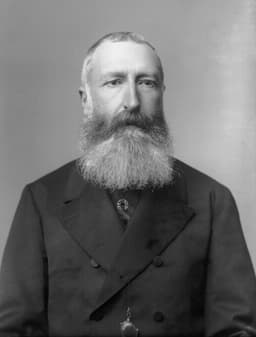
Leopold II of Belgium
Emperor · Modern
50.0Total
Basic Information
Born
1757
1835
Died
1836
1909
Era
Modern
Modern
Nationality
France
Belgium
Occupation
Emperor
Emperor
Civilization
Western
Western
Score Comparison
Military (10%)
21.1
35.0
Political (20%)
25.0
45.1
Influence (20%)
46.3
54.1
Legacy (20%)
35.8
45.8
Leadership (15%)
31.2
72.0
Strategy (15%)
60.0
39.6
TOTAL
37.1
50.0
Charles X of France — Complete Timeline
1825 AD
Coronation of Charles XCultural◆ Major
Charles X was crowned at Reims Cathedral in a lavish ceremony that revived medieval traditions, including the use of the Holy Ampulla. The coronation emphasized divine right and traditionalist Catholicism, signaling his rejection of the constitutional principles of the Charter of 1814.
CoronationDivine RightTraditionalism
Impact: national
1830 AD
Invasion of Algiers (1830)War◆ Major
Charles X ordered a military expedition to invade Algiers, aiming to boost his popularity and distract from domestic unrest. The French captured Algiers in July 1830, beginning the colonization of Algeria. The victory came too late to save his throne, as the July Revolution erupted simultaneously.
Colonial WarAlgeriaDistraction
Impact: global
July Revolution (1830)Political Action
Charles X issued the July Ordinances, dissolving the Chamber of Deputies, restricting press freedom, and altering the electoral system. This sparked three days of street fighting in Paris (July 27-29, 1830). The revolution forced Charles to abdicate and flee to England, ending the Bourbon Restoration.
RevolutionAbdicationBourbon
Impact: nationaldestructive
July Ordinances (Ordonnances de Juillet)Political Action
On July 25, 1830, Charles X signed four ordinances that suspended the press, dissolved the newly elected Chamber, changed the electoral system to favor the aristocracy, and called for new elections. These authoritarian decrees directly triggered the July Revolution and his overthrow.
AuthoritarianismPress CensorshipRevolution
Impact: nationaldestructive
Exile of Charles XPolitical Action◆ Major
After abdicating in favor of his grandson, the Duke of Bordeaux, Charles X fled to England and later to Scotland and Prague. He lived in exile until his death in 1836, never returning to France. His exile marked the definitive end of the senior Bourbon line's rule.
ExileAbdicationBourbon
Impact: nationaltragic
Leopold II of Belgium — Complete Timeline
1885 AD
Creation of the Congo Free StatePolitical Action
Leopold II established the Congo Free State as his personal colony at the Berlin Conference. He gained international recognition for his claim to the Congo Basin, ruling it as private property rather than a Belgian colony.
ColonialismCongoExploitation
Impact: globaldestructive
1890 AD
Congo Free State AtrocitiesOther
Leopold II's regime in the Congo Free State enforced rubber quotas through forced labor, mutilation, and murder. Millions of Congolese died from violence, disease, and starvation between 1885 and 1908.
AtrocitiesHuman RightsColonialism
Impact: globaltragic
1897 AD
Architectural Projects in BelgiumCultural
Leopold II commissioned grand buildings in Brussels, including the Cinquantenaire Arcades, the Royal Museum for Central Africa, and the Mont des Arts. These projects aimed to glorify his reign and colonial achievements.
ArchitecturePatronageLegacy
1900 AD
International Campaign Against Congo AbusesPolitical Action◆ Major
Edmund Dene Morel and Roger Casement launched a campaign exposing Congo atrocities. The Congo Reform Association pressured governments, leading to international condemnation of Leopold II's rule.
ReformHuman RightsActivism
Impact: globalprogressive
1908 AD
Annexation of Congo by BelgiumPolitical Action◆ Major
Under international pressure, Leopold II ceded the Congo Free State to Belgium. It became the Belgian Congo, a colony governed by the Belgian state, ending Leopold's personal rule but continuing colonial exploitation.
ColonialismTransferBelgium
Impact: global
Expert Analysis
Origins
Charles X of France (born 1757) was the fifth son of the Dauphin Louis and grandson of Louis XV. He grew up in the opulent court of Versailles, receiving a conservative Catholic education that emphasized divine right. As comte d'Artois, he fled France during the French Revolution in 1789 and spent decades in exile, which hardened his ultra-royalist views. In contrast, Leopold II of Belgium (born 1835) was the second son of King Leopold I. He was educated in military and political affairs but lacked a clear path to the throne until his older brother's death in 1869. Leopold traveled extensively, studying colonial empires in Asia and Africa, developing a fascination with overseas possessions. His father's cautious constitutional monarchy contrasted with Leopold's ambitions for absolute control over a personal colony.
Rise to Power
Charles X became king in 1824 after the death of his brother Louis XVIII. His accession was celebrated with a medieval-style coronation at Reims Cathedral in 1825, using the Holy Ampulla, which signaled a return to pre-revolutionary symbolism. He quickly alienated liberals by supporting the Catholic Church and compensating émigrés for lands lost during the Revolution. Leopold II ascended the throne in 1865 upon his father's death. Unlike Charles, he had to navigate a constitutional system where parliament held power. His rise was marked by persistent lobbying for colonial expansion, which the Belgian government rejected. At the Berlin Conference (1884-1885), Leopold skillfully presented himself as a humanitarian and philanthropist, gaining recognition for the Congo Free State as his personal possession. He scored 72.0 in leadership, reflecting his cunning diplomacy.
Leadership & Governance
Charles X governed as an absolute monarch in spirit, rejecting the compromises of Louis XVIII. He appointed ultra-royalist ministers and pushed the July Ordinances (1830) to dissolve parliament, restrict press freedom, and rig elections. This provoked immediate revolt, leading to his abdication. His governance scored 31.2 in leadership, with a rigid adherence to divine right that ignored public opinion. Leopold II ruled the Congo Free State as a personal fief, using forced labor to extract rubber and ivory. He employed the Force Publique, a brutal militia, to enforce quotas, resulting in millions of deaths. In Belgium, he used his constitutional powers to push through grand architectural projects, but his governance was secretive and exploitative. His political score of 45.1 reflects his manipulative control.
Triumph & Tragedy
Charles X's greatest triumph was the invasion of Algiers in 1830, which briefly boosted his popularity and established French influence in North Africa. However, his tragedy was the July Revolution that same year: his ordinances sparked three days of fighting (July 27-29), leading to his abdication and exile. He scored only 21.1 in military matters, as his policies provoked conflict rather than achieving military success. Leopold II's triumph was the creation of the Congo Free State, which made him personally wealthy and gave him international influence. His tragedy was the exposure of atrocities: the Congo Reform Association, led by Edmund Morel and Roger Casement, documented mutilations, murders, and a population decline estimated at 10 million. Leopold was forced to cede the colony to Belgium in 1908, dying in 1909 with his reputation shattered. His legacy score of 45.8 reflects this mixed outcome.
Character & Destiny
Charles X was stubborn and out of touch, believing in the divine right of kings even after the French Revolution had demonstrated its fragility. His character led him to ignore warnings from moderates, sealing his fate. He scored 60.0 in strategy for his Algiers expedition, but his overall political score of 25.0 reflects his inability to adapt. Leopold II was calculating and ruthless, viewing the Congo as a business venture. His strategic score of 39.6 shows he was less adept at long-term planning than at short-term exploitation. His character combined grand ambitions with a callous disregard for human life, which ultimately led to his condemnation.
Legacy
Charles X is remembered as the last Bourbon king of France, whose reactionary policies provoked the July Revolution and established the July Monarchy under Louis-Philippe. His legacy is one of failed absolutism, with influence score 46.3. Leopold II's legacy is more complex: in Belgium, he is commemorated with statues and monuments, but internationally he is condemned for crimes against humanity. The Congo Free State atrocities remain a dark chapter in colonial history, influencing modern debates on reparations. His influence score of 54.1 reflects the enduring impact of his exploitation.
Conclusion
Leopold II had greater impact than Charles X, as his atrocities led to global human rights campaigns and shaped colonial discourse. While Charles X's fall ended Bourbon rule, Leopold's exploitation of the Congo caused demographic catastrophe and left a legacy of suffering. Leopold's total score of 50.0 versus Charles's 37.1 reflects this, with Leopold's leadership (72.0) and political (45.1) scores significantly higher. Charles X's rigid absolutism was a failure of adaptation, while Leopold's calculated brutality had far-reaching consequences. Thus, Leopold II's impact, though horrific, was more significant.
Rankings
🥇
Leopold II of BelgiumLeader
Mil: 35.0Pol: 45.1Inf: 54.1
50.0
🥈
Charles X of France
Mil: 21.1Pol: 25.0Inf: 46.3
37.1
+12.9 behind
How This Comparison Works
Algorithm
Each figure is scored on 6 dimensions (0—100 scale) based on structured historical data: Military (10%), Political (20%), Influence (20%), Legacy (20%), Leadership (15%), Strategy (15%). The weighted total produces the final ranking.
Data Sources
Scores are computed from structured sub-indicators in the database. Scale factors adjust for era (Ancient ×0.85, Modern ×1.0) and civilization size (Eastern ×1.05, Other ×0.80) to account for differences in population and military scale.
Maximum 3 Figures
Comparisons are limited to 2—3 figures to ensure readability and statistical meaningfulness.
Error Margins
±5 points per dimension — Sub-scores are derived from historical records with inherent uncertainty. Two figures within 5 points on a dimension should be considered roughly equivalent in that area.
Total Score Accuracy
±3 points overall — The weighted combination of 6 dimensions produces a total score with approximately ±3 points of uncertainty. Differences of less than 3 points are not statistically significant— the figures are effectively tied.
Known Limitations
- Historical records are incomplete and uneven across civilizations
- Figures from oral-tradition societies may be underrepresented
- Occupation labels can misclassify multi-role figures
- Scores measure capability and impact, not moral character
- Quantitative scoring is a comparison tool, not absolute truth
Capability Radar
Military (10%) — Battles & Warfare
Battles
38
10
Win Rate
37
10
Expansion
41
60
Political (20%) — Governance & Reform
Reform
5
10
Diplomacy
10
40
Economy
10
30
Influence (20%) — Cultural & Global Reach
Cultural
10
15
Global
5
50
Legacy (20%) — Historical Impact
Historical
15
55
Longevity
10
20
Leadership (15%) — Power & Stability
Tenure
10
70
Stability
5
10
Strategy (15%) — Tactics & Innovation
Strategy
47
15
Tactics
50
5
Reform
50
5
Similar Comparisons
Comments & Discussion
No comments yet. Be the first to share your thoughts!